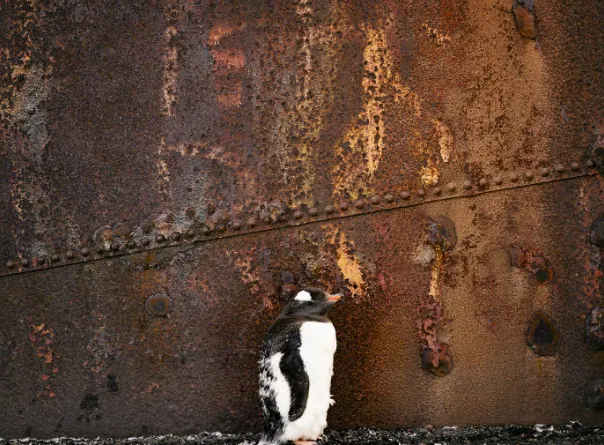
In a remarkable turn of events, Gentoo penguins have emerged as winners in the battle against climate change. The species has been thriving on a remote volcanic island off the coast of Antarctica, where a unique combination of natural and human-induced factors has created a haven for the birds. The island, known as Deception Island, was once home to a bustling human settlement, with oil tankers and whaling ships frequenting its shores. However, after the humans left, the penguins seized the opportunity, and their numbers have been growing steadily.
The story of the Gentoo penguins' success is a fascinating one. According to Heather Lynch, a researcher in ecology and evolution at Stony Brook University, the penguins' ability to adapt to changing environments has been key to their survival. The birds have learned to exploit the remnants of human activity, using the rusting hulks of old ships as shelter from the wind and a place to molt. This unique behavior has allowed them to thrive in an environment that would be hostile to many other species.
The numbers are striking. Between 2013 and 2020, the global Gentoo penguin population grew by 11%, with the largest increases seen in the western Antarctic Peninsula. In some areas, the population has grown by as much as 23%. This is in stark contrast to other penguin species, such as the Adelie and Chinstrap penguins, which have seen significant declines in their populations.
So, what sets the Gentoo penguins apart from their fellow species? According to Lynch, it comes down to their adaptability. Gentoo penguins are not picky eaters, and will happily switch between krill and fish depending on what's available. They also have the ability to increase their egg production in response to changing environmental conditions, which helps them to cope with the unpredictable nature of climate change.
Another key factor in the Gentoo penguins' success is their ability to change their breeding habits in response to climate change. Unlike some other penguin species, Gentoo penguins are able to adjust their breeding schedule to take advantage of changing environmental conditions. This flexibility has allowed them to thrive in an environment that is rapidly changing.
The story of the Gentoo penguins serves as a reminder that not all species are equally affected by climate change. While some species are struggling to adapt, others are finding ways to thrive in a changing world. The Gentoo penguins' success is a testament to the incredible adaptability of life on Earth, and a reminder that even in the face of significant environmental change, there is always hope for survival and even success.
As the world grapples with the challenges of climate change, the story of the Gentoo penguins offers a glimmer of hope. While there is still much to be learned about the impacts of climate change on different species, the Gentoo penguins' success suggests that some species may be more resilient than we think. By studying the Gentoo penguins and other successful species, scientists may be able to gain insights into the strategies that allow them to thrive in a changing world.
Key points
- The Gentoo penguin population has grown by 11% between 2013 and 2020.
- Gentoo penguins have adapted to changing environmental conditions by exploiting the remnants of human activity.
- The species' success is a testament to the incredible adaptability of life on Earth.