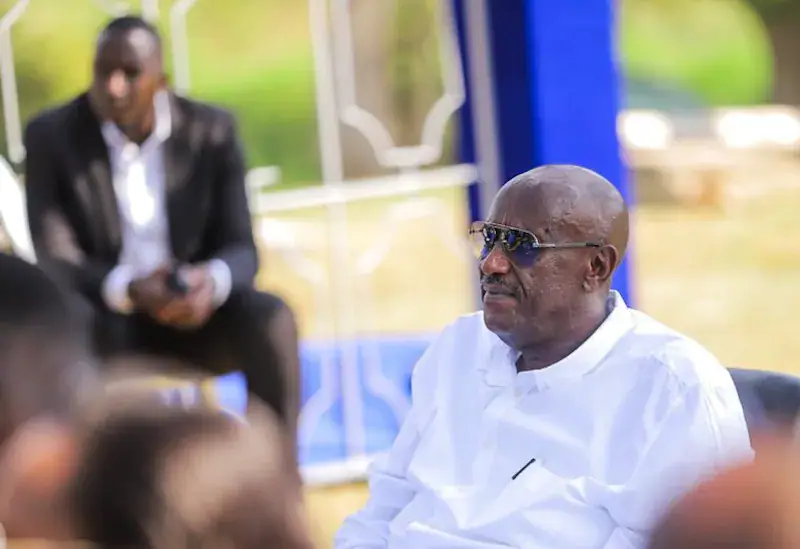
Gen Salim Saleh, a key figure in Ugandan politics and President Museveni's younger brother, has unveiled a 128-page document advocating for a new national agreement to address the country's long-standing divisions. The proposal, co-authored with Prof. Ogenga Otunnu, seeks to overcome decades of political exclusion, regional inequality, sectarianism, and unresolved grievances. This initiative has sparked both interest and skepticism among Uganda's political stakeholders.
The proposed national agreement calls for a transparent national dialogue involving various stakeholders, including political parties, civil society, religious and cultural leaders, and ordinary citizens. This approach marks a significant departure from the secretive political bargains that have historically brought rival elites into government. Saleh's growing public involvement in politics has raised questions about his intentions, particularly given the sensitive discussions around President Museveni's succession.
President Museveni, who has been in office for nearly four decades, is yet to publicly indicate his plans for succession. However, sources within the ruling establishment suggest that disagreements are emerging over who should succeed him and how to manage the transition. Gen Muhoozi Kainerugaba, the Chief of Defence Forces and Museveni's son, has publicly expressed presidential ambitions for 2031, which has sparked concerns among some quarters.
Gen Saleh's recent public statements and actions have been seen as significant, particularly his efforts to mediate between the government and imprisoned opposition politician Dr. Kizza Besigye. Besigye has been detained since November 2024 on treason and misprision of treason charges. Saleh's intervention secured Besigye's transfer to a better-equipped medical facility, highlighting the complex nature of his involvement in the country's politics.
The document, titled Consociational Democracy Agreement, presents a comprehensive critique of Uganda's political and economic system. It argues that the country's education system, traditionally seen as a route out of poverty, is reinforcing existing inequalities. The authors identify several factors contributing to these inequalities, including household income, geographical disparities, and inadequate public investment.
One of the key proposals in the document is that any future political settlement must be written, publicly accessible, and subject to scrutiny. This approach aims to address the grievances of various communities and ensure that reconciliation efforts are successful and sustainable. The document acknowledges Museveni's previous reconciliation efforts but argues that they have largely focused on agreements between political elites, often neglecting the concerns of the communities they represent.
The implications of Gen Saleh's proposal for Uganda's political future remain to be seen. While some view it as a genuine attempt to address the country's long-standing divisions, others suspect that it may be part of a broader initiative to manage succession within the ruling establishment. As Uganda navigates its complex political landscape, the proposal has sparked a necessary conversation about the country's future and the need for a more inclusive and transparent political process.
Key points
- Gen Salim Saleh proposes a national settlement to address Uganda's long-standing divisions.
- The proposal calls for a transparent national dialogue involving various stakeholders.
- The initiative has sparked questions about Saleh's intentions and the potential impact on President Museveni's succession.