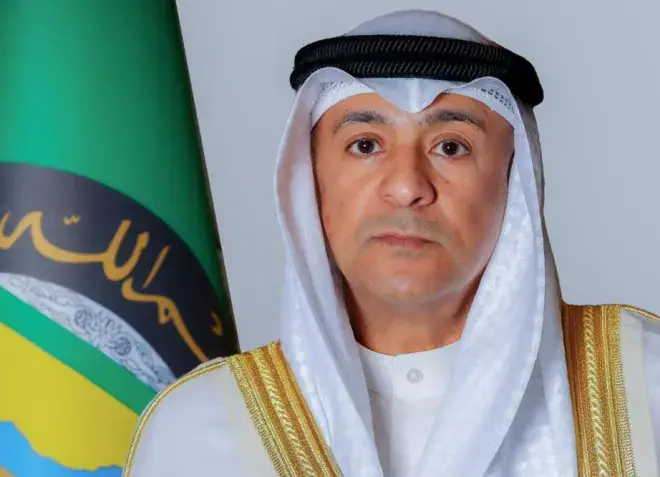
The Gulf Cooperation Council has denounced statements by Somali government officials accusing the United Arab Emirates of interfering in Somalia's internal affairs. In a statement issued on November 19, GCC Secretary-General Jasem Mohamed Albudaiwi expressed support for the UAE amid escalating diplomatic tensions between Mogadishu and Abu Dhabi. Albudaiwi criticized Somali officials for spreading allegations that undermine the UAE's regional and international role.
The GCC statement described the remarks by Somali officials as irresponsible and denounced what it called malicious media campaigns directed against the UAE. Albudaiwi defended the UAE's diplomatic activities, citing its significant contributions to regional security, stability, and international dialogue. He highlighted the UAE's recent hosting of Russian-Ukrainian talks as a demonstration of its commitment to regional and international peace and security.
Somali President Hassan Sheikh Mohamud had accused the UAE of providing political, financial, and security support to regional administrations and armed groups operating outside the federal government's control. He also criticized Emirati agreements involving the ports of Berbera, Bosaso, and Kismayo, arguing that such arrangements undermine Somalia's sovereignty. The Somali government ordered the UAE ambassador to leave the country within 72 hours and recalled its ambassador from Abu Dhabi for consultations.
The UAE Foreign Ministry responded by condemning what it described as the Somali government's hostile approach, accusing Mogadishu of allowing internal political disputes to damage bilateral relations. Abu Dhabi also said it had closed its embassy in Mogadishu and withdrawn its diplomatic personnel in January 2026, following earlier disagreements over Somalia's cancellation of bilateral agreements.
The GCC's statement adds a regional dimension to the dispute, with the six-member Gulf bloc publicly defending the UAE against Somalia's accusations. The GCC comprises the United Arab Emirates, Saudi Arabia, Qatar, Kuwait, Bahrain, and Oman. The council did not announce any diplomatic or economic measures against Somalia, limiting its response to a public condemnation of the Somali government's statements and expressions of support for the UAE.
Albudaiwi emphasized that GCC member states remained committed to advancing peace, stability, and prosperity and would reject campaigns intended to damage the reputation of any member state. He said the allegations against the UAE risked undermining its efforts to promote regional and international cooperation. The GCC statement reaffirmed the bloc's commitment to consolidating security, stability, and prosperity in the region.
The diplomatic tensions between Somalia and the UAE have escalated significantly, with Somalia's Cabinet ordering the UAE ambassador to leave the country and recalling its ambassador from Abu Dhabi. The UAE's defense of its diplomatic activities and the GCC's public support for the UAE have added to the tensions, which risk undermining regional stability and cooperation.
Key points
- The GCC has publicly defended the UAE against Somalia's accusations of interference.
- The UAE has closed its embassy in Mogadishu and withdrawn its diplomatic personnel.
- The diplomatic tensions between Somalia and the UAE have escalated significantly.
Reporting sources
- GCC backs UAE, rejects Somalia’s allegations of interference · Hiiraan Online