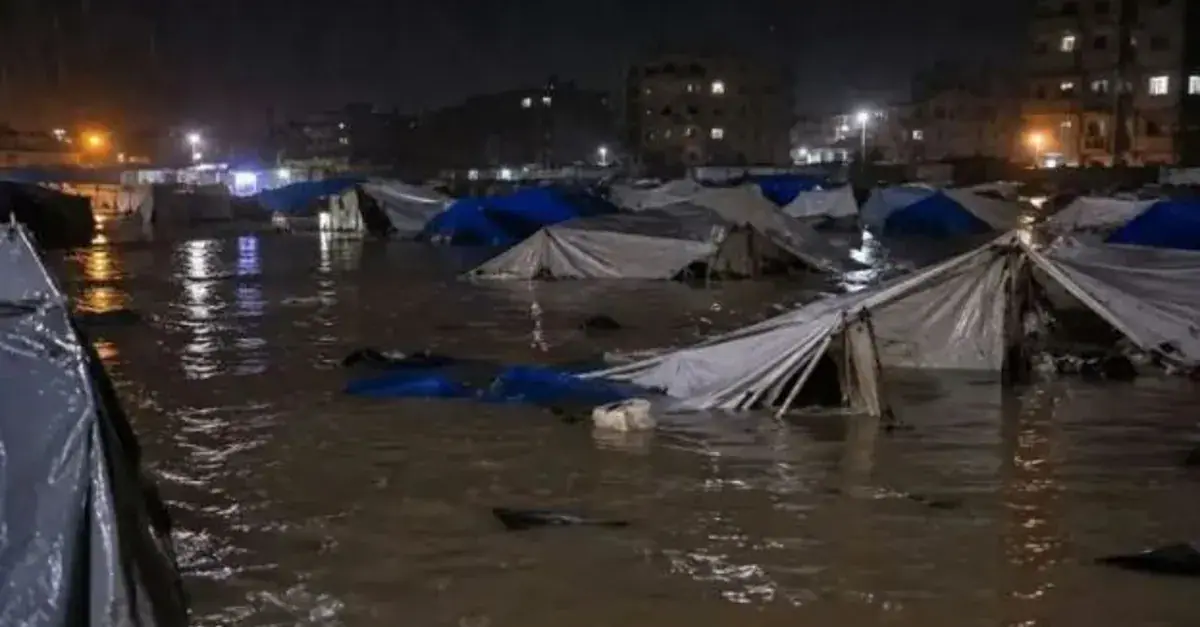
The Egyptian Gaza Strip's civil defense department announced on Saturday that it received 2,166 distress calls since the start of a low-pressure weather system affecting the area. However, response teams were only able to address 218 of those calls due to the high volume of requests and limited resources to deal with the aftermath of heavy rains.
According to the civil defense department, teams declared a state of maximum emergency on Friday to cope with the effects of the low-pressure system and respond to distressed families. Scores of displacement camps, shelters, and entire residential areas have been inundated by flooding caused by heavy rainfall. Water levels in some areas have reached as high as one and a half meters.
The majority of distress calls came from citizens, administrators of refugee camps and shelters, and families whose homes were damaged due to airstrikes. Due to limited resources, response teams were often only able to provide guidance to affected families, rather than providing direct assistance. This was especially true given the large number of distress calls received by the department.
The department warned of worsening humanitarian conditions with continued low-pressure systems expected throughout the winter season. They stressed that the current situation highlights the risks faced by residents of the Gaza Strip, particularly given weather forecasts predicting a winter with heavy rainfall and storms.
The civil defense department renewed its appeal to the international community to pressure Israel to allow the entry of necessary rescue equipment and machinery to deal with the effects of low-pressure weather systems. They also requested the provision of tents, plastic tarps, and mobile homes to shelter displaced persons.
Furthermore, the department called for the provision of fuel necessary to operate civil defense teams and enable them to continue their humanitarian interventions. They urged guarantor countries to stop the firing and the National Committee for the Management of the Gaza Strip to intervene urgently to rescue the population and provide protection and shelter during the winter.
Key factors contributing to the crisis include a lack of resources, a high volume of distress calls, and the need for international support to address the humanitarian situation in Gaza.
Key points
- The civil defense department received 2,166 distress calls but was only able to respond to 218 due to limited resources.
- The situation highlights the risks faced by residents of the Gaza Strip, particularly given weather forecasts predicting a winter with heavy rainfall and storms.
- The department is calling for international support, including the provision of rescue equipment, tents, and fuel to operate civil defense teams.
Reporting sources
- غزة تغرق.. 2166 نداء استغاثة والدفاع المدني: لم نستجب سوى لـ218 · Al-Qahera News