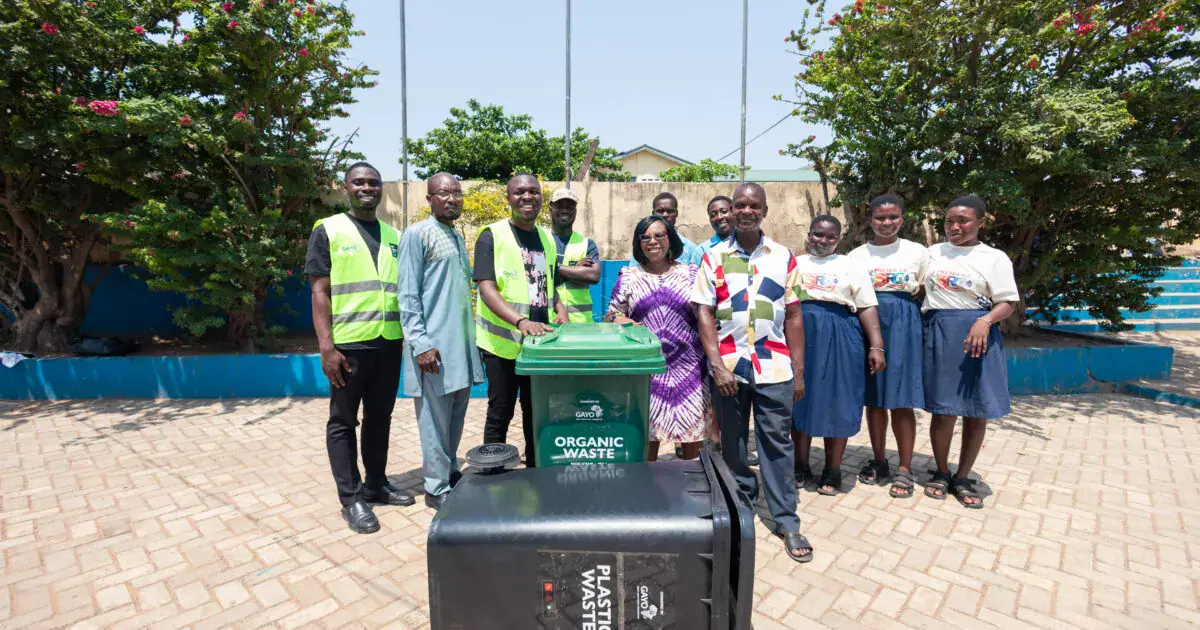
The Green Africa Youth Organization (GAYO) has initiated a partnership with metropolitan, municipal, and district assemblies (MMDAs) and schools in Greater Accra to promote waste segregation. This initiative, part of GAYO's Zero Waste portfolio, aims to educate students on proper waste management practices. The program covers schools in seven municipalities, including La Dade Kotopon, Ledzokuku, Accra Metropolitan, and Ablekuma West.
The initiative seeks to help schools separate their waste at source, turn organic waste into compost, and recycle plastics. According to Betty Adjei, Operations and Programs Director at GAYO, the program is crucial as the government has directed households to start separating their waste from next year. She emphasized the importance of instilling this habit in young students.
As part of the initiative, GAYO is distributing 200 bins, 300 books, pens, and educational flyers to schools across the seven municipalities. Each school receives two bins to facilitate waste separation. Adjei mentioned that the initiative will later extend to markets and wider municipalities, aiming for a broader impact on waste management in Greater Accra.
Antonio Yayrator Korkuvi, Project Coordinator on GAYO's Zero Waste portfolio, highlighted that about 60 percent of financial resources given to assemblies go into managing waste. A waste analysis by GAYO found that about 60 percent of the waste generated in schools is organic. The organization is helping schools separate their waste, turning organic waste into compost used in school gardens.
The composting initiative not only aids in waste management but also provides schools with chemical-free vegetables. GAYO is training students to make compost themselves, while plastics are processed into pellets at its material recovery facility. This approach also addresses a challenge faced by schools where collected waste is often mixed back together by collection trucks.
Madam Habiba Kotomah, Education Director for the La Dade Kotopon Municipality, welcomed GAYO's plan to collect separated waste directly and pay schools a token in return. This initiative is expected to generate some form of internal generated funds (IGF) for the schools. The La Dade Kotopon Municipal Assembly's material recovery facility already diverts more than 50 tonnes of waste a month.
The partnership between GAYO and schools has received positive feedback from school administrators. Rosina Lawal, Assistant Headmistress (Domestic) at Forces Senior High School, expressed satisfaction with the initiative and requested more bins for the students. She believes that widespread adoption of such practices could significantly improve Ghana's cleanliness.
Key points
- GAYO partners with MMDAs and schools to promote waste segregation
- Initiative aims to help schools separate waste, turn organic waste into compost, and recycle plastics
- Program seeks to instill proper waste management habits in students ahead of government directive