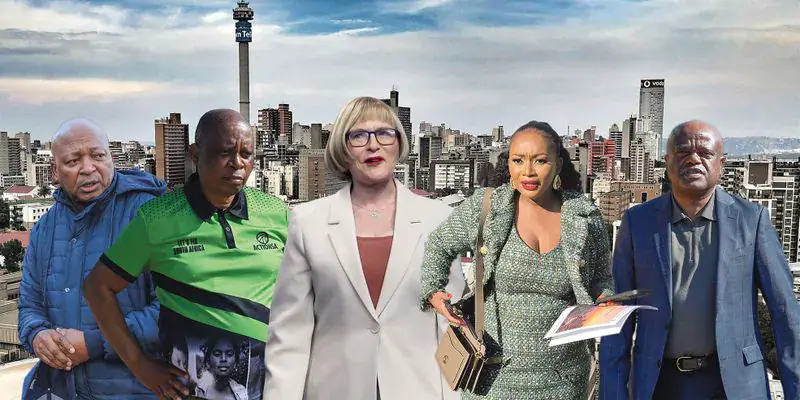
With 70% of ballots counted in Gauteng, the province's top six parties - the African National Congress (ANC), the Democratic Alliance (DA), ActionSA, the Economic Freedom Fighters (EFF), the uMkhonto weSizwe party (MK), and the Freedom Front Plus (FF+) - are preparing for coalition talks. The ANC, DA, and ActionSA are projected to be the top three parties in the metros of Ekurhuleni, Johannesburg, and Tshwane. Coalition talks are expected to be intense, with parties having 14 days to negotiate after the official declaration of results.
ActionSA, led by Herman Mashaba, has seen notable gains in Gauteng, particularly in Tshwane, where it is leading 26 wards previously held by the ANC. The party is projected to come second in Tshwane with 22.7%, third in Ekurhuleni with 18.40%, and third in Johannesburg with 16.76%. ActionSA is open to negotiating with any party, including the MK party, but has expressed concerns about Jacob Zuma's party. The party's national chairperson, Michael Beaumont, stated that ActionSA will only negotiate coalitions with parties that abide by certain conditions, including a commitment to service delivery, fighting corruption, and stability.
The ANC, led by deputy secretary-general Nomvula Mokonyane, has a history of working in coalition governments in Gauteng and is open to talking to all parties. The party's projected to come second in Ekurhuleni with 21.7%, second in Johannesburg with 20.16%, and third in Tshwane with 20.07%. Mokonyane stated that the ANC will ensure that any coalition partner reflects the party's six pillars, including providing affordable basic services, creating jobs, and promoting community safety.
The DA, led by Geordin Hill-Lewis, is projected to lead in all Gauteng metros, but without an outright majority. The party is projected to take Ekurhuleni with 29.48%, the City of Johannesburg with 33.94%, and the City of Tshwane with 31.77%. Hill-Lewis stated that the DA will prioritize building a coalition government based on integrity, accountability, and merit-based appointments, with a zero-tolerance approach to corruption.
The EFF, led by Julius Malema, has seen its support in Gauteng slide from third in 2021 to fourth in 2026. The party's treasurer-general, Omphile Maotwe, stated that the EFF will not exclude parties based on principle, but Malema appeared to contradict this, implying that the party will not enter a coalition government with the DA. Maotwe stated that the EFF will only enter coalitions with parties that agree to a "socialist programme".
The uMkhonto weSizwe party (MK), led by Jacob Zuma, is also a key player in Gauteng, with ActionSA expressing concerns about the party's potential influence. The Freedom Front Plus (FF+) is also projected to play a role in coalition talks, although its projected vote share is not yet clear.
Coalition talks are expected to be intense and complex, with parties having to balance their interests and negotiate with each other. The outcome of these talks will have a significant impact on the governance of Gauteng's metros and the delivery of services to residents.
Key points
- The top six parties in Gauteng - the ANC, DA, ActionSA, EFF, MK, and FF+ - are preparing for coalition talks.
- ActionSA, ANC, and DA have outlined their conditions for coalition talks, including a commitment to service delivery, fighting corruption, and integrity.
- The EFF and MK parties are also key players in coalition talks, with the EFF implying that it will not enter a coalition government with the DA.