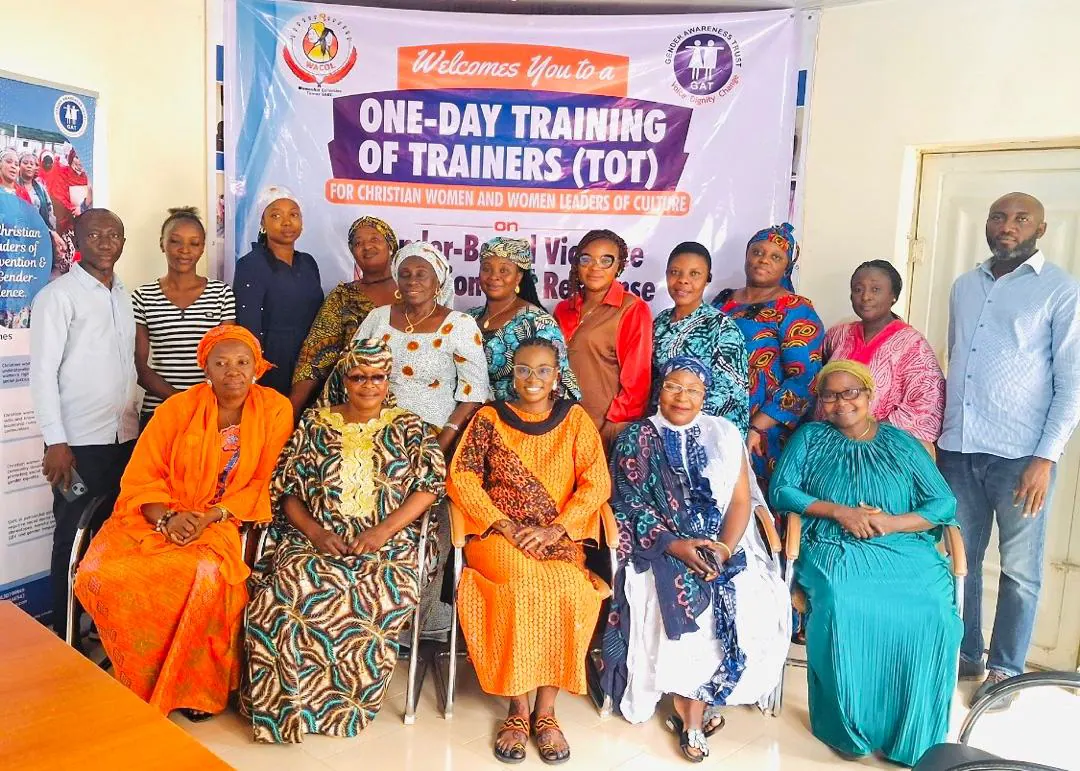
The Gender Awareness Trust (GAT) recently conducted a one-day Training of Trainers (ToT) in Kaduna, bringing together 12 selected Christian women and women leaders of culture from Zangon Kataf and Kaduna South Local Government Areas. This initiative is part of the second phase of GAT's intervention aimed at strengthening grassroots capacity for the prevention and response to gender-based violence. The training was implemented by GAT with funding support from the Women Aid Collective (WACOL).
The training, organised under the Empowering Christian Women and Leaders of Culture for Prevention and Response to Gender-Based Violence in Nigeria project, aims to leverage the influence of women within faith, cultural and community structures to promote positive attitudes and challenge harmful norms. GAT Executive Director, Dr. Lydia Umar, emphasized that Christian women and women leaders of culture are in a strong position to influence attitudes, behaviours, and practices within families and communities.
During the training, Dr. Umar noted that participants were not only expected to acquire knowledge about GBV but also to become advocates and trainers capable of taking prevention messages to other members of their communities. Women leaders, faith actors, community influencers, and custodians of culture have platforms through which they can shape conversations around relationships, family life, dignity, and respect, making their involvement critical to efforts aimed at preventing violence before it occurs.
The training provided participants with an opportunity to examine how cultural and religious beliefs can influence attitudes and practices relating to gender-based violence. Dr. Umar explained that addressing GBV required more than responding to cases after they had occurred, stressing the importance of prevention, awareness, early intervention, and sustained community engagement. Participants were encouraged to distinguish between positive cultural and religious values that promote peaceful and respectful relationships and harmful interpretations or practices that could normalise violence.
A major component of the training was the Training of Trainers approach, which requires participants to take the knowledge acquired beyond the training venue and share it with other women and community members. Dr. Umar stressed that the impact of the programme would depend largely on the ability of the trainees to translate the lessons into practical activities within their communities. Participants were expected to conduct step-down trainings in Zangon Kataf and Kaduna South, thereby extending the reach of the intervention.
According to GAT, the training was expected to increase the knowledge, confidence, and practical skills of the Christian women and women leaders of culture to identify, challenge, and prevent harmful social and cultural norms that contribute to GBV. The organisation said participants were also expected to improve their ability to communicate prevention messages effectively and engage faith, cultural, and community structures in addressing the issue.
The broader project aims to strengthen the capacity of Christian women leaders and women leaders of culture to prevent and respond to gender-based violence in Kaduna and Katsina states. WACOL, which supports the project, emphasises the importance of engaging religious and cultural leaders in addressing violence against women and girls due to the influence such structures wield within communities.
Key points
- GAT trains Christian women and cultural leaders to prevent and respond to gender-based violence in Kaduna.
- The training aims to leverage the influence of women within faith, cultural, and community structures to promote positive attitudes and challenge harmful norms.
- Participants are expected to conduct step-down trainings in their communities, extending the reach of the intervention.