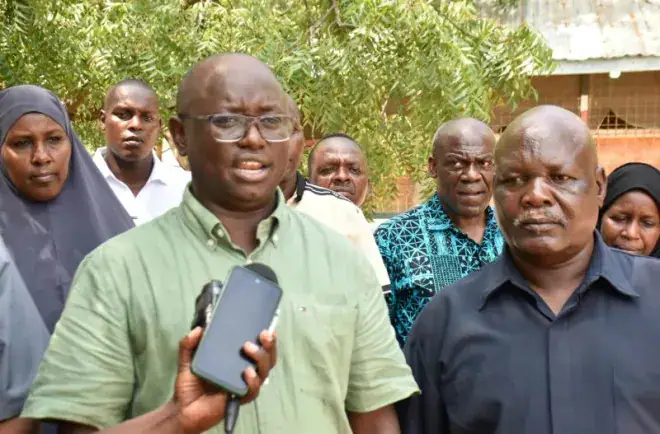
Residents of Garissa, Kenya, are calling on the Unclaimed Financial Assets Authority (UFAA) to decentralize its services, making it easier for people to claim their unclaimed assets without incurring high travel costs to Nairobi. The UFAA, in collaboration with the National Treasury, held a public participation forum in Garissa to discuss the draft National Policy on Unclaimed Financial Assets. The forum provided an opportunity for residents to share their views and suggestions on how to improve the management and reunification of unclaimed financial assets.
Muktar Dahir, chairperson of the Garissa Human Rights Network, stated that many Kenyans are unaware of the existence of UFAA and its services, partly due to its location in Nairobi. He emphasized that decentralizing services would enhance public awareness and increase the authority's visibility across the country. The proposed policy provides an opportunity to explore ways of decentralizing services and improving access to information, enabling more Kenyans to recover their money and other assets.
Aden Bille, the Garissa County chairperson for Persons with Disability, raised concerns about identifying rightful beneficiaries, particularly in cases where account holders die without providing or updating their next-of-kin details. He urged the agency to ensure the proposed policy clearly addresses succession and the identification of beneficiaries to avoid situations where money belonging to deceased account holders remains unclaimed.
Resident Damaris Shiko emphasized that services should be taken closer to people at the grassroots level, as the cost of traveling to Nairobi to follow up on claims can discourage ordinary Kenyans from pursuing their money. She suggested that establishing accessible regional offices or alternative service delivery channels would ease the burden on claimants and ensure that the recovery process does not become more expensive than the value of the assets being pursued.
UFAA Chief Executive Officer and Managing Trustee Laban Molonko stated that the agency had noted the issues raised, particularly the need to decentralize services and strengthen the use of next-of-kin information. He mentioned that the agency had so far managed to reunite only approximately eight percent of the assets it had received with their rightful owners, which had informed the government's decision to develop a comprehensive national policy to address existing gaps.
Molonko highlighted that next-of-kin information is crucial in processing claims, as incomplete or outdated records often make it difficult for the authority to trace and reunite assets with their rightful owners. The authority is exploring how existing information held by financial institutions could be better utilized to identify account holders and their beneficiaries, while improving the efficiency of the claims process.
The Unclaimed Financial Assets Act was enacted in 2011, establishing the legal framework for the receipt, safeguarding, and reunification of unclaimed financial assets with their rightful owners and beneficiaries. UFAA has received more than Sh45.2 billion in cash assets and approximately 2.03 billion units of unclaimed shares, paying out more than Sh3.3 billion to nearly 48,000 Kenyans and non-Kenyans identified as the rightful owners and beneficiaries.
Key points
- The proposed policy aims to establish a comprehensive framework for improving the management and safeguarding of unclaimed assets.
- Decentralizing services would enhance public awareness and increase the authority's visibility across the country.
- The authority has so far managed to reunite only approximately eight percent of the assets it had received with their rightful owners.