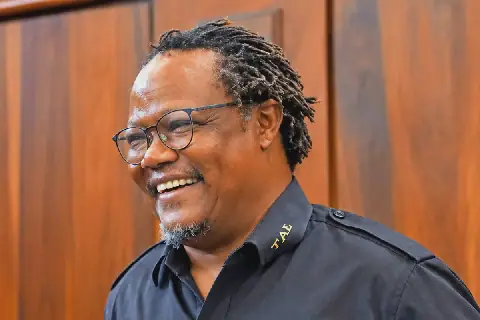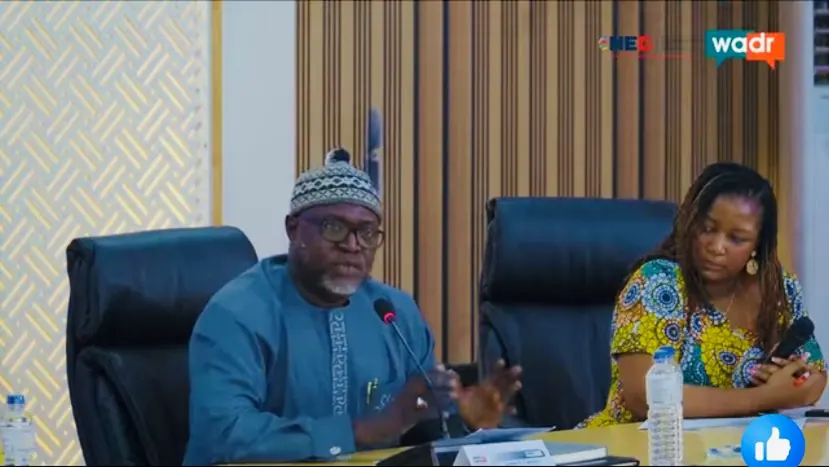
Senior Counsel Lamin S. Camara has expressed concerns about the state of democracy in Gambia, stating that reforms since 2017 have not delivered institutions that reflect the wishes and aspirations of Gambians. Speaking at the West Africa Democracy Radio (WADR) Democracy and Governance Forum in Banjul, Camara questioned the effectiveness of the country's democratic institutions. The forum, part of WADR's project "Voices for Democracy and Freedom in West Africa," aimed to assess progress and challenges in political, judicial, and security reforms ahead of the December 2026 presidential election.
Camara noted that the 1997 Constitution has undergone over 53 amendments out of 232 provisions since its adoption. He described these changes as attempts to create a perfect constitution, but ultimately unsuccessful. The senior counsel recalled the high expectations after the 2017 transition that ended Yahya Jammeh's 22-year rule, when Gambians anticipated a new era with strong transitional justice mechanisms and a constitution reflecting popular will. However, he expressed disappointment that these expectations have not been met.
The senior counsel criticized the fate of the draft constitution produced by the Constitutional Review Commission (CRC). Over D160 million was spent on pre-draft and post-draft consultations, resulting in a transformational document grounded in empirical data of what Gambians wanted. However, the document was not adopted, and Camara lamented that it was "literally thrown away with the birth water on the very first day it was presented to the National Assembly." He questioned the need for further constitutional reforms, given the fate of the CRC draft.
Camara also expressed concerns about the implementation of recommendations from institutions like the Janneh Commission and the Truth, Reconciliation and Reparations Commission (TRRC). While these institutions produced significant findings, their implementation remains a concern. Camara questioned the effectiveness of these institutions, stating that they seem to be "gathering dust somewhere."
The senior counsel challenged participants to reflect on the essence of democracy beyond formal structures. He asked whether having a constitution, judiciary, national assembly, and periodic elections necessarily means that Gambia is a democratic state. Camara emphasized that it is not about having institutions, but whether they serve the people and reflect their wishes and aspirations.
Camara disagreed with former US President Barack Obama's assertion that Africa needs strong institutions, not strong persons. He argued that Africa needs both strong institutions and strong persons. Camara also offered two reasons for the CRC draft's failure: the executive did not sufficiently advocate for the document before lawmakers, and there was no negotiation among political parties on the desirability of a new post-Jammeh constitution.
The forum, supported by the National Endowment for Democracy, brought together stakeholders to discuss the progress and challenges of Gambia's political, judicial, and security reforms. The discussions aimed to inform recommendations for future reforms. Key stakeholders, including government officials, civil society representatives, and international partners, participated in the forum to assess the country's democratic progress.
Key points
- Over D160 million was spent on the Constitutional Review Commission's draft constitution, which was ultimately not adopted.
- Counsel Camara questioned the effectiveness of Gambia's democratic institutions, citing failed reforms and a lack of implementation of recommendations.
- The senior counsel emphasized the need for strong institutions and strong persons in Africa, disagreeing with former US President Barack Obama's assertion.