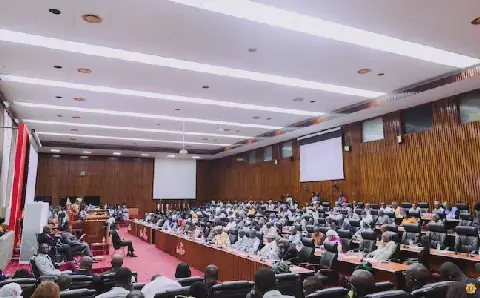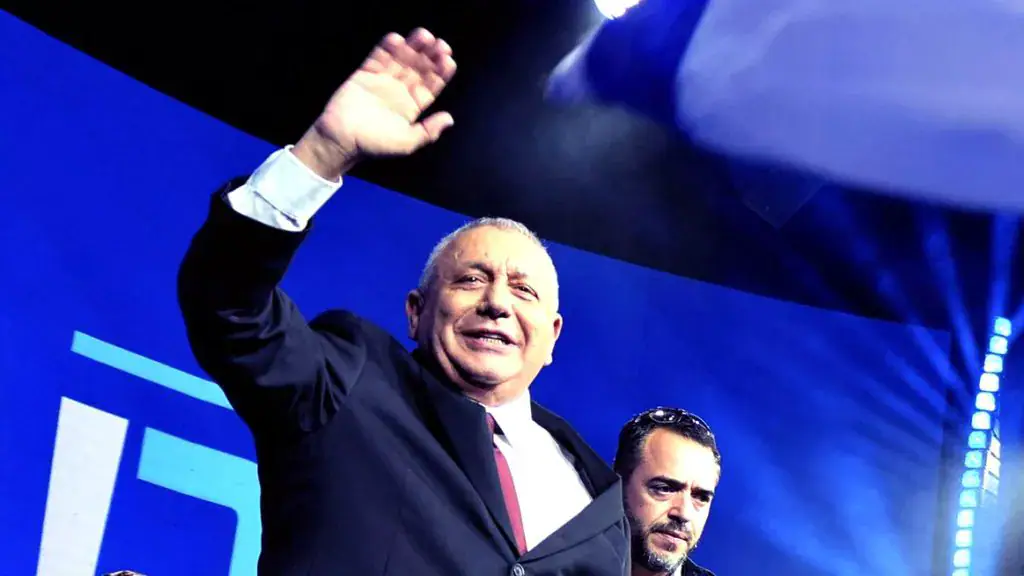
Israeli President Isaac Herzog has tasked Gadi Eisenkot, the former chief of staff and current opposition leader, with forming the country's next government. This move marks a significant development in Israeli politics, as Eisenkot's appointment comes after 12 days of consultations and negotiations following the October 27 legislative elections. With 67 lawmakers pledging their support, Eisenkot has a 28-day window to secure a parliamentary majority.
Eisenkot's centrist party, Yashar, has called on members of Benjamin Netanyahu's Likud party to join a potential coalition government, provided they distance themselves from what Yashar considers extremist alliances. The opposition leader has also extended an invitation to ultra-Orthodox parties, whose 13 seats could prove crucial in securing a majority. Additionally, Eisenkot can rely on the support of two major Arab parties, the Unified List and Raam, which collectively hold 19 seats.
At 66 years old, Gadi Eisenkot brings a military background to the role, having led the Israeli army from 2015 to 2019. His campaign focused on national reconciliation, aiming to bridge the country's deepening divisions. Eisenkot has pledged to "unite all Israelis once again." His personal story has also garnered public sympathy, as he lost his son and two nephews in operations in the Gaza Strip.
The task ahead of Eisenkot is complex, as he needs to secure at least 61 seats in the 120-member Knesset to form a government. In a statement, he emphasized the need for a "national emergency government." Eisenkot has expressed his commitment to working towards a united Israel and has vowed to restore the country's image, which has been strained by conflicts in Gaza, Lebanon, and against Iran.
Internationally, Eisenkot aims to strengthen Israel's relations with the United States and work closely with President Donald Trump to promote stability in the Middle East. His appointment has sparked a new chapter in Israeli politics, and it remains to be seen whether he can form a stable coalition within the given 28-day timeframe.
Gadi Eisenkot's designation as the leader of the next government has significant implications for Israel's future. As a former military chief, he is expected to bring a unique perspective to the role. His success in forming a government will depend on his ability to navigate the complexities of Israeli politics and build a coalition that can command a majority in the Knesset.
As Eisenkot begins his efforts to form a government, he faces significant challenges. With a divided Knesset and a history of fragile coalitions, the road ahead will be difficult. However, with the support of 67 lawmakers and a commitment to national unity, Eisenkot has a chance to make a meaningful impact on Israeli politics and lead the country towards a more stable future.
Key points
- Gadi Eisenkot has been tasked with forming Israel's next government.
- Eisenkot has 28 days to secure a parliamentary majority.
- The new government's success will depend on Eisenkot's ability to build a stable coalition.