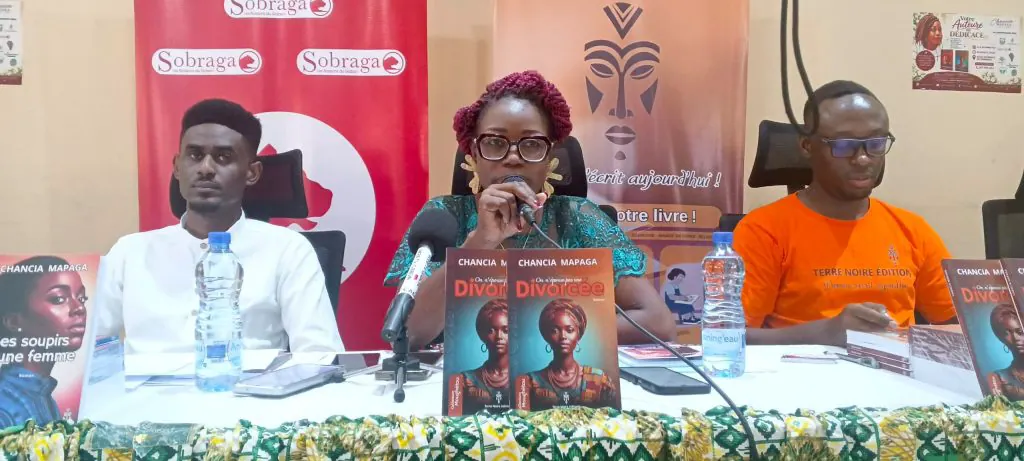
On September 26, 2026, in Port-Gentil, Gabon, author Chancia Mapaga unveiled her second novel, "On n'épouse pas une divorcée," which tackles the sensitive topic of divorced women in Gabonese society. The book, published with the support of Terre Noire Éditions, a Port-Gentil-based publishing house, delves into the realities faced by divorced women, including social stigma, abuse, and the quest for personal reconstruction. Mapaga's work is an autofiction inspired by real-life stories, aiming to spark a debate about the prejudices surrounding divorced women.
According to Mapaga, her novel seeks to challenge the common perception that divorced women are somehow "finished" or undeserving of a second chance. She argues that this mindset is rooted in societal norms and traditions that often deny divorced women the opportunity to rebuild their lives. Through her story, Mapaga aims to show that divorced women are capable of resilience, dignity, and reconstruction, and that they deserve a chance to rediscover themselves and potentially remarry.
The novel's title, intentionally provocative, is meant to draw attention to the issue and encourage discussion. Mapaga explains that divorced women often face judgment and marginalization, with their past being seen as a defining factor in their future. However, she emphasizes that a person's past does not dictate their future and that individuals have the power to recreate themselves and choose their own path.
Mapaga's work also explores the intersection of divorce and traditional Gabonese customs. While some customs permit divorced women to remarry, social considerations often continue to restrict their opportunities. The author hopes that her novel will inspire greater understanding and empathy towards divorced women, encouraging readers to look beyond their past experiences and focus on their potential for growth and renewal.
The presentation of the novel was attended by a captivated audience, including readers and supporters of Mapaga's work. One reader, Marina Koumba, praised the book for its thought-provoking themes, emphasizing that divorced women should not be judged without understanding their individual stories and experiences. Koumba's comments reflect the impact that Mapaga's novel is likely to have on its readers, sparking reflection and empathy.
Terre Noire Éditions, the publishing house behind the novel, has been instrumental in supporting Mapaga's work. The company, established in Port-Gentil in 2025, has published around twenty titles and offers a range of services, including editing, layout design, and printing. The collaboration between Mapaga and Terre Noire Éditions has resulted in a professionally produced novel that is now available to readers in Gabon and beyond.
With "On n'épouse pas une divorcée," Chancia Mapaga continues to establish herself as a powerful voice in Gabonese literature, using her writing as a tool for social commentary and empowerment. Her novel is a testament to the resilience of divorced women and a call to action for greater understanding and support. As Mapaga herself stated, "Your past does not define your future. You are capable of recreating yourself, rebuilding, and choosing your own path."
Key points
- Chancia Mapaga's novel challenges societal prejudices against divorced women in Gabon.
- The book is an autofiction inspired by real-life stories, exploring themes of divorce, abuse, and personal reconstruction.
- The novel aims to empower divorced women and promote greater understanding and empathy towards their experiences.