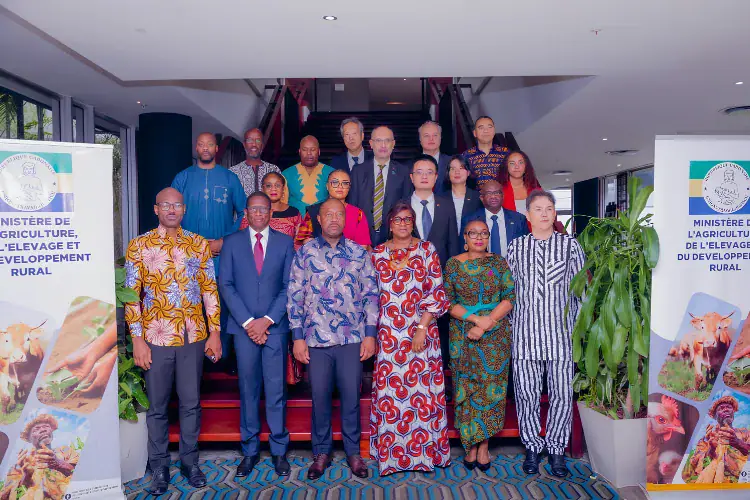
The Gabonese government has taken a significant step towards achieving food sovereignty by 2030 with the unveiling of the Plan de transformation des systèmes alimentaires (PTSA) 2026-2030. Agriculture Minister Pacôme Kossy presented the plan to technical and financial partners in Libreville, aiming to gather feedback and ensure a collaborative approach. The PTSA aligns with the country's National Growth and Development Plan (PNCD) 2026-2030 and reflects President Ali Bongo Ondimba's vision of leveraging agriculture as a driver of economic development.
The PTSA focuses on three key transformations: achieving food sovereignty, diversifying the economy through value creation, and generating sustainable employment opportunities for young people. To meet the food needs of Gabon's population, 12 agricultural sectors have been identified and grouped into four poles. The government will play a regulatory role, creating a favorable environment, while the private sector is expected to invest in the sector. Despite having 5.2 million hectares of arable land, agriculture currently accounts for less than 5% of Gabon's GDP, with annual imports exceeding $1 billion.
To address these challenges, the PTSA will target 13 key areas along the value chain, including land management, infrastructure development, organization of agricultural sectors, financing, and skills development. Partners have welcomed the plan, but emphasized the need for better coordination and reduced post-harvest losses. The African Development Bank (AfDB) has announced plans to support the plan with a project focused on the poultry sector, while the World Health Organization (WHO) has recommended incorporating local vegetables and strengthening monitoring and evaluation mechanisms.
The PTSA aims to transform Gabon's agricultural sector by 2030, with a focus on increasing production, reducing imports, and creating jobs. The plan's success will depend on effective collaboration between the government, private sector, and development partners. With the right implementation, Gabon could significantly reduce its reliance on food imports and improve the livelihoods of its citizens.
According to Minister Kossy, the PTSA is a critical component of Gabon's economic development strategy, and its success will be closely monitored. The government has already begun engaging with stakeholders, including farmers, investors, and civil society organizations, to ensure that the plan is implemented effectively. The PTSA's focus on job creation and skills development is particularly important, given the high levels of youth unemployment in Gabon.
The WHO's recommendation to incorporate local vegetables, such as folong and spinach, into the PTSA is seen as a positive step towards promoting sustainable agriculture and improving nutrition. The organization's emphasis on monitoring and evaluation will also help ensure that the plan's objectives are met and that progress is tracked over time.
The launch of the PTSA marks a significant milestone in Gabon's efforts to transform its agricultural sector and achieve food sovereignty. With the support of development partners and the private sector, the government is confident that the plan will help drive economic growth, reduce poverty, and improve the livelihoods of Gabon's citizens.
Key points
- The PTSA aims to achieve food sovereignty, diversify the economy, and generate sustainable employment opportunities for young people by 2030.