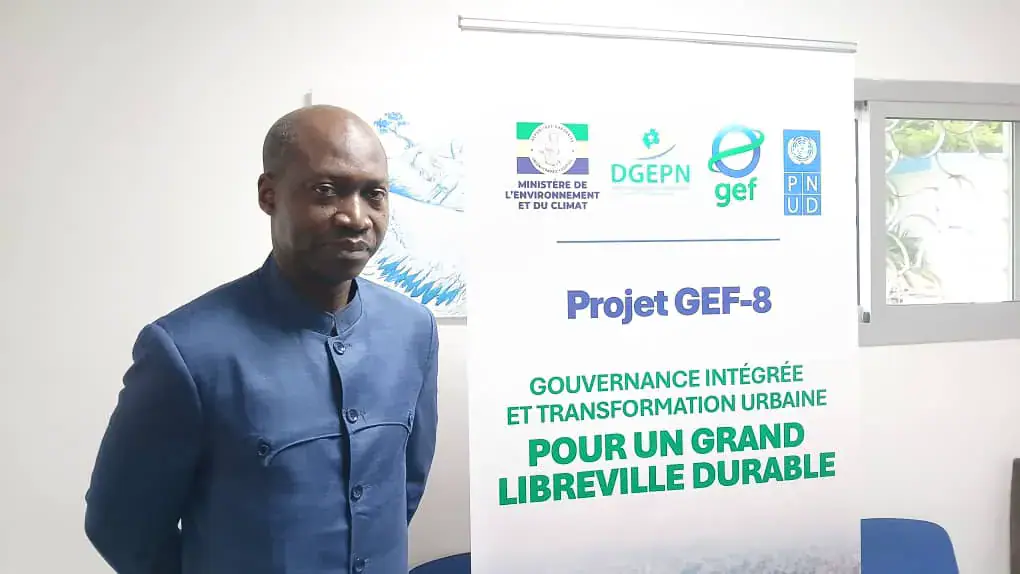
The Director-General of Environment and Nature Protection, Judicaël Léonce Eugène Anvane Obame, recently presented the operational method for the GEF-8 "Grand Libreville durable" project at the UNDP's "Maison verte" in Libreville. This project aims to stimulate the green economy and modernize the capital city. The method is built on three main pillars: implementing reproducible ecological prototypes, disbursements managed by the DGEPN, and upcoming calls for candidatures.
The DGEPN will act as the national executing agency, centralizing funds and directly paying teams, suppliers, and service providers. The budget envelopes, allocated over six years, will be evenly distributed among the four beneficiary communes (Libreville, Owendo, Akanda, and Ntoum) and sectoral ministries based on their needs. According to Anvane Obame, terms of reference compliant with UNDP standards must be elaborated and validated before any disbursement.
The project also involves establishing a regulatory framework for a sustainable city and developing pilot projects that can serve as models and be replicated on a large scale. Announced prototypes include creating a catalog of local materials, constructing model eco-friendly housing, building a pilot cycling track, and implementing a sustainable urban agriculture mechanism adaptable to households.
Once tested, these models will help mobilize bridging funds from technical and financial partners. The program aims to lay the groundwork for a local market of green construction and sustainable management in the coming months. This initiative is crucial, as the Libreville agglomeration is home to nearly half of Gabon's population.
The DGEPN's approach includes calls for tenders, with selected municipal officials and agents exercising their functions under a temporary secondment regime, renouncing their original salary in favor of the project's remuneration. This method is designed to be pragmatic, ensuring the project's effectiveness and sustainability.
The project's focus on ecological prototypes and sustainable practices aligns with Gabon's efforts to promote environmental protection and economic growth. By developing and validating local solutions, the program can be replicated in other regions, contributing to the country's overall sustainable development.
The successful implementation of the GEF-8 project will depend on effective collaboration between the DGEPN, local authorities, and stakeholders. With its comprehensive approach, the program has the potential to make a significant impact on Libreville's environmental and economic landscape, serving as a model for sustainable urban development in Gabon and beyond.
Key points
- The project's operational method is built on three main pillars: ecological prototypes, managed disbursements, and calls for candidatures.