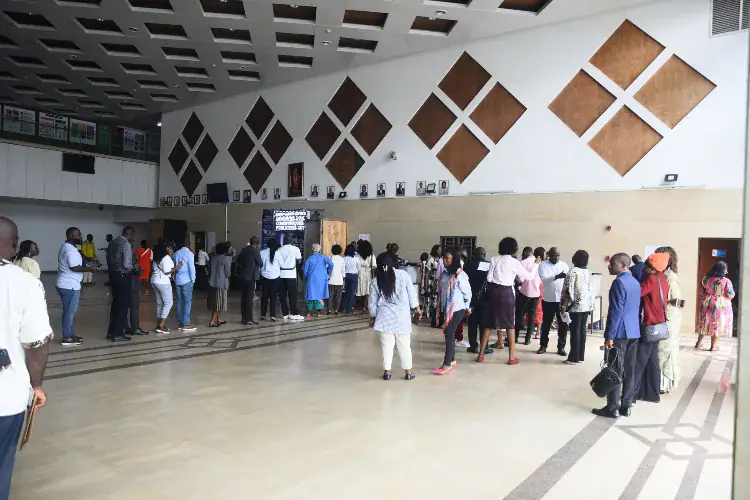
The Gabonese government has taken a significant step in structuring social dialogue by officially recognizing 16 organizations representing workers and employers. This move, formalized through a decree issued by the Ministry of Labor, Full Employment, and Social Dialogue on November 9, 2026, follows the first professional elections held on April 22, 2026, which saw the participation of nearly 180,000 voters across the country.
The recognized organizations include eight trade unions representing workers, such as the Confédération syndicale des agents publics, parapublics et privés (Cosynap), the Confédération syndicale gabonaise (Cosyga), and the Confédération gabonaise des syndicats libres (CGSL). Additionally, eight organizations representing employers have been recognized, including the Fédération des entreprises du Gabon (FEG) and the Confédération gabonaise des petites et moyennes entreprises (CGPME).
The decree, signed by Minister Adrien Nguema Mba, also integrates 22 sectoral federations covering key areas of the national economy, such as finance, education, health, mining, energy, and transportation. This recognition enables these organizations to participate in national consultations and take on various responsibilities, including designating delegates to parity committees, negotiating collective agreements, and benefiting from public subsidies to support their operations.
The government's recognition of these organizations marks a significant advancement in regulating relations between social partners. However, the true challenge lies in the ability of these recognized organizations to effectively represent the interests of workers and employers, making social dialogue a genuine instrument for consultation and regulation in the professional sphere.
The selection of these organizations followed an administrative investigation into the recent elections, which aimed to establish the Council for National Social Dialogue (CNDS). This council is expected to facilitate dialogue between workers, employers, and the government on key issues affecting the country's workforce and economy.
The recognized trade unions and employer organizations will play a crucial role in shaping Gabon's labor landscape. Their responsibilities will include advocating for workers' rights, negotiating better working conditions, and promoting social dialogue to prevent labor disputes and foster a more harmonious work environment.
The government's efforts to structure social dialogue and promote worker-employer relations are seen as essential steps towards creating a more stable and productive work environment in Gabon. The effectiveness of these recognized organizations in representing their constituents will be closely watched in the coming months and years.
Key points
- The Gabonese government has recognized 16 organizations to engage in social dialogue, representing workers and employers.