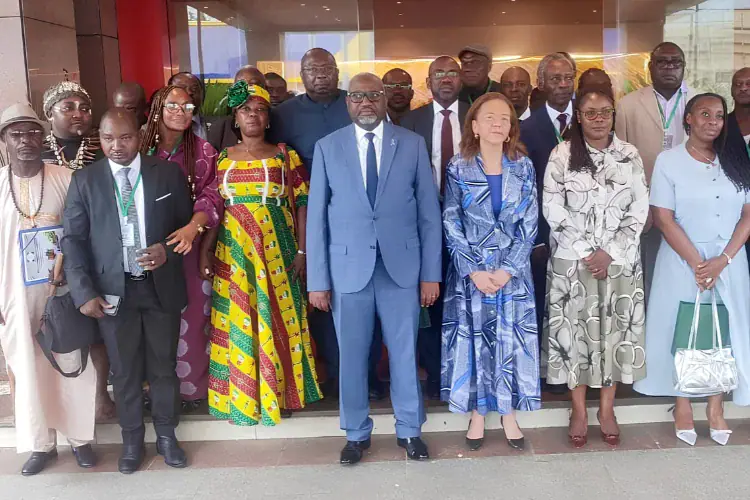
The Gabonese government has initiated a process to organize and regulate traditional medicine, a practice long operated on the fringes of the country's official healthcare system. On November 25, 2026, in Libreville, the government launched a three-day national workshop bringing together public administrations, partners, healthcare professionals, and traditional practitioners. The workshop aims to examine draft texts on the conditions for practicing traditional medicine, recognition of practitioners, and the creation of a National Council.
The workshop, opened by Health Minister Elsa Nkana Joséphine Ayo-Bivigou, seeks to establish a framework for traditional medicine that ensures patient safety, ethics, and scientific rigor. The minister emphasized that the goal is not to oppose traditional and conventional medicine but to organize their complementarity. The draft texts also cover the regulation of traditional medicine establishments and products.
Traditional practitioners have expressed their support for the regulation of their practice. Charles Rotombo, president of their association, advocates for a "formalized and legal" sector. Nestor Mouloungui, another practitioner, stresses the need for practitioner registration, training in hygiene and safety rules, and protection of ancestral knowledge.
The workshop's outcomes are expected to include an operational roadmap and a final report. The challenge now is to translate these orientations into concrete rules for better regulation of traditional medicine. The government's move is seen as a step towards integrating traditional medicine into the country's healthcare system.
The regulation of traditional medicine in Gabon is expected to improve the quality of care provided to patients. The country's healthcare system has faced challenges, including a shortage of teachers in the education sector, which could reach 5,000 posts by 2030. The government has also been dealing with other issues, such as electricity outages, which were recently postponed.
The integration of traditional medicine into Gabon's healthcare system could also have economic benefits. The sector has the potential to create jobs and stimulate local economic growth. However, the government must ensure that traditional practitioners adhere to safety and hygiene standards to protect patients.
The Gabonese government's efforts to regulate traditional medicine reflect a growing recognition of the importance of traditional practices in the country's healthcare system. The outcome of the workshop and the implementation of the new regulations will be closely watched by stakeholders, including patients, practitioners, and healthcare professionals.
Key points
- The Gabonese government has launched a workshop to regulate traditional medicine, a practice long operated on the fringes of the country's official healthcare system.