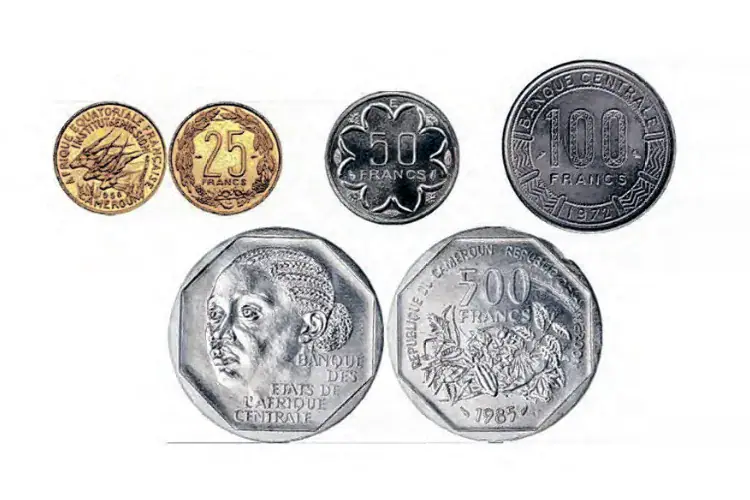
The markets in Gabon's capital city have been plagued by a common phrase: "Keep your coins, I don't want them." This has become a daily occurrence for traders and transport users since the Bank of Central African States (BEAC) announced the withdrawal of small change issued between 1958 and 1985, ranging from 1 to 500 francs. Taxi drivers and vendors are now refusing to accept these coins in exchange for services or products, causing disputes with clients.
Despite the BEAC's announcement, the refusal to accept the small change is more of a precautionary measure than a regulatory obligation. The public is not well-versed in the intricacies of banking communications and has mistaken the announcement of the reform for its immediate implementation. The calendar, however, did not indicate any urgency, with the loss of legal tender not taking effect until November 1, 2026. It is only from this date that traders will be entitled to refuse these coins for daily purchases.
The BEAC has provided a timeline for the exchange of the small change. The public has a first window from November 1, 2026, to July 31, 2027, to exchange the coins in all banks and microfinance institutions. A second phase will then take place, exclusively carried out by the BEAC, which will prolong the operation from August 1 to October 31, 2027, before the definitive withdrawal on November 1, 2027. Despite this, the general stress is based on a deep misunderstanding of the official texts.
The populations, panic-stricken, are acting as if their money has already lost all its value. However, the exchange will remain open for twelve months. This confusion has concrete effects: clients are hastily getting rid of their small change, vendors are refusing still-legal payments, and taxi drivers are demanding new banknotes or coins. R.J., one of the victims of this confusion, recounts a dispute with a taxi driver who refused her 500-franc coin.
This situation highlights the need for proximity communication that is well-mastered. For G.M., the BEAC is partly responsible for the chaos. "I think the Central Bank communicated poorly on the subject. They should have simply proceeded with the withdrawal of these coins from the market without the user being aware of it. That would have been simpler." The lack of clear communication has led to a situation where everyday purchases have become negotiations in crisis.
The situation is affecting various sectors, including gas stations, where these coins are also being refused. A.M. notes that even in gas stations, the coins are no longer accepted. The daily life of Gabon's population is being disrupted by the confusion surrounding the withdrawal of small change. The need for clear communication from the BEAC has become urgent to avoid further chaos.
The incident highlights the importance of effective communication from financial institutions to the public. The BEAC's failure to clearly convey the timeline and process for exchanging small change has led to widespread confusion and disruption. As the situation continues to unfold, it remains to be seen how the BEAC will address the issue and restore order to Gabon's markets.
Key points
- The BEAC's withdrawal of small change has caused chaos in Gabon's markets due to a misunderstanding of the timeline and process for exchanging the coins.