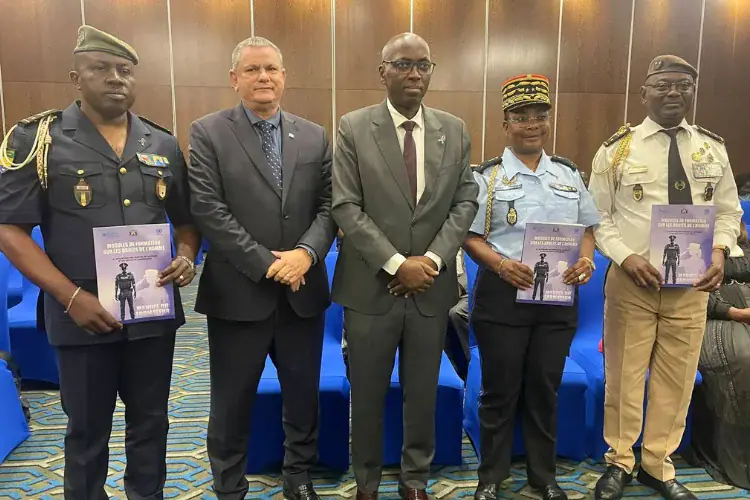
The Gabonese government has officially presented a human rights training manual for its defense and security forces. The manual was introduced on November 10, 2026, in Libreville, during a ceremony presided over by the Minister of Justice, Augustin Emane. This new tool aims to promote professional practices that respect fundamental freedoms and enhance the competencies of security agents.
The manual focuses on several key areas, including the proper use of force, prevention of torture and mistreatment, and protection of vulnerable individuals. It also emphasizes the principles of necessity and proportionality in the exercise of public authority. According to Edna-Paola Biyogou-Minko, Director General of Human Rights, the manual's implementation will help align the practices of security agents with Gabon's national and international commitments.
The United Nations has welcomed the introduction of the manual and reaffirmed its support for the Gabonese government. Dr. Xavier Crespin, representing the UN, praised the initiative and emphasized the importance of human rights training for security forces. The manual will be deployed in training schools for penitentiary security, national police, and gendarmerie from November 11 to 13, 2026.
The next step is to train instructors who will transmit these teachings to security agents in training and those already in service. The challenge now is to ensure the manual's effective application on the ground, making respect for human dignity a daily requirement. This development is part of a broader effort to promote human rights and prevent abuses in Gabon.
The manual's introduction is particularly timely, given the upcoming 16-day campaign against gender-based violence, which runs from November 25 to December 10, 2026. The UNFPA has been actively engaging with media outlets to raise awareness about their role in preventing and reporting such violence. This campaign highlights the importance of protecting fundamental freedoms and promoting a culture of respect.
The Gabonese government's efforts to enhance human rights training for its security forces have been praised by various stakeholders. The manual is seen as a crucial step towards promoting a culture of respect for human dignity and preventing abuses. Its effective implementation will be closely watched by human rights organizations and the international community.
As Gabon continues to strengthen its human rights framework, the introduction of this manual marks a significant milestone. The government faces the challenge of ensuring that the manual is widely adopted and effectively applied by security forces across the country. With the support of international organizations, Gabon aims to make progress in promoting and protecting human rights.
Key points
- The manual focuses on the proper use of force, prevention of torture, and protection of vulnerable individuals.