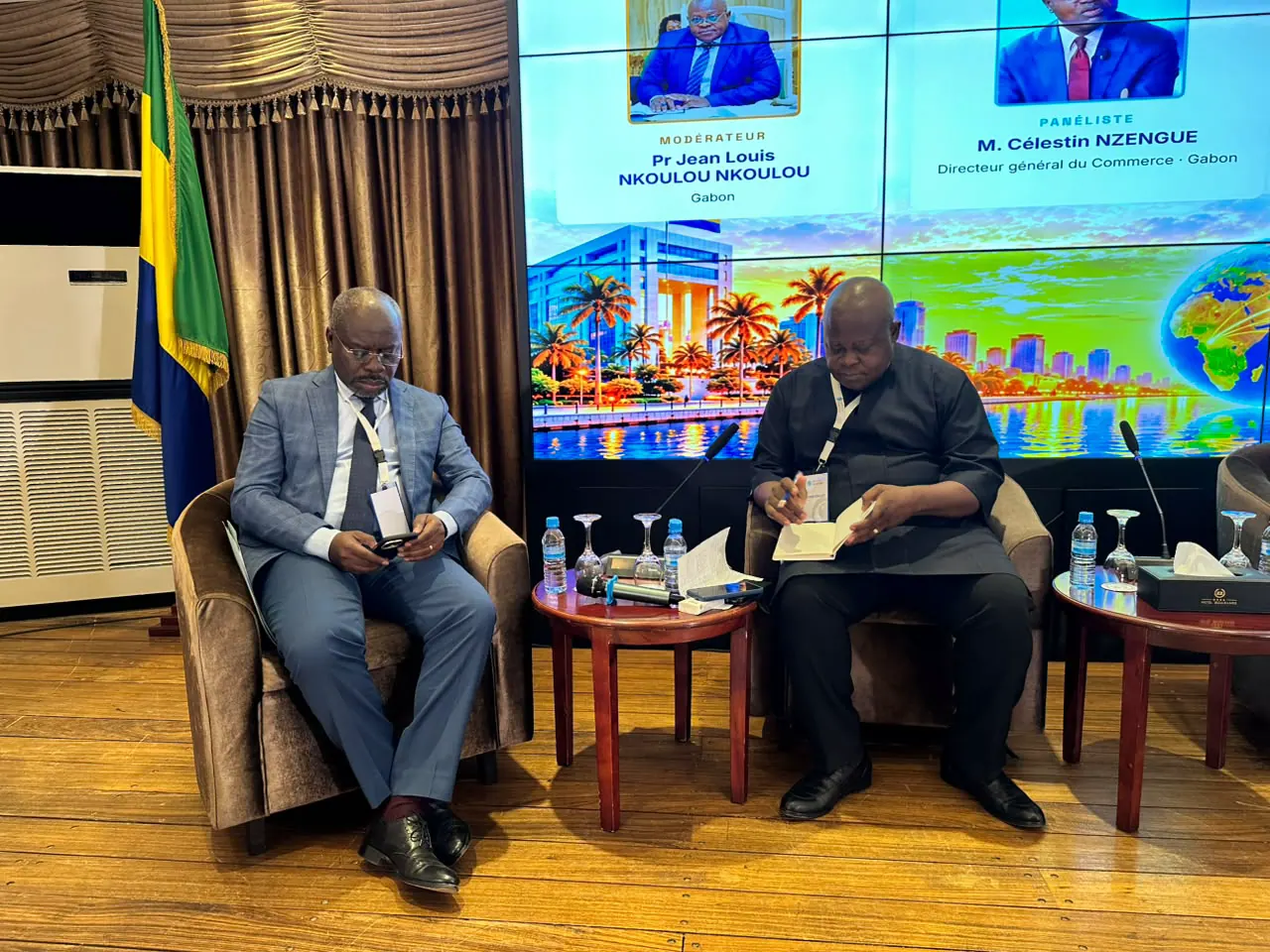
The Gabonese government has identified five major hurdles that need to be addressed in order to fully benefit from its economic partnership with China. These constraints concern the regulatory framework, productivity, energy, financing, and competitiveness of industries. According to Célestin Nzengue, Director-General of Trade, and Vulgain Andzembe Tsiegori, Commissioner General for Planning, addressing these issues is crucial to unlocking the full potential of the partnership. The officials made these remarks during a panel discussion on "African economy, industry, and trade in the face of opportunities" at the China-Africa colloquium.
The Chinese program "zero tariff" offers a significant opportunity for Gabon, provided that the country determines how this mechanism can help address four national emergencies: debt, monetary sustainability, job creation, and import substitution. Nzengue emphasized that the program can be a game-changer for Gabon, but it requires careful planning and implementation. The country's economic development strategy, the National Growth and Development Plan (PNCD) 2026-2030, aims to improve living standards and create jobs.
The PNCD, presented by Commissioner General for Planning Vulgain Andzembe Tsiegori, is built around three strategic axes, 11 areas of intervention, and 37 programs. The plan focuses on local transformation of minerals, food sovereignty, and valorization of natural capital, including the 13 national parks. The goal is to reduce the structural deficit of 500 billion FCFA by half and achieve economic growth of 8%, necessary to address the challenges posed by a debt estimated at 9,000 billion FCFA.
To achieve this growth, the country needs to create jobs and reduce poverty, with 75% of the population being young. The PNCD aims to achieve this through investments in key sectors, including infrastructure, education, and healthcare. The plan also seeks to promote private sector growth and improve the business environment.
Nzengue and Andzembe Tsiegori emphasized that addressing the five identified constraints is essential to strengthening Gabon's position in Sino-African exchanges. They called for transformative investments to improve national competitiveness and fully benefit from the strategic partnership with China. The officials also highlighted the importance of improving the business environment and promoting private sector growth.
The China-Africa colloquium, moderated by Professor Jean-Louis Nkoulou Nkoulou, brought together experts and officials to discuss opportunities and challenges in African economy, industry, and trade. The event provided a platform for participants to share experiences and best practices in promoting economic development and cooperation between China and African countries.
The Gabonese government is committed to implementing the PNCD and unlocking the full potential of its economic partnership with China. With careful planning and implementation, the country aims to achieve sustainable economic growth, create jobs, and improve living standards for its citizens. The five key areas identified by the government will be crucial to achieving these goals.
Key points
- The Gabonese government has identified five major constraints to unlocking the benefits of its economic partnership with China.
- The country's National Growth and Development Plan (PNCD) 2026-2030 aims to achieve economic growth of 8% and reduce poverty.
- Addressing the five identified constraints is essential to strengthening Gabon's position in Sino-African exchanges and fully benefiting from the strategic partnership with China.