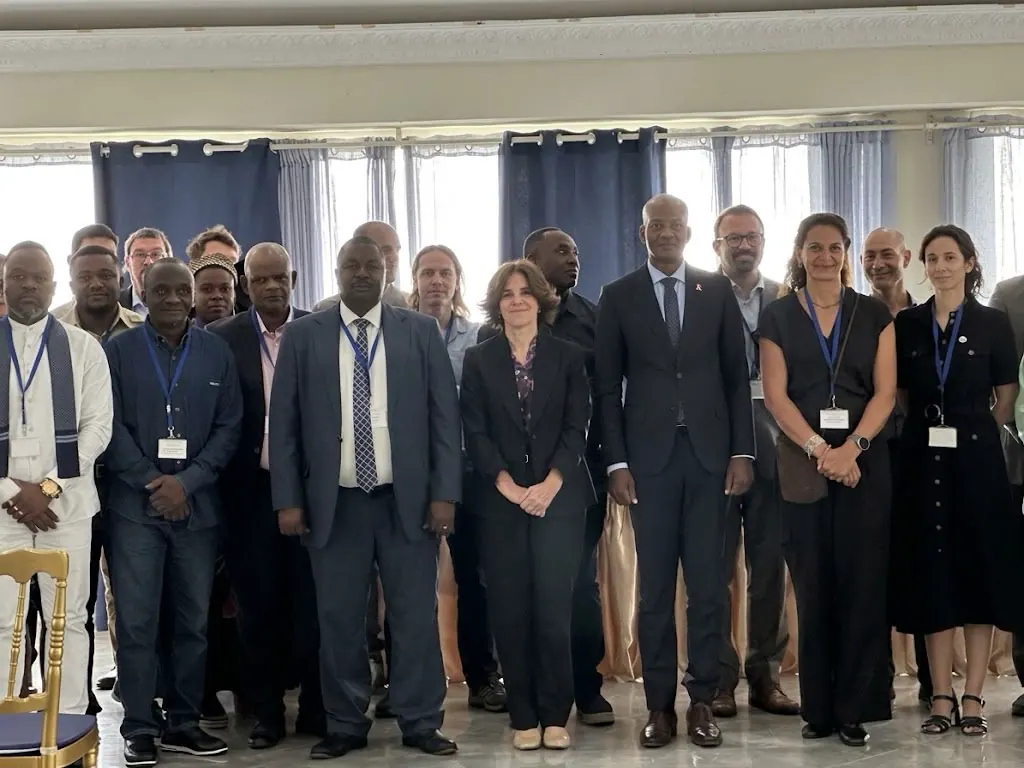
The Gabonese Minister of Water, Forests, Environment, and Climate, Maurice Ntossui Allogo, opened a subregional workshop in Libreville on October 5, 2026. The event, which runs until October 9, brings together experts to develop training content on community-led wildlife management in central Africa. The workshop is part of the Sustainable Wildlife Management (SWM) program, implemented by the Food and Agriculture Organization (FAO) with partners including the European Union, the French Development Agency (AFD), and the Centre for International Cooperation in Agricultural Research for Development (Cirad).
The SWM program, launched in 2018, aims to train approximately 300 field agents in Cameroon, Congo, Gabon, and the Democratic Republic of Congo between 2026 and 2028. These agents will support local communities in sustainable hunting practices. The current workshop focuses on capacity building and scaling up the program. It seeks to capitalize on experiences from different sites, consolidate training priorities, and develop a pedagogical framework for training modules.
The workshop features four training modules: ecology of harvested species, sustainable community hunting, social safeguards and community engagement, and wildlife rights, policies, and governance. The program plans to collaborate with centers of excellence in central Africa, governments, and other stakeholders to co-develop adapted training modules. This approach aims to ensure that training is tailored to the specific needs and contexts of each country.
Minister Ntossui Allogo emphasized the need for solid, harmonized competencies among administrations, the private sector, and civil society. He stressed that these competencies must be rooted in the realities of local territories. The workshop aims to establish a common pedagogical foundation, harmonizing practices while accounting for the unique legal, cultural, and ecological contexts of each country.
Nathalie Van Vliet, representative of the SWM program, expressed her expectations for concrete outcomes from the workshop. She called for clear, operational training modules that are adapted to local realities, along with a roadmap and specific commitments. The workshop's outcomes will inform the finalization of training modules, which will be tailored to the specificities of each country.
Following the workshop, a group of SWM program experts and trainers from training centers will finalize the modules. The next steps include the acquisition of pedagogical equipment, the launch of field training, and the online availability of the modules on a Massive Open Online Course (MOOC) platform. This will ensure that the training is accessible to a wide audience and accredited.
The SWM program is implemented in partnership with the Wildlife Conservation Society (WCS) and the European Union, with support from the French Development Agency (AFD) and the Centre for International Cooperation in Agricultural Research for Development (Cirad). The program's goal is to promote sustainable wildlife management and community-led conservation in central Africa, contributing to the region's ecological and economic development.
Key points
- The workshop aims to develop training content on community-led wildlife management in central Africa.
- The SWM program plans to train approximately 300 field agents in sustainable hunting practices between 2026 and 2028.
- The program seeks to establish a common pedagogical foundation for wildlife management, harmonizing practices across countries while accounting for local specificities.