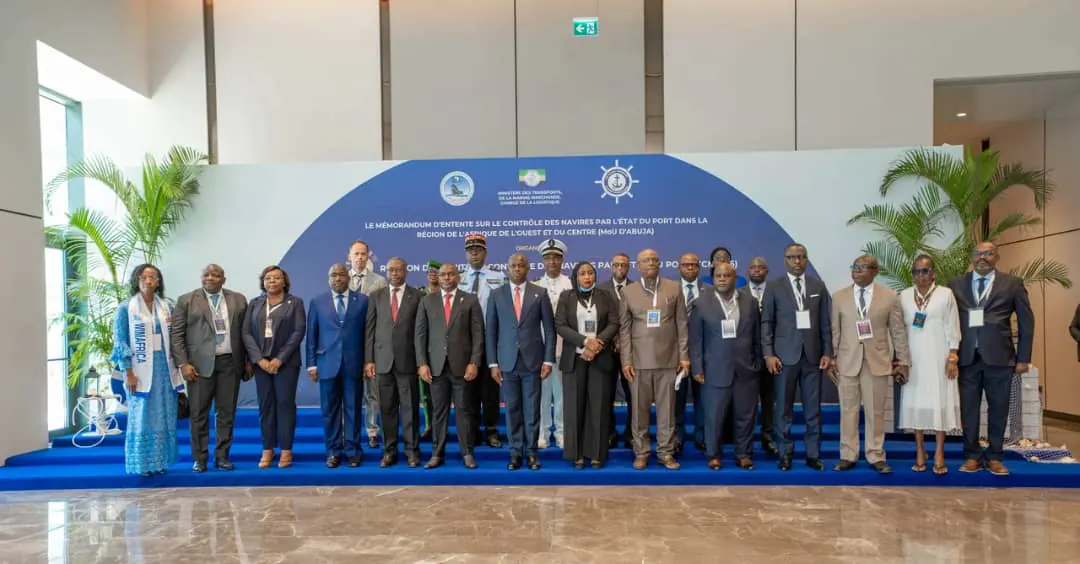
The 16th meeting of the Abuja Memorandum of Understanding (MoU) Committee on port state control opened in Libreville, Gabon, on September 21, 2026. Gabon's Minister of State for Transport, Merchant Navy, and Logistics, Ulrich Manfoumbi Manfoumbi, inaugurated the event, which aims to define the organization's strategic priorities for 2026-2030. The meeting, held at the Palais des Congrès, brings together delegations from 22 member states, representatives of international organizations, and maritime sector experts.
The meeting is under the patronage of Gabonese President Brice Clotaire Oligui Nguema and was attended by Vice-President Hermann Immongault. Its primary objective is to strengthen cooperation among member states and harmonize ship control mechanisms to improve maritime security in West and Central Africa. The minister highlighted the significance of port state control in preventing risks associated with sub-standard ships, noting that over 80% of global trade in volume is transported by sea.
The participants will review the annual report and results of the inspection campaign on ballast water management, as well as evaluate the risk-based inspection system (AMIS) and data governance mechanisms. Discussions will also focus on decarbonization, cybersecurity onboard, fleet aging, and parallel fleets. These discussions are expected to lead to recommendations that will enhance the effectiveness of controls for navigation safety, marine environment protection, and improved working and living conditions for seafarers.
The Abuja MoU, signed 27 years ago, has brought together 22 member states to implement a harmonized port state control regime. The committee's meeting is an opportunity for member states to assess progress, share experiences, and address challenges in implementing the MoU. The event also provides a platform for international organizations and experts to offer insights and support in enhancing maritime security in the region.
Maritime security is a critical concern in West and Central Africa, where the majority of trade is transported by sea. The region's strategic location and rich natural resources make it an important hub for international trade. However, the region also faces challenges related to piracy, armed robbery, and other maritime threats. The Abuja MoU Committee's meeting aims to address these challenges and promote a safer and more secure maritime environment.
The meeting's outcomes are expected to contribute to the implementation of the International Maritime Organization's (IMO) strategic objectives, including the enhancement of maritime security and the protection of the marine environment. The Abuja MoU Committee's work is also aligned with the United Nations' Sustainable Development Goals (SDGs), particularly SDG 14, which focuses on conserving and sustainably using the oceans, seas, and marine resources.
The 16th Abuja MoU Committee meeting will conclude with recommendations and a renewed commitment from member states to enhance maritime security in West and Central Africa. The meeting's success will depend on the active participation and collaboration of all stakeholders, including governments, international organizations, and industry players. The Gabonese government's hosting of the event demonstrates its commitment to regional cooperation and maritime security.
Key points
- The 16th Abuja MoU Committee meeting aims to define strategic priorities for 2026-2030 to enhance maritime security in West and Central Africa.