The government of Tanzania and the United Nations Development Programme (UNDP) have committed Sh5.2 billion to support 49 community-led environmental projects across Mainland Tanzania and Zanzibar. The projects aim to promote conservation, biodiversity protection, and climate action. This investment is part of the eighth operational phase of the Global Environment Facility (GEF) Small Grants Programme (SGP), with the grants amounting to $2 million. The programme targets to directly benefit approximately 6,000 people.
The grant agreement signing ceremony took place in Dar es Salaam on Friday, November 6, 2026. During the ceremony, Dr. Richard Muyungi, the Permanent Secretary in the Vice-President's Office (Environment and Constitutional Affairs), highlighted the government's commitment to maintaining its financial support for the programme despite a reduction in international funding. The government has retained its Sh5.2 billion contribution to ensure communities continue to benefit from the initiative.
Dr. Muyungi emphasized the value of community-owned projects, citing successful water supply initiatives supported by UNDP in the early 2000s that continued to benefit residents. He mentioned a project at Mgana Catholic Parish, where wells constructed to improve water availability for pilgrims were still supplying water more than two decades later. The programme has demonstrated that community-led projects can be sustainable when communities are involved through their organisations and the initiatives respond to their actual needs.
The eighth phase of the programme attracted over 800 applications, from which 49 organisations were selected. Dr. Muyungi urged the beneficiaries to consider themselves representatives of all applicants and demonstrate how community-led initiatives could deliver lasting results. He also called for transparency, proper use of funds, and stronger collaboration among organisations implementing similar projects to facilitate knowledge-sharing and reduce implementation costs.
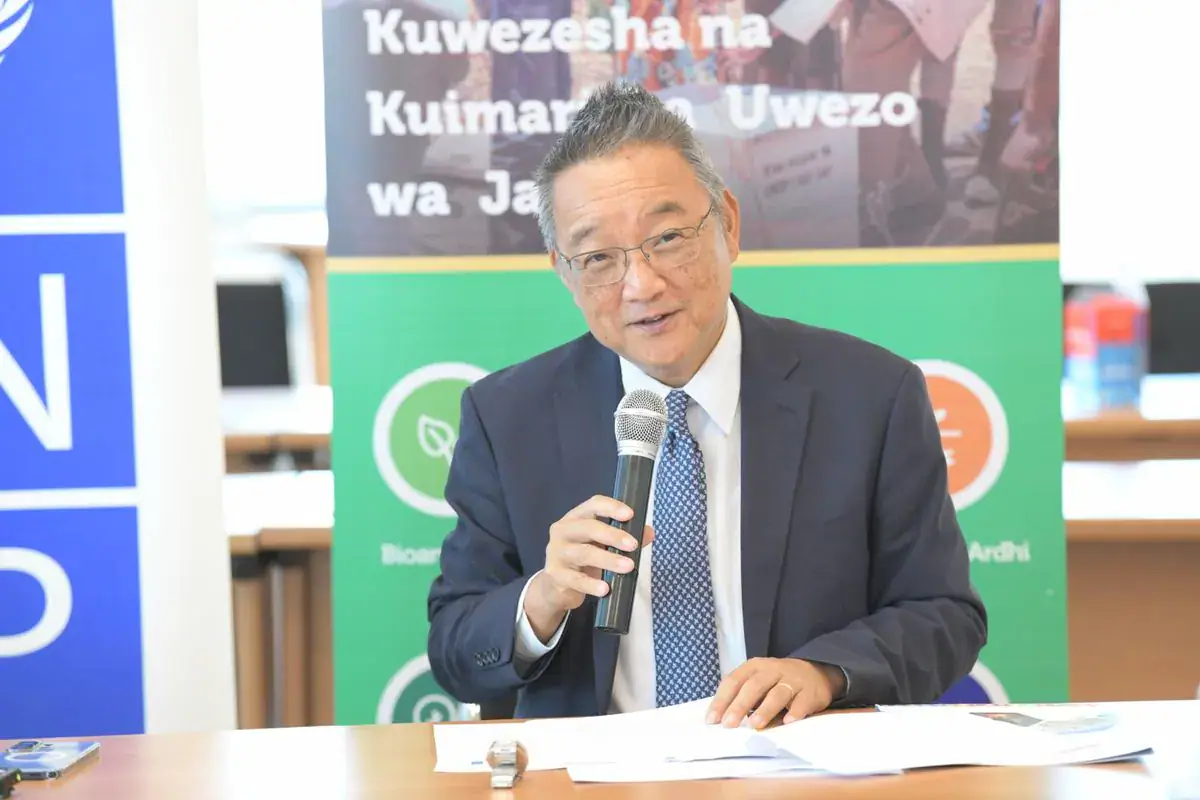
UNDP Resident Representative Shigeki Komatsubara noted that the selection of beneficiary organisations reflected their grassroots connections and ability to translate local knowledge into practical environmental solutions. He mentioned that by 2025, the programme had committed more than $13 million from GEF and other partners, supporting over 440 community-led projects across Tanzania.
Under the current country strategy, which runs until 2028, the programme prioritises the Serengeti ecosystem, Central Tanzania, particularly Dodoma, and Zanzibar's Jozani ecosystem. However, 30 percent of its resources are reserved for projects outside these areas. The programme aims to support community-led projects that can deliver lasting environmental benefits.
The beneficiaries of the programme have pledged to implement the projects with integrity, transparency, and accountability. They have also committed to ensuring that women, young people, and persons with disabilities participate meaningfully and benefit from these initiatives. Furthermore, they pledged to strengthen cooperation with government institutions, communities, and development partners to ensure the projects remain sustainable beyond the grant period.
Key points
- The programme aims to directly benefit approximately 6,000 people.
- The government has maintained its Sh5.2 billion contribution to the programme despite a reduction in international funding.
- The programme has supported over 440 community-led projects across Tanzania, committing more than $13 million by 2025.