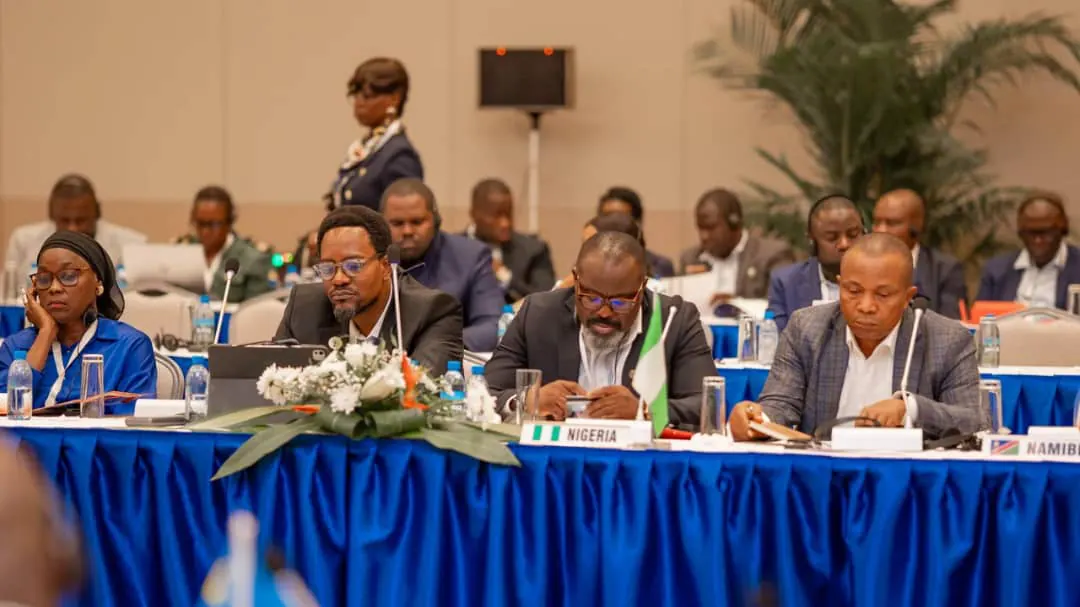
The 16th meeting of the Abuja Memorandum Committee opened in Libreville, Gabon, on September 21, 2026, with a focus on enhancing maritime security and combating substandard ships. The committee emphasized the importance of controlling foreign vessels by the port state as a preventive measure against maritime risks. This move aims to ensure compliance with international safety, security, and labor standards. The meeting was attended by various stakeholders, including government officials and representatives from international organizations.
The Abuja Memorandum, signed on October 22, 1999, under the auspices of the International Maritime Organization (IMO), is a mutual cooperation mechanism that enables states to inspect foreign ships in their ports. The memorandum facilitates the verification of compliance with international safety, security, and labor standards. Gabon's Minister of State, Minister of Transport, Merchant Navy, and Logistics, Ulrich Manfoumbi Manfoumbi, highlighted the significance of this mechanism in preventing maritime risks and eliminating substandard ships.
According to Frédérique Avomo Angue Oliveira, Director-General of the Merchant Navy, the Abuja Memorandum is based on the conviction that no single state can guarantee navigation safety alone. The cooperation relies on the AMIS information system, which enables the sharing of inspection data to prevent non-compliant vessels from evading controls. This system also strengthens the competencies of control officers. The memorandum has received support from several regional and international organizations, including the IMO, ILO, and Lloyd's Register Foundation.
The Abuja Memorandum Committee's work is crucial in addressing emerging maritime challenges, such as substandard vessels, sanctions, hidden ownership, parallel fleets, cyber threats, and decarbonization requirements. The committee's objective is to consolidate a reactive regional system to eliminate substandard ships from the region's waters. The meeting's participants will discuss ways to enhance cooperation and information sharing to achieve this goal.
The International Maritime Organization (IMO) and other partner organizations have been actively involved in supporting the Abuja Memorandum. These organizations provide technical assistance and capacity-building programs to help states implement the memorandum's provisions. The cooperation aims to promote a harmonized approach to maritime safety and security in the region.
The 16th Abuja Memorandum Committee meeting provides a platform for stakeholders to share best practices and discuss challenges in implementing the memorandum. The meeting's outcomes are expected to contribute to the development of a more effective regional system for combating substandard ships. The committee's work is essential in ensuring the safety of navigation and protecting the marine environment.
The elimination of substandard ships from the region's waters requires sustained efforts from all stakeholders. The Abuja Memorandum Committee's work will continue to play a vital role in promoting maritime safety and security in the region. The meeting's conclusions will be instrumental in shaping the future of maritime cooperation in the region.
Key points
- The Abuja Memorandum Committee's work is crucial in addressing emerging maritime challenges, such as substandard vessels, sanctions, hidden ownership, parallel fleets, cyber threats, and decarbonization requirements.