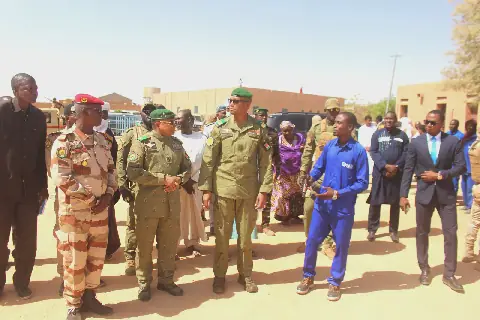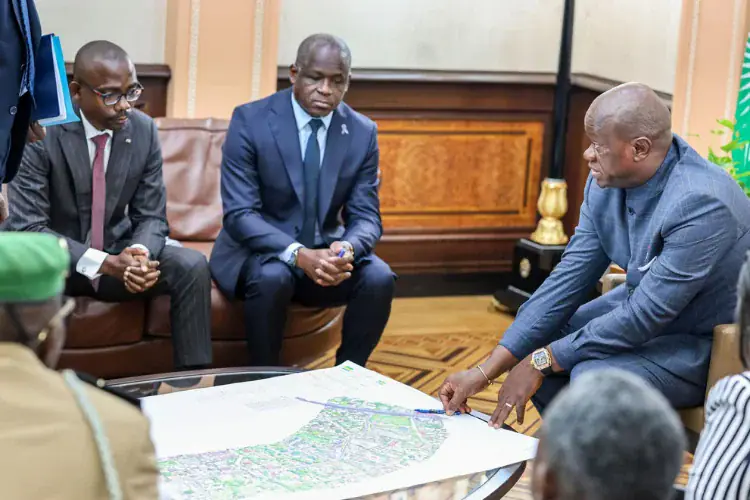
The government of Gabon has announced plans to provide compensation to families affected by the ongoing demolition of informal settlements in Diba-Diba, Okala, and Lac-Bleu, in the capital city of Libreville. According to Minister of Housing Mays Mouissi, the government has allocated 4 billion CFA francs for this purpose. The demolitions are part of a larger effort to modernize Libreville and improve living conditions for its residents. The minister emphasized that the operations are necessary to address issues of traffic congestion, access to hospitals, and emergency response.
The demolitions, which began on November 4, are aimed at addressing long-standing issues of flooding and insecurity in the affected areas. Minister Mouissi explained that the government's goal is to create a new urban order, which may be painful for some residents but is necessary for the country's development. He stressed that the construction of new infrastructure is essential to support the growth of Libreville. The minister's comments come after President Brice Clotaire Oligui Nguema announced the additional funding for affected families.
However, not all affected families will be eligible for compensation. According to Minister Mouissi, those who have voluntarily settled on roads that previously existed and obstructed them will not receive compensation or government support. In contrast, residents living along former roads that will be upgraded to two-lane highways may be eligible for assistance. This distinction has raised concerns about potential disputes and the need for transparency in the compensation process.
The government faces a significant challenge in implementing the compensation plan and avoiding further controversy. Past experiences, such as the Plaine-Orety demolitions, have shown that displacement operations can lead to disputes over land ownership and compensation. To mitigate this risk, the government will need to demonstrate transparency and fairness in its dealings with affected residents.
President Oligui Nguema has emphasized that the modernization of Libreville must be done in a way that takes into account the needs and concerns of its residents. He stated that "a city does not modernize against those who live in it; it modernizes with them." The government will need to balance the need for urban development with the need to protect the rights and interests of affected communities.
The compensation plan is part of a broader effort to address the challenges of urbanization in Libreville. The city is facing significant development pressures, including issues of housing, transportation, and infrastructure. The government's response to these challenges will have a significant impact on the lives of Libreville's residents and the future of the city.
The success of the compensation plan will depend on the government's ability to engage with affected communities and address their concerns. This will require a high degree of transparency, accountability, and fairness in the implementation of the plan. Ultimately, the goal is to create a more sustainable and equitable urban environment for the residents of Libreville.
Key points
- The Gabon government has allocated 4 billion CFA francs to compensate families affected by demolitions in Diba-Diba, Okala, and Lac-Bleu.
- Not all affected families will be eligible for compensation, with those who obstructed roads not receiving government support.
- The government faces a significant challenge in implementing the compensation plan and avoiding further controversy.