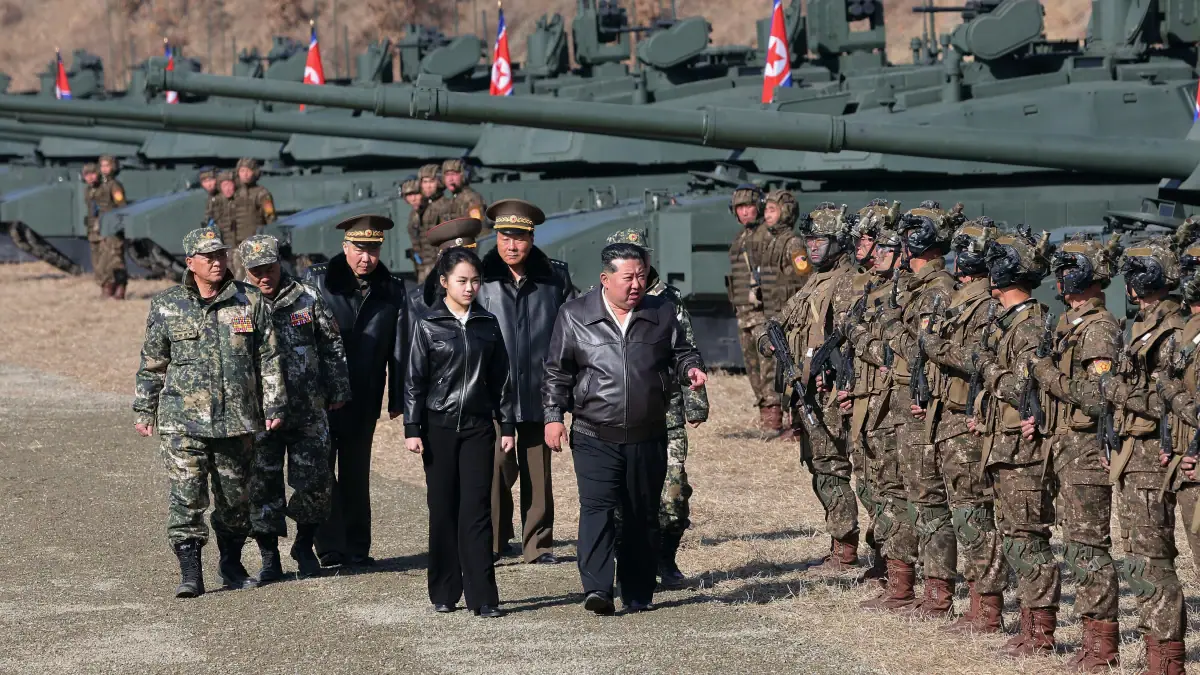
Kim Yumi, a 32-year-old North Korean defector, felt frustrated watching state TV show leader Kim Jong Un with his young daughter. She saw it as a clear message that North Korea was preparing for a hereditary transfer of power to Kim's daughter. Kim Yumi defected to South Korea with her family, citing her desire to give her children freedom from a fourth-generation dictatorship. Her experience reflects the widespread discontent among North Koreans with the country's authoritarian dynasty.
North Korea's dynastic rule, established in 1948, has been marked by a lack of public resistance during previous successions. The country's next leader will face significant challenges, including governing an impoverished, nuclear-armed nation with limited political freedom. Kim Jong Un's repeated public appearances with his daughter, Kim Ju Ae, have led to speculation about her potential succession. The Associated Press spoke with nearly a dozen defectors who still have contacts in North Korea or witnessed the country's previous power successions.
Most defectors believe Kim Ju Ae is being groomed as Kim Jong Un's heir. Eight of the 11 defectors interviewed by the AP shared this view, citing the protocols reserved for a successor that she receives from senior North Korean officials. Tae Yongho, a former minister at North Korea's Embassy in London, noted that the treatment of Kim Ju Ae is similar to that provided to Kim Jong Un when he accompanied his father as his heir.
Doubts remain about a woman becoming North Korea's leader, due to the country's deeply patriarchal culture. Some defectors, including Kim Jeong-Ah, a former North Korean army officer, expressed skepticism about Kim Ju Ae's potential leadership. However, others, such as Lee Si-young, a defector who heads the Seoul-based Free North Korea Radio station, believe that the Kim family's status as "gods reigning over humans" makes gender less relevant.
Kim Jong Un's push for hereditary power transfer faces little resistance at home. South Korea's spy agency recently assessed that Kim is extremely obese and at high risk of cardiovascular disease, but shows no other signs of poor health. Ahn Chan-il, a defector and scholar, noted that North Koreans will passively accept a hereditary succession as something they should go along with.
The institutionalization of a hereditary power succession system in North Korea has contributed to the lack of resistance. Oh Gyeong-seob, an analyst at Seoul's Korea Institute for National Unification, compared it to presidential elections in other systems. Choi Song-juk, a defector who fled North Korea in 2015, said she had been brainwashed into accepting the North's two earlier power successions without complaint.
The international community is watching North Korea's leadership transition closely. The country's nuclear-armed status and limited political freedom make the succession a crucial issue. As Kim Ju Ae continues to make public appearances with her father, speculation about her potential succession is likely to continue.
Key points
- Kim Jong Un's daughter Kim Ju Ae is being groomed as his likely heir, according to many North Korean defectors.
- The country's deeply patriarchal culture may pose challenges to a woman becoming its leader.
- North Koreans are likely to passively accept a hereditary succession due to the country's institutionalized system.