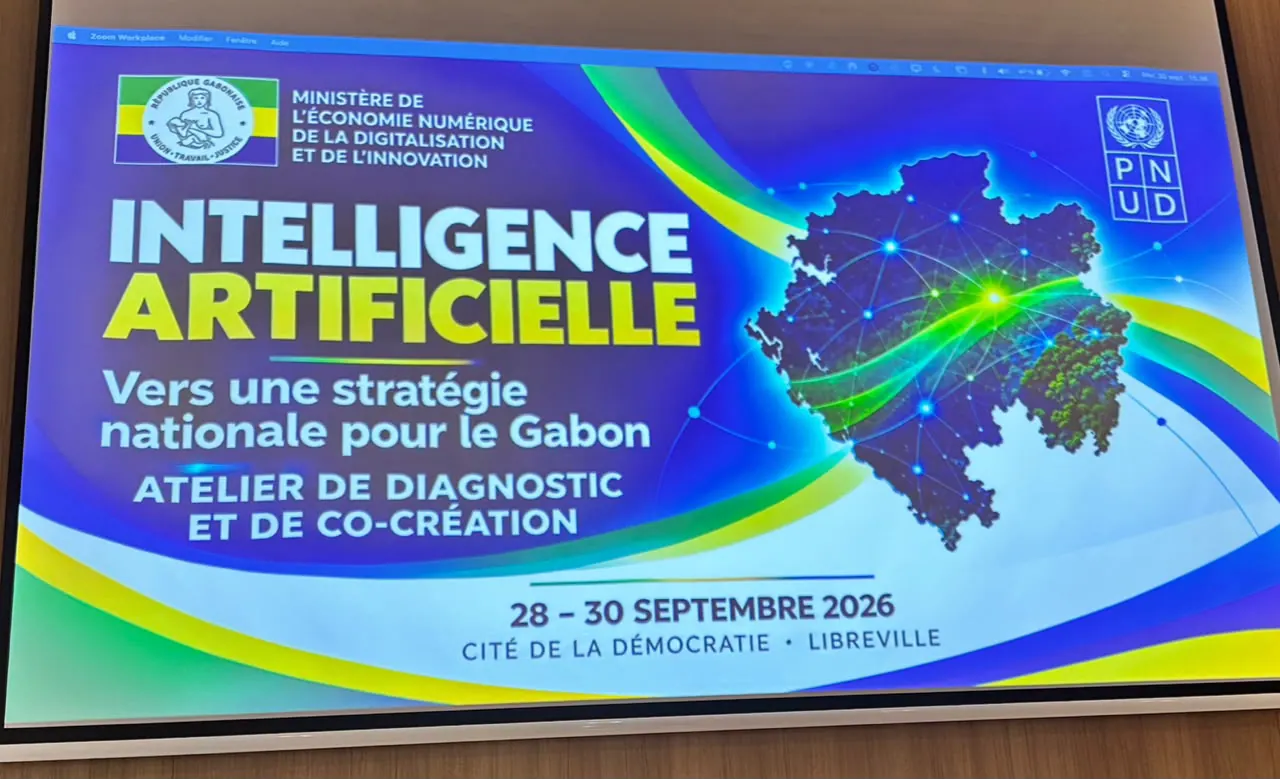
The Gabonese government has taken a significant step towards integrating artificial intelligence (AI) into its national strategy. On September 30, 2026, six working groups presented 22 challenges and 36 recommendations to Mark-Alexandre Doumba, the Minister of Digital Economy, Digitalization, and Innovation. These recommendations aim to shape the country's future National Artificial Intelligence Strategy, aligning with the vision of "responsible AI serving Gabon's sovereignty, innovation, and development by 2030."
The working groups, comprising participants from the public and private sectors, as well as national incubators, focused on six key areas. These areas included foundation and data governance, talent and skills, digital infrastructure and computing capacity, trustworthy and responsible AI, innovation and economic development, and public sector transformation. By addressing these areas, the experts aimed to create a comprehensive strategy for AI adoption in Gabon.
A key aspect of the recommendations is the emphasis on responsible AI. The experts suggested establishing a regulatory framework that defines ethics, designates a regulatory body, and outlines the roles of each stakeholder. Furthermore, they recommended reducing dependence on foreign solutions, hosting and classifying data in Gabon, and promoting national research to develop effective AI solutions tailored to local needs.
The availability of data emerged as a significant challenge, with the experts stressing the need to open up state data to administrations, startups, and the ecosystem. They also highlighted the importance of strengthening interoperability, secure sharing, and valorizing data as an economic resource. Additionally, the financing of innovation was identified as a challenge, with the state urged to facilitate access to banks, the FGIS, the BCEG, venture capital, incubators, and accelerators.
The experts also focused on digital infrastructure, recommending improvements to existing infrastructure rather than starting from scratch. They emphasized the need for a network of experts and a pedagogical and competency framework to guide the revision of school programs. Moreover, they suggested creating an incentive framework, including a dedicated AI zone and technopolises that bring together schools, incubators, accelerators, and investors.
To ensure the strategy's adoption by the population, the experts proposed awareness campaigns, hackathons, and public events. The Ministry of Digital Economy and the United Nations Development Programme (UNDP) will compile the recommendations into two to five pillars in a workshop report. The groups will then specify strategic objectives, actions, priority sectors, and timelines.
The UNDP and the Ministry will draft the strategy project, including an action plan, financing, governance, and monitoring and evaluation indicators. The document will be validated at a workshop, presented to the government, and then promulgated.
Key points
- The Gabonese government aims to adopt a national AI strategy by 2030.
- The strategy will focus on responsible AI, innovation, and economic development.
- The UNDP will support the development of the strategy.