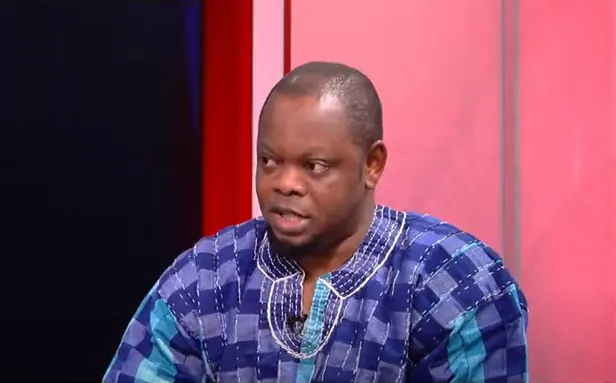
A dispute between Ghana's Economic and Organised Crime Office (EOCO) and a sitting Member of Parliament, Nana Agyei Baffour Awuah, has escalated. Deputy Attorney-General Dr. Justice Srem-Sai publicly accused the lawmaker of deliberately avoiding an investigation into economic crimes. On October 1, Dr. Srem-Sai appeared on Joy FM's Super Morning Show, stating that Mr. Awuah had been invited by EOCO to respond to questions but chose not to, despite having no obstacles to appearing.
According to Dr. Srem-Sai, Mr. Awuah's conduct was not an inability to attend but a calculated stance. After evaluating a week's worth of explanations from Mr. Awuah against the facts of the case, it was clear the lawmaker had simply refused to honour the invitation. Dr. Srem-Sai described the refusal as a 'deliberate and principled position' rather than a genuine obstruction. This contradicts Mr. Awuah's account that he had visited EOCO's offices several times since receiving the invitation but was never arrested.
A point of contention is why EOCO did not detain Mr. Awuah during his visits to its premises if investigators genuinely wanted to question him. Dr. Srem-Sai dismissed this as a bad-faith argument, explaining that Mr. Awuah had gone to EOCO's offices to represent clients as a lawyer. Arresting him mid-representation would have given him a stronger claim of being targeted for doing his professional work.
The accusation follows weeks of back-and-forth between EOCO and Mr. Awuah. On September 23, EOCO issued a statement addressing an attempted arrest of Mr. Awuah in February 2026, defending its handling of the matter as consistent with constitutional rules and parliamentary privilege. On the same day, Mr. Awuah released his own statement, setting out five points concerning a law firm's role in EOCO's investigation and insisting he had been cooperating throughout the process.
The standoff raises questions about whether parliamentary privilege, which shields MPs from certain legal processes, is being invoked to slow down or frustrate an active economic crimes probe. For ordinary Ghanaians, the case tests how far investigative bodies like EOCO can go in compelling a sitting lawmaker to answer questions without running into immunity protections designed to let MPs perform their parliamentary role unhindered.
The dispute remains unresolved, with no fixed date for Mr. Awuah to appear before EOCO or for any further legal steps to be taken against him. The Deputy Attorney-General's latest remarks signal that the government views the MP's conduct as a deliberate attempt to avoid scrutiny rather than a procedural misunderstanding.
The case has sparked debate about the balance between parliamentary privilege and the need for accountability in Ghana's governance. Key stakeholders will be watching closely as the situation unfolds, with implications for the country's anti-corruption efforts and the role of MPs in the country's democratic process.
Key points
- Deputy AG accuses MP Baffour Awuah of deliberately dodging EOCO probe
- Dispute raises questions about parliamentary privilege and accountability
- Case has implications for Ghana's anti-corruption efforts and MP accountability