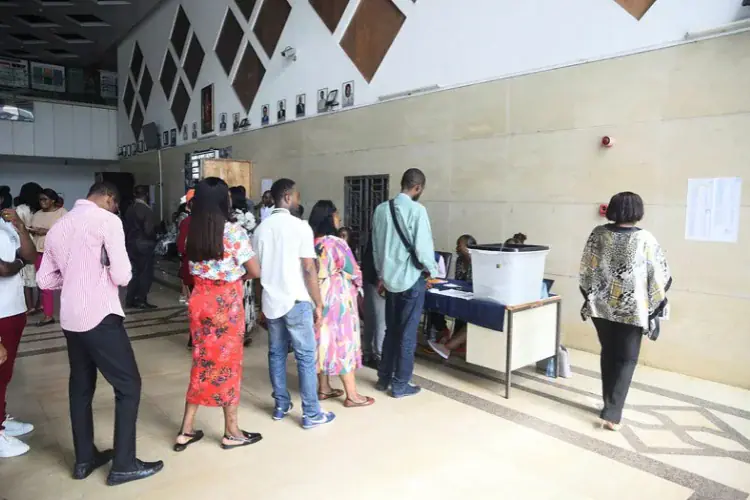
The Gabonese government has officially announced the representatives of various sectors for tripartite social dialogue. Following professional elections in April and May 2026, and an administrative investigation, the official list was published through decree n° 0043/MTPEDS, signed by Minister of Labor, Employment, and Social Dialogue Adrien Nguema Mba. This move aims to structure social dialogue and modernize relationships between the state, workers, and employers.
The decree recognizes 16 organizations, representing sectors such as Education, Health, Energy, Mines, Transportation, Industry, Buildings, Public Works, and Agro-industry. These organizations will now officially represent their respective sectors in discussions with the government. The move is expected to bring order to the labor landscape and prevent unnecessary conflicts. The government had set a goal of increasing participation in the elections, with a turnout of 67% achieved during the April and May polls.
The official recognition of these organizations is a step towards establishing the National Council for Social Dialogue. This council will serve as the sole public and official platform for discussing disputes and differences between employees and employers. The council's establishment is seen as crucial in promoting harmonious labor relations and addressing potential conflicts in a structured manner.
The recent developments follow the conclusion of the fifth edition of the Resources for Equality between Women and Men in Education (RELIEFH) project. The project aimed to promote girls' education and was marked by a caravane de sensibilisation that traveled across the country. The success of this project demonstrates the government's commitment to addressing social issues and promoting equality.
The social dialogue process in Gabon has been ongoing, with a focus on modernizing labor relations and promoting cooperation between stakeholders. The government has been working to create a more structured framework for labor discussions, which will help prevent conflicts and promote economic growth. The recognition of official representatives is a key step in this process.
The move has been welcomed by stakeholders, who see it as a positive step towards promoting social dialogue and cooperation. The government's efforts to promote labor peace and stability are seen as crucial in attracting investment and promoting economic development. The recognition of official representatives will also help to prevent unauthorized entities from claiming to represent workers or employers.
The next steps in the social dialogue process will involve the establishment of the National Council for Social Dialogue and the continuation of discussions between stakeholders. The government is expected to continue working with recognized organizations to promote labor peace and stability. The success of this process will depend on the continued cooperation and commitment of all stakeholders involved.
Key points
- The Gabonese government has officially recognized 16 organizations to represent various sectors in tripartite social dialogue.
- The recognition of these organizations aims to promote structured social dialogue and modernize labor relations.
- The National Council for Social Dialogue will serve as the sole public platform for discussing labor disputes and differences.