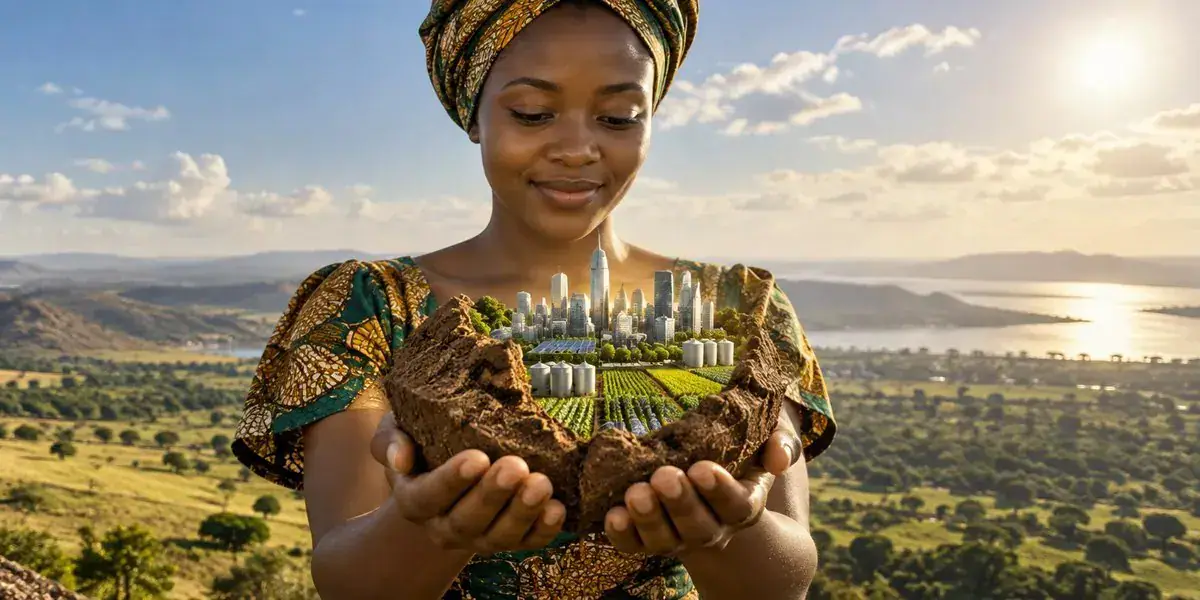
Africa's future depends on attracting investment, developing its resources, and inspiring a generation that recognises the continent's value and its own ability to create prosperity. For decades, Africa's development narrative has focused on what the continent needs from the outside world. However, an equally important question deserves greater attention: how can Africa realise its economic potential without first nurturing a generation that genuinely believes in its own continent? This question is crucial in understanding the continent's development challenges.
Promoting African identity is essential, but it should not be nationalism in its traditional sense. Rather, Africa needs a renewed sense of continental pride, economic ambition, and shared responsibility for its future. The objective is to inspire young Africans to believe in their continent's potential and capabilities. By doing so, they can create opportunities and build successful lives and businesses at home. This approach can help change the perception that leaving the continent is synonymous with success.
Across much of Africa, international success is frequently associated with opportunities abroad. Studying in Europe, building a career in North America, or establishing a business in the Gulf can represent important personal achievements. However, the challenge emerges when leaving the continent becomes synonymous with success, while remaining is perceived as accepting fewer opportunities. This perception can be changed by educating young Africans about the continent's economic potential and achievements.
Africa's natural resources provide a compelling starting point for economic development, but they also illustrate the continent's fundamental development challenge. African economies supply essential inputs to global industries, but too much of the value generated by these resources is captured elsewhere. The real opportunity lies in transforming natural wealth into productive capacity, technological expertise, competitive businesses, and lasting employment. Mozambique's natural gas industry is a prime example of this opportunity.
Mozambique's natural gas industry should represent more than export revenues; its long-term contribution will also depend on developing local suppliers, training engineers, strengthening institutions, and creating economic opportunities beyond the energy sector. Similarly, Africa's mineral wealth should support the gradual development of processing industries, manufacturing capabilities, and technological innovation. The ultimate measure of Africa's natural wealth should be how much opportunity it creates for future generations.
Education is a crucial investment in Africa's economic development, but it should not exclusively focus on traditional academic subjects. African students should learn about the continent's entrepreneurs, scientists, industrial achievements, and emerging technologies alongside its political history. By doing so, they can understand the continent's economic potential and develop the skills needed to build successful businesses and create jobs.
By inspiring a generation of young Africans to believe in their continent's potential, Africa can create a brighter future for itself. This can be achieved by promoting continental pride, economic ambition, and shared responsibility for its future. The continent's natural resources, education, and economic development are all crucial components of this effort. As FurtherAfrica emphasises, Africa's future depends on nurturing a generation that genuinely believes in its own continent.
Key points
- Africa needs a renewed sense of continental pride, economic ambition, and shared responsibility for its future.
- The continent's natural resources should be transformed into productive capacity, technological expertise, competitive businesses, and lasting employment.
- Education should focus on the continent's entrepreneurs, scientists, industrial achievements, and emerging technologies to develop the skills needed to build successful businesses and create jobs.
Reporting sources
- Why young Africans must believe in Africa’s opportunity · FurtherAfrica