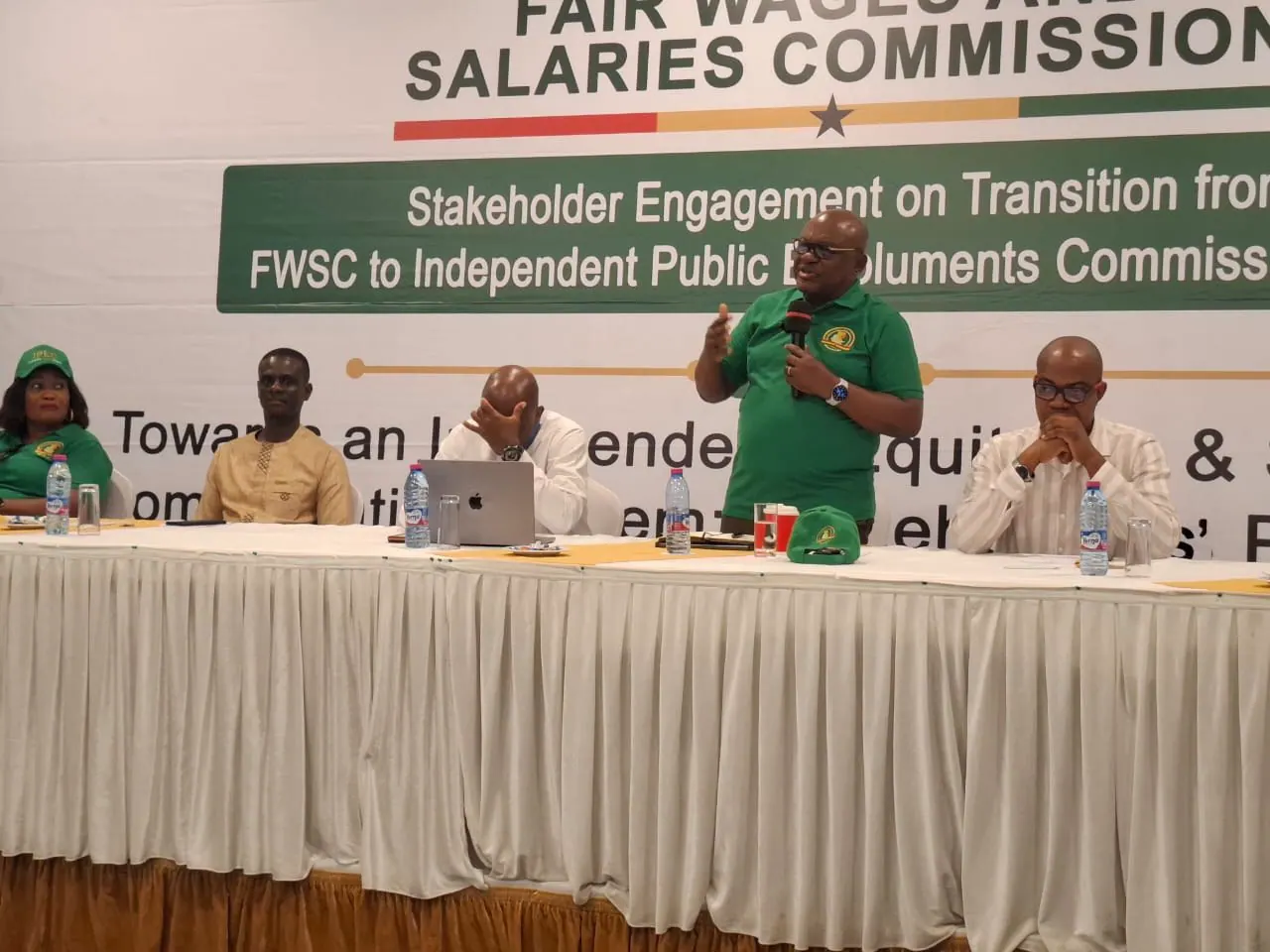
The Fair Wages and Salaries Commission (FWSC) has addressed concerns from state-owned enterprises (SOEs) in Ghana, including GWCL and Ghana Post, regarding the implementation of a new pay regulator, the Independent Public Emoluments Commission (IPEC). Dr. George Smith-Graham, CEO of FWSC, assured SOEs that IPEC will consider their financial position, size, complexity, productivity, market conditions, and capacity when determining pay. This clarification aimed to alleviate concerns that IPEC would impose a uniform salary structure on all SOEs.
The reassurance was necessary due to concerns raised by SOEs about the potential impact of IPEC on their pay structures. Some enterprises worried that IPEC could hurt their pay, particularly those that generate their own revenue and do not rely on government subvention. Smith-Graham emphasized that commercially-run enterprises and institutions funded through the general public service budget will be treated differently under the new framework. FWSC already uses audited financial statements and a financial model to gauge whether an enterprise can afford improved pay without compromising its operations.
An example of a successful transition to a new pay structure was cited by Smith-Graham, who mentioned the Gaming Commission. After weaning off the central salary structure and government subvention, the Gaming Commission improved both its revenue generation and workers' remuneration. This example demonstrates that IPEC's approach can lead to better outcomes for SOEs. The FWSC's current approach will be maintained, with some adjustments to ensure equity and transparency in pay determination.
Smith-Graham also addressed concerns about the role of SOE boards in the new framework. He assured them that IPEC will not strip boards of their governance responsibilities, particularly in proposing remuneration for chief executives, senior managers, and other staff. Boards will continue to develop and submit remuneration proposals to IPEC, with the change lying in the governance framework guiding how those proposals are reviewed.
The proposed IPEC Bill aims to replace the Fair Wages and Salaries Commission Act, 2007, establishing IPEC as a constitutional body with a new national framework for setting public sector pay. The bill is part of ongoing consultations ahead of FWSC's transition into IPEC. Smith-Graham clarified that IPEC is not being set up solely to address pay for Article 71 officeholders, a category of public officials including the President, ministers, and MPs.
Minister for Labour, Employment and Job Creation, Emmanuel Kwadwo Agyekum, urged SOEs to continue contributing to the consultation process to ensure the eventual framework suits Ghana's specific circumstances. He emphasized that the government is not trying to take away boards' powers but wants a reform that can withstand future scrutiny. The outcome of this reform affects workers and management across dozens of state enterprises.
The implementation of IPEC will have a significant impact on workers and management across Ghana's state enterprises, including utilities such as the Ghana Water Company Limited and Ghana Post. The transition from FWSC to IPEC is ongoing, with no date given for when the IPEC Bill will be passed or when the transition will be completed. Officials have described the recent session as part of continuing consultations rather than a finalised plan.
Key points
- IPEC will consider the size, revenue, and market realities of each SOE when determining pay.
- The new framework aims to ensure equity and transparency in pay determination.
- IPEC will work alongside the State Interests and Governance Authority (SIGA) to provide specialised oversight of compensation.