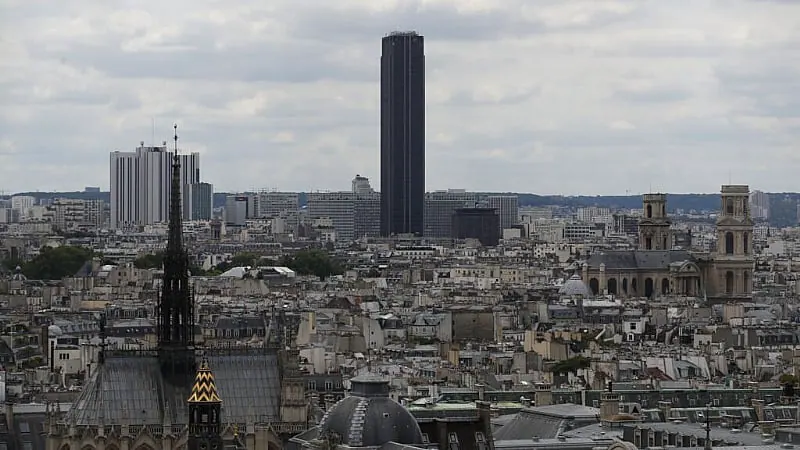
The future of Paris's iconic Montparnasse Tower remains uncertain after a planned revamp was rejected by its co-owners. The proposed renovation aimed to transform the 1970s tower into a lighter, greener skyscraper, but it was met with significant opposition. More than 76 percent of stakeholders voted against signing contracts to remove asbestos, strip out the interior, and partly dismantle the facade. This decision effectively kills the redevelopment project, as its planning permission expires at the end of November.
The Montparnasse Tower has been a contentious presence on the Paris skyline since its construction began in 1969 and its completion in 1973. The 210-metre tower was built as part of a larger plan to redevelop the area around the old Montparnasse railway station. However, the project was met with criticism from the outset, with many Parisians opposing the introduction of a high-rise building into the city's historic centre. The tower's monolithic design and dark facade were seen as out of place among the city's Haussmannian buildings, church domes, and the Eiffel Tower.
The proposed renovation had aimed to address some of the criticisms levelled at the tower. The plan, unveiled in 2017, would have retained the existing structure but replaced the dark facade with lighter glass, while adding planted terraces and opening the lower levels more directly to the surrounding neighbourhood. A hotel was planned for the upper floors, with an agricultural greenhouse on the roof. The architects, Nouvelle AOM, said they wanted to create a tower that was "clear, open to the outside and rooted in the life of the neighbourhood".
However, the project was ultimately derailed by disputes over rising costs, financing, and the redistribution of floor space. The projected cost had risen from just over €300 million to around €800 million, leading to the withdrawal of support from several major shareholders, including the LFPI investment group, MGEN, Axa insurance company, and real-estate investment fund Icade. The building has already been emptied in preparation for the work, but it now appears that the renovation will not proceed as planned.
The Montparnasse Tower has a long history of controversy. Extensive asbestos was discovered in the building, leading to a long and complex removal programme. The tower also became emblematic of a wider backlash against high-rise development in central Paris, leading to planning rules that largely restricted new buildings to a maximum of 37 metres. The tower's problems were not only aesthetic, but also practical, with issues surrounding its environmental performance and impact on the surrounding neighbourhood.
A newly formed owners' committee is expected to look at a less ambitious renovation and eventually submit a fresh planning application. Stakeholders MGEN have called for "a faster project that we are capable of carrying out". There are also plans for another vote on clearance and asbestos-removal work. Some owners are already pushing to salvage part of the project, with Frédéric Lemos, Xavier Niel, and two other co-owners stating that they are not prepared to "bury the Montparnasse Tower".
The redevelopment was linked to a wider overhaul of the Montparnasse complex, including plans for the ageing shopping centre at its base. Philippe Goujon, mayor of Paris's 15th arrondissement, has called for a compromise, warning against abandoning a project that has been in development for over 10 years. The future of the Montparnasse Tower remains uncertain, but it is clear that any new plans will need to address the concerns of stakeholders and the local community.
Key points
- The planned revamp of the Montparnasse Tower has collapsed due to opposition from stakeholders.
- The tower has a long history of controversy, including disputes over its design and environmental performance.
- A newly formed owners' committee is expected to look at a less ambitious renovation and submit a fresh planning application.