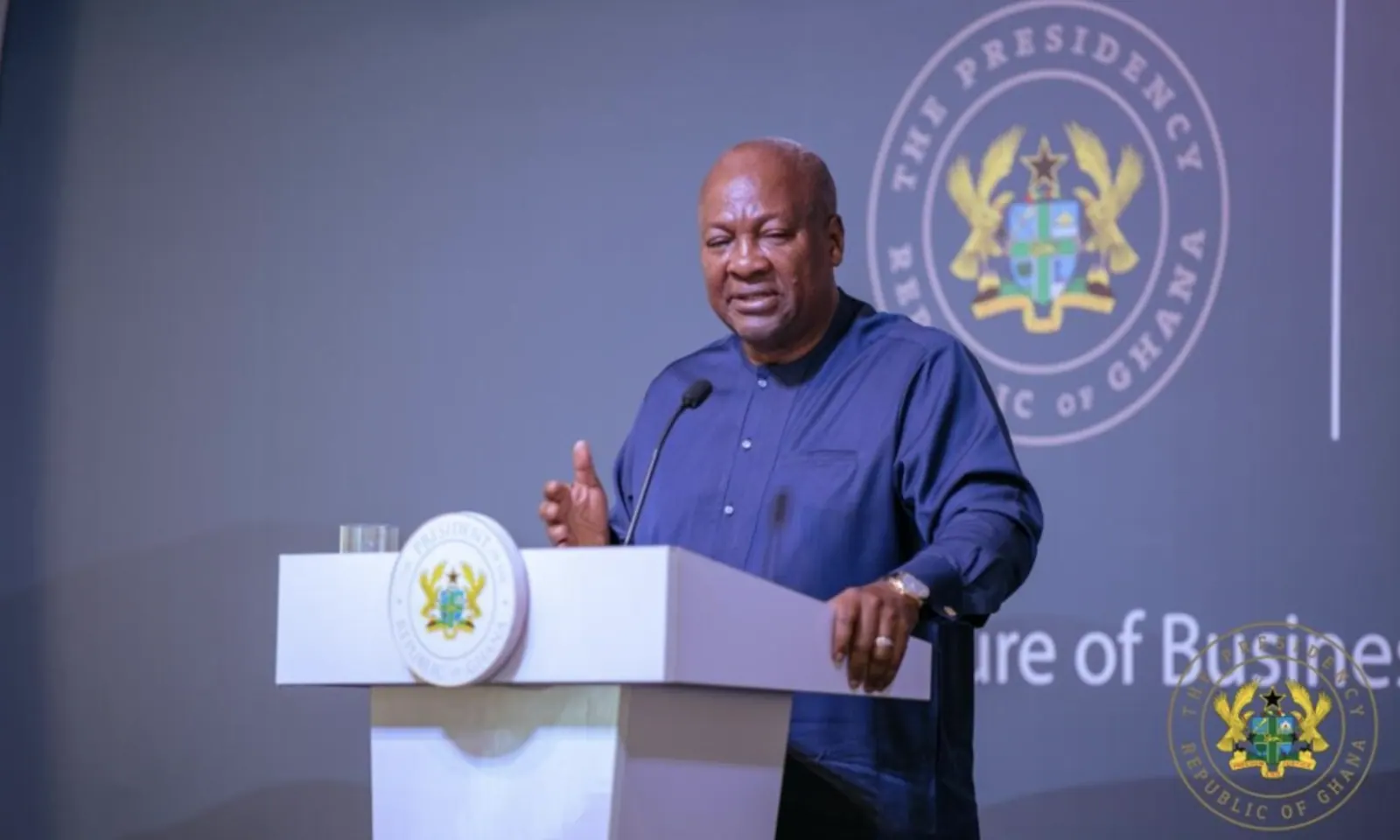
Former Ghanaian President John Mahama delivered a speech at a high-level side event on the return and restitution of cultural properties and heritage on the sidelines of the 81st UN General Assembly. He emphasized the significance of repatriating Africa's cultural heritage, currently housed in Western museums and institutions. Mahama highlighted the emotional and psychological impact of this loss on the continent, stressing that these artifacts are not mere relics but living traditions and active institutions that belong to communities. He cited the return of the sacred Mpomponsuo sword to Ghana in 2024 as a positive step towards healing and justice.
Mahama noted that Ghana has experienced firsthand the pain of losing its cultural heritage. In 1874, British forces destroyed Kumasi, looting the palace of the Asantehene, and over a century later, some of these artifacts were returned. He also referenced other instances of cultural looting across Africa, including the removal of human remains, such as the head of King Badu Bonsu II of Ahanta, which was taken by Dutch colonial authorities in 1838 and returned to Ghana in 2009. Mahama stressed that human remains are not collectibles but ancestors, and their restitution is a fundamental test of human dignity.
The former President highlighted a significant development in the quest for repatriation. On March 25, the UN General Assembly adopted Resolution 80/250, which declared the trafficking of enslaved Africans as a grave crime against humanity and called for the prompt return of cultural properties, sacred artifacts, and national archives. Mahama described this resolution as an indispensable moment of global truth but emphasized that truth is only the starting point, and action is required to implement these commitments.
Mahama outlined the NEXT STEPS to transform the vision of repatriation into a global reality. First, he acknowledged progress made by some countries, such as the Netherlands, which has cataloged 2,000 Ghanaian artifacts for return, and Germany, which has engaged with Ghana's Kpando traditional area. However, he stressed that moral justice cannot rely on piecemeal generosity and called for a permanent, institutionalized global system to facilitate the return of cultural heritage.
The second NEXT STEP involves rejecting the narrative that restitution must wait until African nations build modern facilities to secure their heritage. Mahama argued that capacity constraints should not be used as a justification for continued possession and that Africa is already building the necessary infrastructure. He cited the African Union's Agenda 2063 project, which aims to establish the Great African Museum, and the AU-EU Museum Partnership as examples of collaboration.
Mahama's third point emphasized that cultural heritage is not a luxury item to be addressed after economic development but an engine of development. He called on multilateral development banks, international financial institutions, and private sector partners to invest in Africa's cultural infrastructure, including regional archives, conservation laboratories, and professional training for African curators and historians.
Ultimately, Mahama's speech was about the future and the children who will inherit the world. He stressed that young Africans must learn about their ancestors' brilliance and creativity, rather than just their subjugation. Mahama concluded by citing an old Ghanaian proverb, which reminds us that past trauma must not sentence us to permanent estrangement and that we have the power to write how we heal from historical injustices.
Key points
- Former Ghanaian President John Mahama calls for the unconditional return of Africa's cultural properties and human remains from Western museums and institutions.
- The UN General Assembly adopted Resolution 80/250, declaring the trafficking of enslaved Africans as a grave crime against humanity and calling for the prompt return of cultural properties.
- Mahama outlines the NEXT STEPS to transform the vision of repatriation into a global reality, including building a permanent, institutionalized global system and investing in Africa's cultural infrastructure.