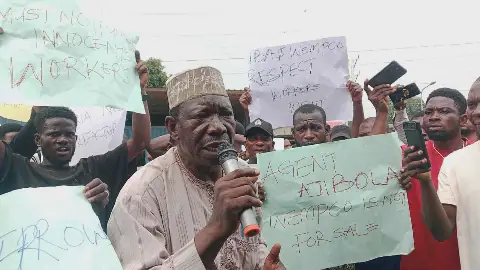
A group of Fulani citizens, Concerned Fulani Citizens, has taken a bold step to correct the wrong impression that Fulani people are behind the age-long ethno-religious clashes in Nigeria. At a joint meeting, the Board of Trustees and top echelon of management officially launched the group with a mandate to ensure peaceful coexistence among the various tribes in Nigeria. The group expressed concern about the deepening ethno-religious hate, especially the stigmatization of Fulani people in the country.
The Concerned Fulani Citizens group posited that Nigeria was created as a country for people of diverse ethnic, religious, and cultural backgrounds who had become deeply interconnected through marriage, commerce, religion, and other social relationships. They called on Nigerian authorities to recognize Fulani citizens as equal stakeholders in Nigeria, entitled to the same rights and privileges as Nigerians of other ethnic groups. The group emphasized the need for Nigerians to embrace peaceful coexistence and reject efforts to portray any ethnic group as an enemy of the country.
The Fulani group urged other tribes in Nigeria to extend the olive branch of peace, reconciliation, and goodwill to one another. They stated that a country continually cursed by its own citizens could hardly prosper. The group rejected the stigmatization of Fulani people as criminals, saying they are proudly Fulani people, proud of their heritage, socio-economic, and cultural background, which is rooted in cattle rearing and pastoralism. They noted that pastoralism is a legitimate agricultural activity that deserves government support.
According to the group, they are not a liability and should be seen and treated as co-contributors to national economic development. The Fulanis should be free to live, work, and conduct lawful businesses anywhere in Nigeria in accordance with the constitution. The organization challenged the argument that Fulani people could not be regarded as Nigerians because Fulani communities exist across several African countries. They pointed to the existence of Yoruba communities outside Nigeria, noting that the international spread of an ethnic group does not deprive its members of Nigerian nationality.
The group cited historical accounts concerning Yoruba links with Brazil, Barbados, and other parts of the Caribbean. They referred to comments attributed to the Olu of Ilaro and Paramount Ruler of Yewaland, Oba Kehinde Olugbenle, about historical links between Ilaro people and communities in Brazil and Barbados. The Fulani group made reference to an interview granted by the late Akran of Badagry, De Wheno Aholu Menu-Toyi I, discussing the movement of people through Badagry during the trans-Atlantic slave trade.
The Concerned Fulani Citizens group recalled that Nigeria was created as a single political entity on January 1, 1914, following the amalgamation of the Northern and Southern Protectorates and the Colony of Lagos under British colonial rule. They noted that Nigeria subsequently moved towards self-government, with Sir James Wilson Robertson as Governor-General in 1955 and Sir Abubakar Tafawa Balewa becoming Chief Minister in 1957. The group stated that under Robertson, Sir Abubakar Tafawa Balewa was appointed Chief Minister, a position that carried the designation of Prime Minister.
The group noted that Nigeria became an independent sovereign country on October 1, 1960, although it remained a constitutional monarchy within the Commonwealth. They stated that James Robertson continued as Governor-General until November 16, 1960, when Dr. Nnamdi Azikiwe became the first indigenous Governor-General. The group emphasized the need for Nigerians to understand how the modern Nigerian state emerged and reduce ethnic misconceptions through the restoration of Nigerian history as a major component of education.
Key points
- The Fulani group calls for the recognition of Fulani citizens as equal stakeholders in Nigeria.
- The group rejects the stigmatization of Fulani people as criminals.
- The Concerned Fulani Citizens group advocates for the restoration of Nigerian history in education to promote understanding and reduce ethnic misconceptions.