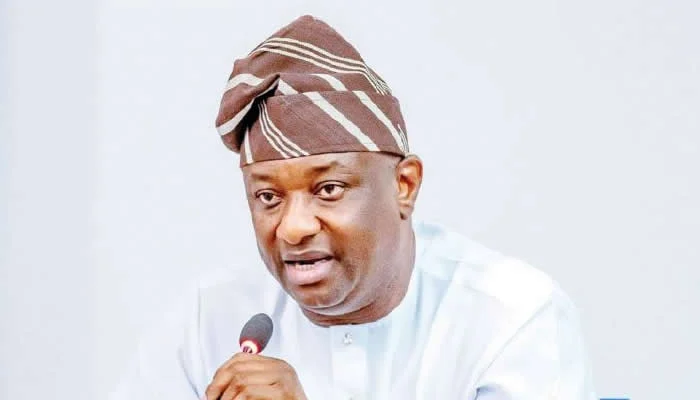
Nigeria's Minister of Aviation and Aerospace Development, Festus Keyamo, has stated that the removal of fuel subsidy has enabled President Bola Tinubu's administration to increase investment in critical aviation infrastructure. Keyamo revealed that about $500m has been raised for the reconstruction of the Lagos airport and other need-specific aviation infrastructure within two years. He made this statement at the 67th anniversary of Aero Contractors in Lagos.
According to Keyamo, the funds used for infrastructural developments were not raised through borrowing but were made possible by improvements in the country's liquidity and foreign reserves. He mentioned that the country's foreign reserves have risen from $3bn to $56bn, making it an attractive destination for investors. This increase in foreign reserves has enabled the government to invest in critical infrastructure without relying on borrowing.
Keyamo's remarks come amid debate over the economic consequences of the removal of the fuel subsidy, particularly its impact on household incomes and the rising cost of food, transportation, and other essential goods. Critics have questioned the relevance of stronger foreign reserves to Nigerians facing economic hardship. However, Keyamo argued that macroeconomic stability is crucial to attracting foreign investment required to create jobs and develop infrastructure.
The minister stressed that the focus should be on how Nigeria can position itself to attract investors capable of bringing capital, infrastructure, and employment opportunities into the country. He questioned the rationale behind agitation for the suspension of the subsidy removal, stating that it is essential to create an environment that attracts investors. Keyamo emphasized that jobs cannot be created simply through government pronouncements but are linked to investment and infrastructure development.
The Lagos airport project is part of a broader effort by the Tinubu administration to upgrade Nigeria's aviation infrastructure and position the sector to support economic growth. Keyamo revealed that the government has approved the return of the China Civil Engineering Construction Corporation to the Abuja airport project for the construction of the long-delayed second runway at the Nnamdi Azikiwe International Airport.
The Abuja runway project has been stalled for years due to disagreements over its cost and funding. Keyamo recalled the controversy surrounding the project when its estimated cost was about N45bn, saying the proposed expenditure had faced resistance at the time. He noted that 15 years later, the project now costs nearly ₦500bn. Keyamo insisted that the link between investment and employment is attracting capital, developing infrastructure, and creating an environment in which investors have confidence.
The Managing Director of Aero Contractors emphasized that the airline industry must be placed at the centre of Nigeria's economic development agenda, stressing that aviation remains a critical enabler of trade, tourism, employment, and investment. He maintained that the progress recorded under the current administration's Renewed Hope agenda in other sectors should be matched by a clear and strategic focus on aviation.
Key points
- The removal of fuel subsidy has increased investment in critical aviation infrastructure in Nigeria.
- The country's foreign reserves have risen from $3bn to $56bn, making it an attractive destination for investors.
- The government has approved the return of the China Civil Engineering Construction Corporation to the Abuja airport project for the construction of the long-delayed second runway.