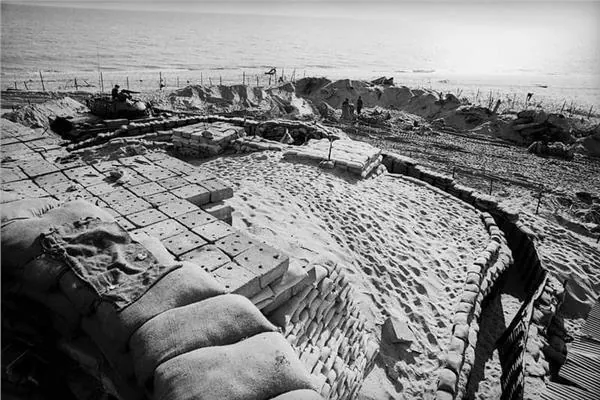
The Bar-Lev Line, a defensive system established by Israel after the 1967 war, was designed to secure the eastern bank of the Suez Canal and prevent Egyptian forces from crossing. The line was a complex network of sand walls, ditches, and fortified positions, stretching 170 kilometers along the canal. It included 22 fortified positions, 36 strong points, and numerous bunkers and shelters. The line was intended to be a bulwark against Egyptian attacks, but it ultimately proved vulnerable to innovative tactics employed by the Egyptian military.
The idea for the Bar-Lev Line was conceived by Israeli General Chaim Bar-Lev, who proposed its construction to secure Israel's gains in the 1967 war. The line was built at a cost of $5 billion and was considered one of the most impressive fortifications in the world at the time. It featured advanced technology, including radar surveillance and communication systems, as well as a network of pipes that could pump flammable materials into the canal to prevent enemy ships from passing. Despite its formidable appearance, the line had significant weaknesses that were exploited by the Egyptian military.
Israeli leaders, including Defense Minister Moshe Dayan, were confident in the line's ability to withstand any Egyptian attack. Dayan stated that the line was "a wall of steel" that could not be breached, and that any attempt to cross the canal would result in the annihilation of Egyptian forces. However, Egyptian military planners were determined to find a way to overcome the line and launched a series of operations to test its defenses. They discovered that the line's weaknesses lay in its design and construction, particularly in its vulnerability to water-based attacks.
The Egyptian military, led by General Baki Zaki Yousri, developed an innovative plan to breach the line using water pumps. The pumps, which were typically used for irrigation, were adapted to erode the sand walls of the line, creating breaches that could be exploited by Egyptian troops. On October 6, 1973, Egyptian forces launched a surprise attack on the line, using artillery, air power, and infantry to overwhelm Israeli defenses. As the attack progressed, Egyptian engineers used the water pumps to create breaches in the sand walls, allowing troops and armor to cross the canal.
The breach of the Bar-Lev Line was a significant turning point in the 1973 Arab-Israeli War. Egyptian forces poured across the canal, overrunning Israeli positions and pushing deep into the Sinai Peninsula. The Israeli military, caught off guard by the speed and ferocity of the Egyptian attack, struggled to respond effectively. Despite their initial confidence in the line's defenses, Israeli leaders were forced to confront the reality of their vulnerability.
The Bar-Lev Line's failure was attributed to a combination of factors, including the innovative tactics employed by the Egyptian military and the line's design flaws. The line's reliance on advanced technology and fortifications had created a sense of complacency among Israeli leaders, who underestimated the determination and resourcefulness of their Egyptian opponents. The breach of the line marked a significant shift in the balance of power in the region, as Egyptian forces demonstrated their ability to overcome even the most formidable defensive systems.
The legacy of the Bar-Lev Line serves as a reminder of the importance of adaptability and innovation in military planning. The Egyptian military's use of water pumps to breach the line has been studied by military historians and strategists around the world, and its impact on the 1973 war continues to be felt today. The line's failure also highlighted the importance of understanding the strengths and weaknesses of defensive systems, as well as the need for military planners to anticipate and prepare for unexpected challenges.
Key points
- The Bar-Lev Line was breached by Egyptian forces using innovative tactics and exploiting its design flaws.
- The line's failure marked a significant turning point in the 1973 Arab-Israeli War, as Egyptian forces gained the initiative and pushed deep into the Sinai Peninsula.
- The legacy of the Bar-Lev Line continues to influence military planning and strategy, highlighting the importance of adaptability, innovation, and understanding the strengths and weaknesses of defensive systems.