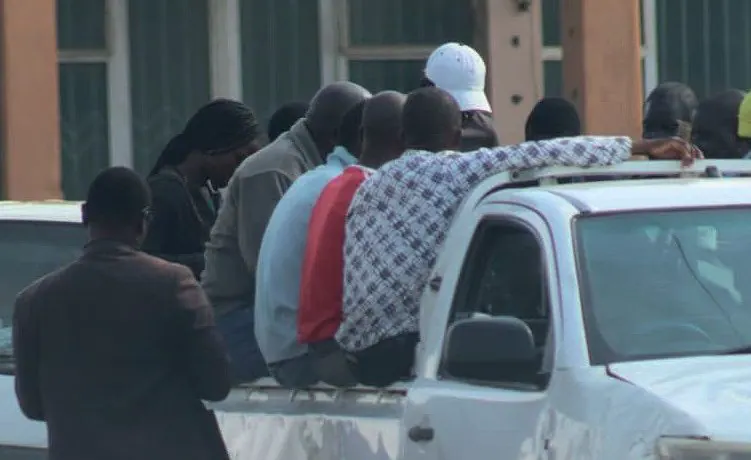
A severe fuel shortage in Malawi has led to a substantial increase in bus fares across the country. Commuters are now paying higher prices to travel, with some routes experiencing fare hikes of up to 100%. For example, a trip from Area 25 to Lilongwe's Old Town now costs K6,000, up from K4,000. Similarly, fares from Chinsapo to Lilongwe Bus Depot have increased to K2,000 from K1,000.
The fuel shortage has affected various regions, with bus fares from Lumbadzi to Mponela in Dowa rising to K11,000 from K6,000. In Blantyre, minibus conductors are now charging K4,000 from Chirimba Township to Limbe, up from K2,500. The increased fares are having a significant impact on commuters, particularly those who rely on public transportation for their daily activities. Many are being forced to dig deeper into their pockets to afford the higher fares.
The fuel shortage has also affected motorcycle taxi operators, who are struggling to find petrol. Jafali Binawuli, a motorcycle taxi operator from Chirimba Township, said he sometimes spends the whole day looking for petrol. He cannot afford to buy fuel on the black market, where it is selling for up to K20,000 per litre. This has resulted in reduced services and higher fares for passengers.
According to Coaxley Kamange, secretary general of the Minibus Owners Association of Malawi, the fuel shortage has forced operators to hike fares. He attributed the unstable bus fares to the shortage of both petrol and diesel. Kamange noted that minibus operators spend more time searching for fuel and, once they get it, they want to recover the cost, leading to higher fares.
The Passenger Welfare Association of Malawi president, Don Napuwa, said some passengers are opting to walk because they cannot afford the exorbitant fares. He urged the government to solve the problem, warning that if not addressed, the country's economic recovery gains will be reversed. The association is calling for a resolution to the fuel shortage crisis.
The National Oil Company of Malawi (Nocma) is seeking to address the fuel shortage by rethinking how it secures fuel. The company is facing a worsening foreign-exchange shortage, which is affecting its ability to import fuel. Nocma has suggested alternative payment terms, currencies, transport routes, and financing arrangements to keep supplies flowing.
Nocma is inviting suppliers to propose alternative payment arrangements that could reduce immediate pressure on scarce United States dollars. The company is seeking 440,000 metric tonnes of refined petroleum products, automotive gas oil, and motor gasoline through a competitive tender covering the ports of Beira and Nacala in Mozambique and Dar es Salaam in Tanzania.
Key points
- The fuel shortage in Malawi has led to a significant increase in bus fares, affecting commuters and the economy.
- The Minibus Owners Association of Malawi attributes the unstable bus fares to the shortage of both petrol and diesel.
- Nocma is seeking alternative payment arrangements to address the fuel shortage and keep supplies flowing.