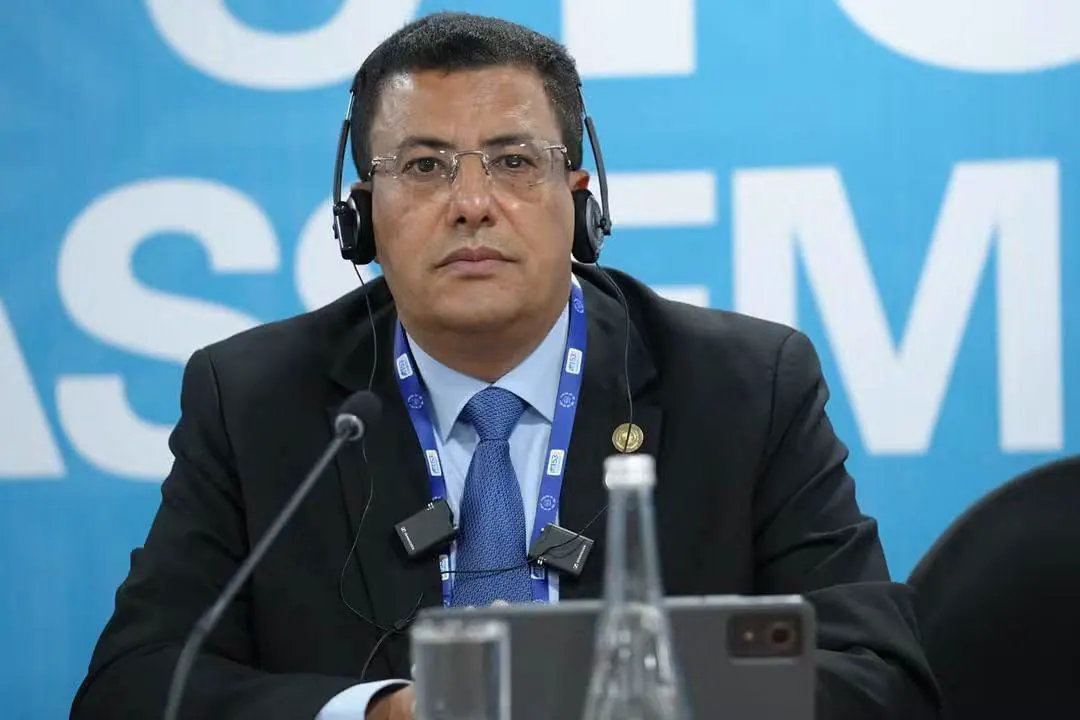
On October 6, 2026, Dr. Fateh Boutbig, President of the African Parliament, addressed the International Parliamentary Union (IPU) assembly, urging parliamentarians to bolster legislation, funding, and oversight to protect public health and support evidence-based health tax reforms across Africa. He delivered his opening remarks alongside Dr. Tedros Adhanom Ghebreyesus, Director-General of the World Health Organization (WHO), at a workshop titled "Parliamentary Leadership on Health Taxes for a Healthier and More Prosperous Future: Country Experiences and Lessons Learned." The event took place at the International Conference Centre in Arusha, on the sidelines of the 153rd IPU assembly, which ran from October 5 to 9, 2026.
The workshop, organized in collaboration between the WHO and the IPU, brought together parliamentarians and health experts to discuss how taxes on tobacco, alcohol, and sugar-sweetened beverages can help reduce harmful consumption, increase domestic revenue for health systems, and support universal health coverage and broader development priorities. Dr. Boutbig commended the partnership between the WHO and the IPU, stating that it has helped parliaments translate global health commitments into national actions. He emphasized that decisions made in parliaments today can save lives, alleviate the burden on families, and strengthen health systems for the future.
Citing WHO data, Dr. Boutbig highlighted that non-communicable diseases (NCDs) caused at least 43 million deaths in 2021, including 18 million deaths among people under 70 years old. He stressed the urgent need for investment in prevention, increased domestic resources, and protection of vulnerable populations in Africa. Dr. Boutbig also referenced the WHO's initiative "3 by 35," which aims to increase the real prices of tobacco, alcohol, and sugar-sweetened beverages by at least 50% by 2035 through health taxes.
Dr. Boutbig outlined four priorities for parliamentary action: adopting data-driven and evidence-based reforms; increasing budgets for prevention, primary healthcare, and access to medicines; monitoring the implementation of reforms and revenue collection; and engaging citizens in the goals and impacts of reforms. He emphasized the importance of considering national contexts and the impact on low-income families, while protecting public decision-making from conflicts of interest.
The workshop also featured a parliamentary dialogue with representatives from Tanzania, Poland, Malaysia, and Mauritania, including Dr. Fadima Habib, former Deputy President of the African Parliament and current Deputy Chair of the African Parliament's Health Committee. The discussions focused on national experiences, challenges, and parliamentary oversight responsibilities after adopting legislation.
Dr. Boutbig called for enhanced cooperation among national parliaments, strengthened capacities of health and finance committees, and support from the WHO and the IPU. He proposed a follow-up process to identify parliamentary needs, facilitate technical assistance, and encourage coordination among relevant sectors.
In conclusion, Dr. Boutbig stated that parliamentarians have a responsibility to translate knowledge into legislation, commitments into financing, and decisions into tangible outcomes for citizens. He emphasized that protecting health is an investment in human capital and Africa's future.
Key points
- Dr. Fateh Boutbig urges parliamentarians to enhance legislation, funding, and oversight to support evidence-based health tax reforms across Africa.
- The WHO and IPU are collaborating to support parliaments in translating global health commitments into national actions.
- Non-communicable diseases caused at least 43 million deaths in 2021, with 18 million deaths among people under 70 years old.