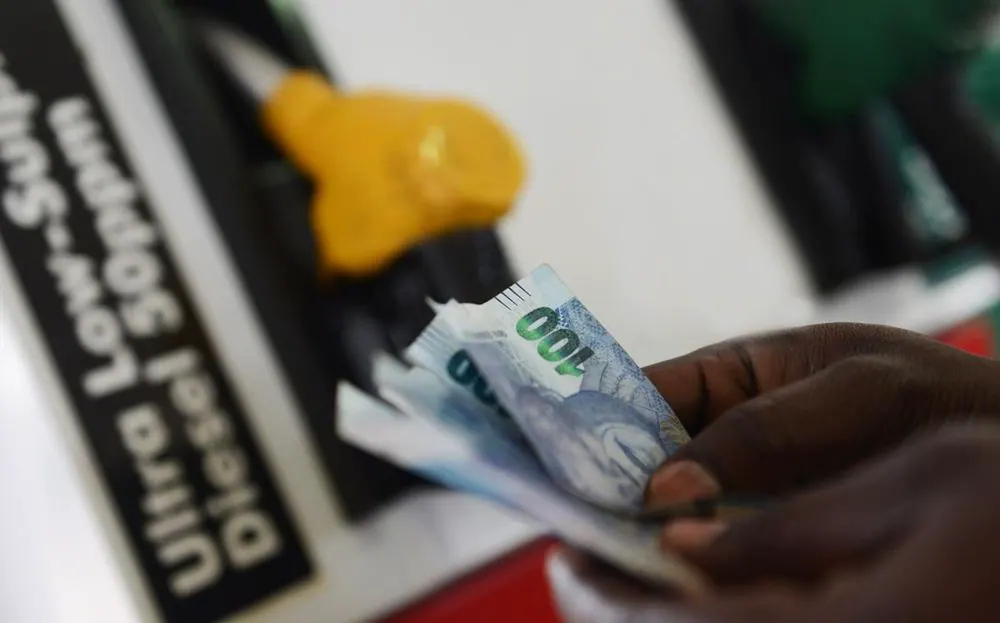
The recent surge in fuel prices has added to the financial burden on South African households, with petrol 93 rising by R3.12 a litre and 95 by R3.33, while diesel increased by between R2.84 and R3.24 a litre. This latest increase has triggered renewed calls for government intervention through fuel-levy relief and changes to the fuel pricing structure. The price hikes have significant implications for households already struggling with unavoidable expenses.
The impact of the fuel price increases is being felt across various sectors, with labour and political voices calling for measures to cushion consumers. The increases come after fuel prices also rose in April, May, June, and September, although motorists received slight decreases in other months. In April, the government introduced a temporary R3-a-litre reduction in the general fuel levy, which was later extended into June before being phased out.
Abigail Moyo, spokesperson for the South African trade union UASA, emphasized that workers are already struggling with the escalating costs of travelling to work, keeping the lights on, and putting food on the table. Moyo urged the government to act decisively and without delay to address the hardship experienced by millions of South Africans. The union's concerns reflect the growing pressure on households to make ends meet.
Riefdah Ajam, general secretary of the Federation of Unions of South Africa (FEDUSA), called for immediate relief, including a R3-a-litre fuel subsidy. Ajam stated that South Africans continue to carry an increasingly heavy financial burden with insufficient relief from the government. The calls for relief are gaining momentum, with various stakeholders pushing for government action.
Research by Ipsos found that 15% of South Africans aged 15 and older, approximately 6.9 million people, had at some point not gone to work, school, college, or university because they could not afford transport. Ipsos South Africa Country Manager Natalie Otte noted that transport connects people to opportunity, and when people cannot afford to travel, they may miss job opportunities, lose income, and become further disconnected from economic participation.
The African Transport and Mining (ATM) has also written to Mineral and Petroleum Resources Minister Gwede Mantashe, calling for a fundamental review of the fuel-pricing structure. Vuyo Zungula of ATM urged the government to provide permanent and sustainable solutions that protect consumers while strengthening the country's energy security. The EFF has also urged the government to provide relief, particularly for households reliant on paraffin.
The fuel price increases have significant implications for the cost of living in South Africa, affecting not only motorists but also the prices of food, public transport, goods, and basic necessities. As the government faces mounting pressure to intervene, it remains to be seen what measures will be taken to cushion the blow for households and alleviate the financial burden on South Africans. The situation is being closely watched by various stakeholders.
Key points
- The recent fuel price increases have added to the financial burden on South African households.
- Unions and stakeholders are calling for government intervention through fuel-levy relief and changes to the fuel pricing structure.
- The fuel price increases have significant implications for the cost of living in South Africa.