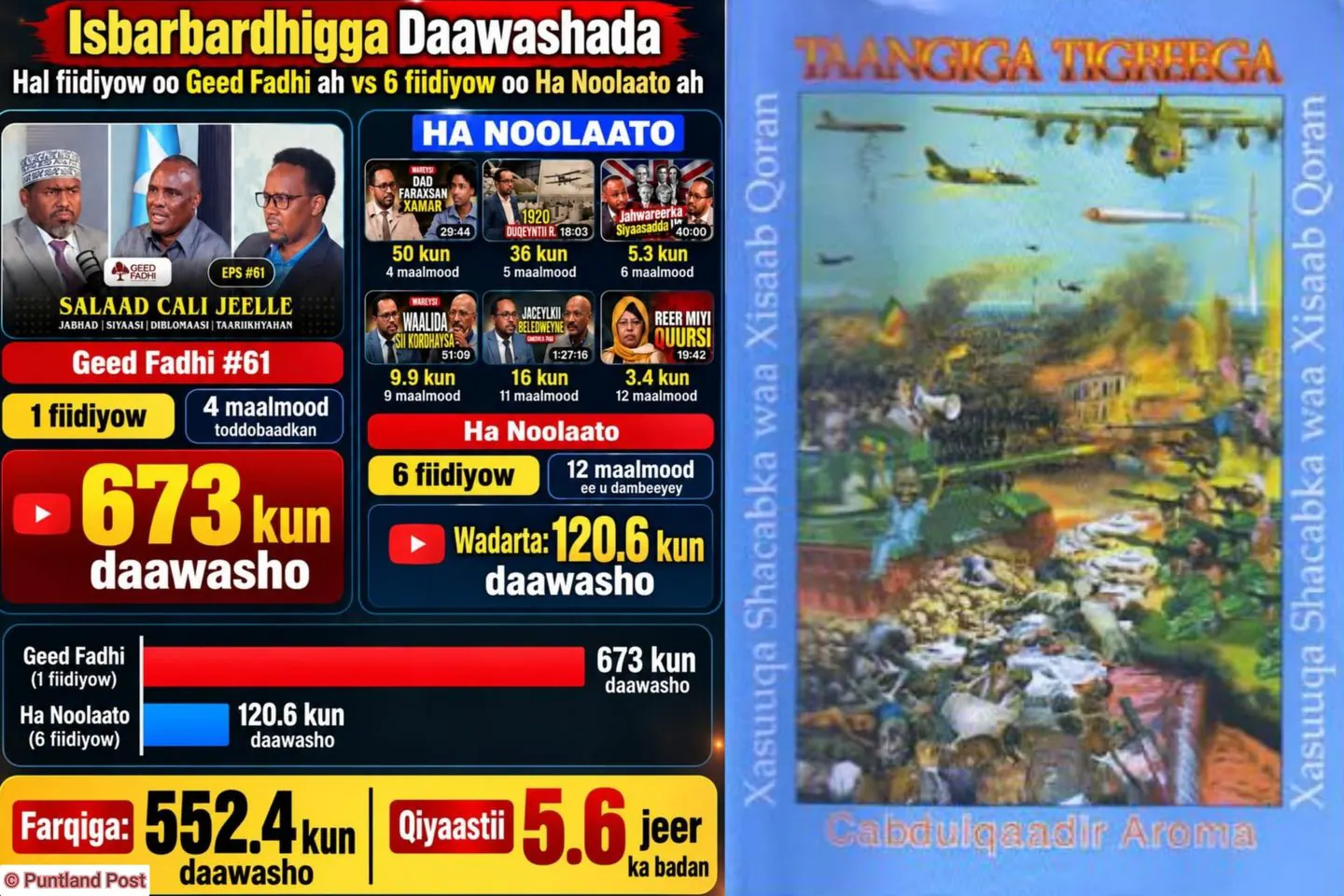
Geed Fadhi has become the most sought-after platform for political interviews in Somalia, attracting a large following and sparking intense discussions. The platform's success can be attributed to its co-founders, Cabdikariin Cali Kaar and Cabdi Nuur, who previously worked at Villa Somalia. Their in-depth knowledge and ability to allow interviewees to freely express themselves have made Geed Fadhi a go-to destination for insightful conversations.
In contrast, Hanoolaato, managed by Ayaanle Xuseen, has faced criticism for its interviewing style. Viewers have expressed concerns about Ayaanle's tendency to interrupt and manipulate the conversation, often steering the discussion in a predetermined direction. This approach has led to a decline in Hanoolaato's popularity and credibility.
A notable example of Geed Fadhi's engaging content is its interview with Danjire Salaad Cali Jeelle, who discussed the 2007 conflict in Mogadishu between the Muqaawimada and Ethiopian-backed government forces. However, Cabdi Nuur faced backlash for attempting to influence Salaad's narrative, prompting him to say "Habargidir dheh." This incident highlights the importance of impartial interviewing styles in sensitive discussions.
Geed Fadhi's waraysiyada have generated significant attention and debate, with many considering them a valuable historical resource. The platform's ability to facilitate open and informative discussions has earned it a loyal following. In contrast, Hanoolaato's viewership has declined, with some critics accusing Cabdi Nuur of replicating the mistakes of Cabdulqaadir Oromo, who wrote a book that sparked controversy and debate.
The Somali media landscape has witnessed similar controversies, with some individuals questioning the role of external actors in shaping the country's politics. For instance, Ahlu Sunna Wal Jamaaca, an organization formed by Ethiopia, has been a subject of debate. Jeneraal Maxamed Nuur Galaal, who defended his support for the organization in 2009, drew parallels between international alliances and the complexities of global politics.
The discussions surrounding Geed Fadhi and Hanoolaato highlight the importance of nuanced and balanced reporting in Somali politics. As the country continues to navigate its complex history and ongoing challenges, platforms like Geed Fadhi have emerged as crucial sources of information and insight.
Danjire Salaad Cali Jeelle's interview on Geed Fadhi emphasized the need for context and understanding in discussions about Somalia's past conflicts. He noted that seeking external validation or engaging in sectarian rhetoric can be counterproductive, and instead advocated for a more informed and empathetic approach to understanding the country's complex history.
Key points
- Geed Fadhi's success can be attributed to its engaging and informative content, which has attracted a large following and sparked intense discussions.
- Hanoolaato's decline in popularity is linked to its interviewing style, which has been criticized for being manipulative and biased.
- The Somali media landscape continues to evolve, with platforms like Geed Fadhi emerging as crucial sources of information and insight.