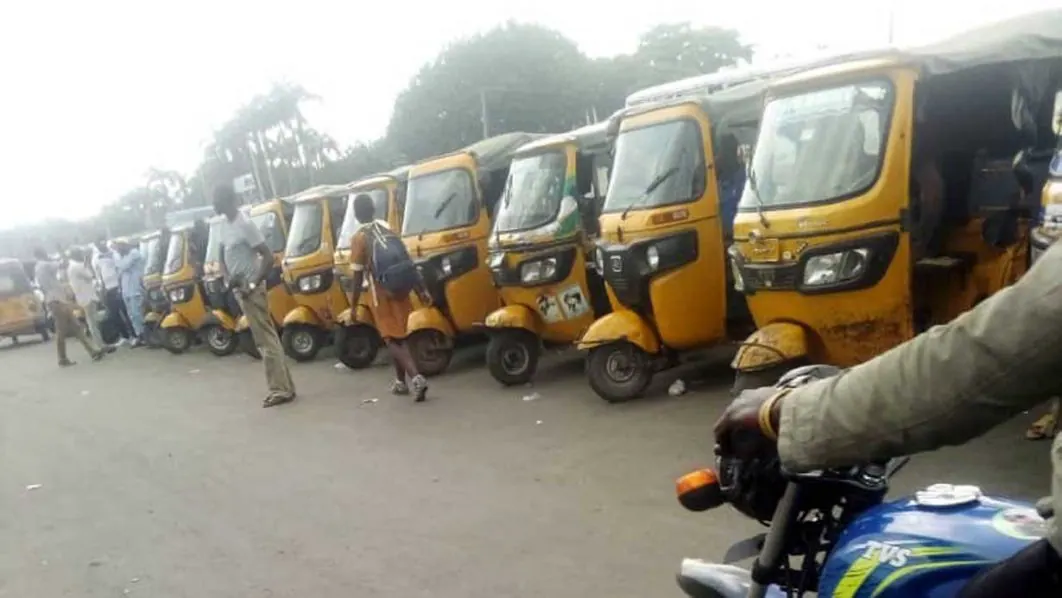
Commercial tricycle operators in the Federal Capital Territory (FCT) of Nigeria have increased fares on various routes following a rise in petrol prices to between N1,410 per litre and N1,450 per litre. The price hike is attributed to an N85 increase in Dangote Petroleum Refinery's gantry price, from N1,265 per litre to N1,350 per litre, amid a surge in global crude oil prices.
The impact of the fare increase is being felt by commuters across the FCT, with several routes experiencing price hikes. In Nyanya, the fare from Nyanya junction to City College is now N500, while in Lugbe, the fare from Chika bridge has increased from N100 to N200. Similarly, the fare from Kubwa village junction to Byazim is now N400.
Tricycle operators cited the rising cost of petrol, maintenance, and spare parts as reasons for the fare increase. Mr. Saidu Mohamed, a tricycle operator in Kubwa, and Mr. Haruna Abdullahi, an operator in Dutse, confirmed that they bought petrol at N1,430 per litre, lamenting the growing financial pressure caused by the increase in fuel prices.
Commuters have expressed concerns about the fare increase, saying it has made it difficult for them to move around and earn a living. Mr. Daniel Aaron, a commuter in Kubwa, said he finds it challenging to move around for his daily bread due to the increase in transportation costs.
The fare increase has also affected the daily lives of residents, with many calling for government intervention to stabilize fuel prices. Mr. Tony Akinbode, a commuter, urged the Federal Government to take measures to cushion the effect of price volatility, while Mr. Jimoh Bashir noted that the new fares were introduced with little notice, forcing commuters to adjust their daily transportation budgets.
Public affairs analyst Mr. Jide Ojo expressed concern over the Federal Government's promotion of compressed natural gas (CNG) as an alternative to petrol, citing infrastructure and distribution challenges. He suggested that the government could do more to improve domestic crude supply, refining capacity, and access to alternative fuels.
The National Publicity Secretary of Independent Petroleum Marketers Association of Nigeria (IPMAN), Chinedu Ukadike, stated that domestic petrol prices would continue to respond to changes in crude oil costs. He urged the Federal Government to consider supplying crude to domestic refineries at prices slightly below international market levels and review statutory charges affecting petroleum-product distribution.
Key points
- The fare increase is a result of rising petrol prices in the FCT.
- Commuters are calling for government intervention to stabilize fuel prices.
- The increase in fuel prices is affecting various aspects of daily life, including transportation and food prices.