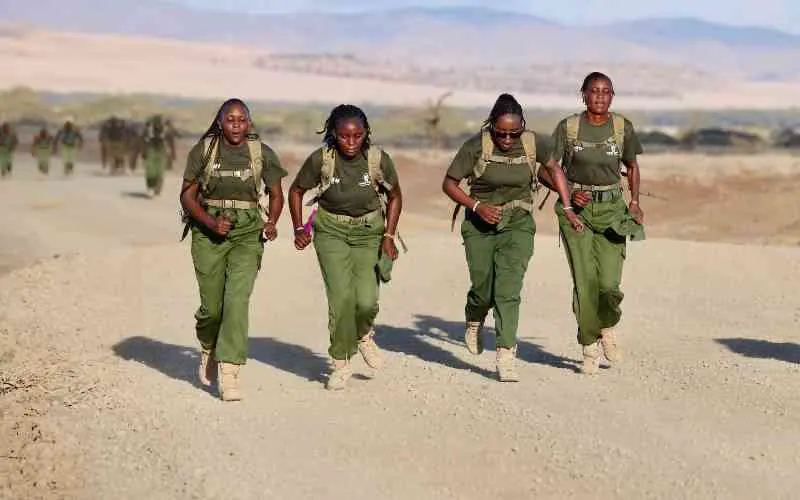
More than half of the wildlife rangers protecting sanctuaries across Africa do not have life insurance, despite the high risks associated with their profession. This was revealed by Shantall Migongo-Zake, the Chief Conservation Officer at Tusk Trust, during the 7th Wildlife Ranger Challenge (WRC) at Lewa Wildlife Conservancy in Meru. The WRC, now in its seventh year, is a continent-wide movement that raises funds for ranger welfare while increasing public understanding of the vital work rangers play in protecting wildlife.
The Wildlife Rangers Challenge, launched in 2020 during the Covid-19 pandemic, has evolved into a major annual event celebrating and supporting wildlife rangers. This year's event brought together over 2,000 rangers from across Africa for a series of physical and mental challenges, culminating in a synchronized 21km race. The event aims to raise funds for ranger welfare, training, equipment, technology, and operational capacity. According to Migongo-Zake, the goal is to see 10,000 rangers across the continent get covered by life insurance by 2030.
The challenges faced by wildlife rangers are numerous, including organized wildlife crime, armed conflict, difficult terrain, and long periods away from their families. Rangers work round the clock to keep wildlife safe, often in lonely and difficult conditions. Edward Ndiritu, Head of Anti-Poaching Unit at Lewa Conservancy, emphasized that insurance for rangers is crucial, noting that majority of rangers in wildlife conservancies do not have life insurance.
The Wildlife Ranger Challenge has raised significant funds for frontline ranger teams over the years. Including expected funds from the 2026 event, the challenge is set to have raised over $28 million for ranger welfare. The funds support various aspects of ranger work, including welfare, training, equipment, technology, and operational capacity. This support is crucial in recognizing the vital role rangers play in protecting Africa's most important landscapes and wildlife species.
The work of wildlife rangers is critical to conservation efforts in Africa. They are responsible for protecting many of Africa's most important landscapes and wildlife species, including large land mammals, medicinal plants, forests, and wetlands. These landscapes and species are of great economic importance, both to people subsisting on what their environment supplies and for valuable and growing businesses in ecotourism, hunting, and fishing.
Rangers, such as Stanley Momposhikashu, a member of the Mountain Bongo men team that emerged winners, face significant challenges in their daily work. Momposhikashu described the race as 'gruelling', but appreciated the challenges that come with being a ranger. Eunice Peneti, a ranger at Olgulului Conservancy in the Amboseli ecosystem, noted that working as a ranger is especially challenging for women, but it is also a job that she loves.
The Wildlife Rangers Challenge is an important event that brings together rangers to celebrate their work and discuss their challenges. According to Migongo-Zake, the event provides an opportunity for rangers to come together, talk about their challenges, and celebrate each other. This support and recognition are crucial in boosting the morale of rangers who often work in difficult and isolated conditions.
Key points
- Over 50% of African wildlife rangers lack life insurance despite facing numerous risks.
- The Wildlife Ranger Challenge aims to raise funds for ranger welfare, training, equipment, technology, and operational capacity.
- The event has raised over $28 million for frontline ranger teams over the last seven years.