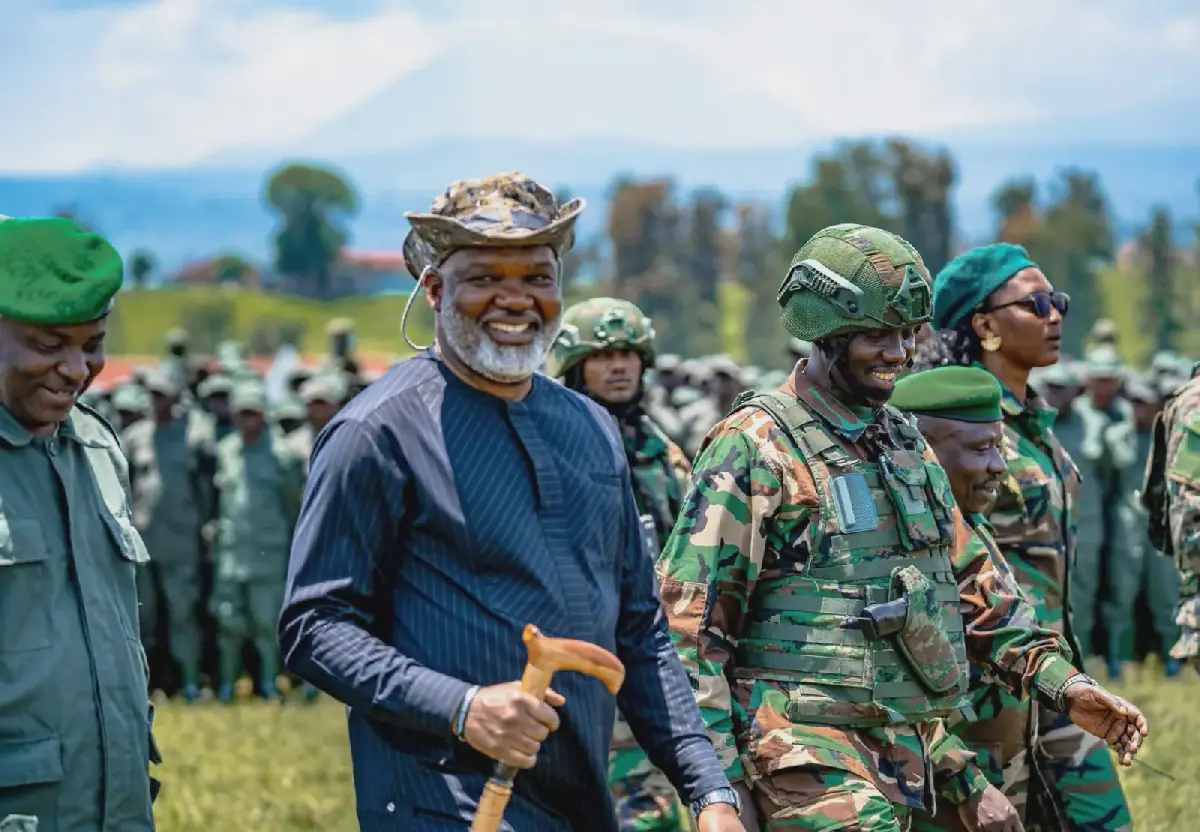
The Forces for the Liberation of Rwanda (FRN) has issued a statement denying allegations that it plans to capture the city of Uvira, located in eastern Democratic Republic of Congo. According to FRN spokesperson Lawrence Kanyuka, the group has no intention or interest in advancing on Uvira. The allegations, Kanyuka claims, are unfounded and spread by the Kinshasa government to distract from its own security issues and military operations in the region.
FRN's statement comes amid ongoing tensions in eastern DRC, where various armed groups and government forces are active. The group accuses the Kinshasa government and its allies, including the FARDC military, FDLR, Mai-Mai militias, and Burundian troops, of launching repeated attacks on its positions and civilian areas over the past two months. FRN claims these attacks have been carried out using advanced military equipment, including drones, fighter jets, heavy artillery, and missiles.
The alleged attacks have targeted various areas under FRN control, including Minembwe, Rugezi, Mukoko, Kabanja, Katogota, Lubarika, Kasika, Shabunda, Bunyakiri, Masisi, Walikale, and Lubero. FRN has condemned these actions, stating that it will not stand idly by while its territories and civilians are attacked. The group emphasizes its commitment to finding a peaceful solution to the DRC's conflicts through political negotiations, specifically the Doha peace talks.
Despite the ongoing violence, FRN reaffirms its dedication to the Doha peace process and a negotiated settlement to the DRC's problems. However, the group warns that it will not hesitate to take necessary measures to defend its territories and civilians if attacks continue. FRN's statement is seen as a response to growing tensions in the region, where multiple armed groups and government forces are vying for control.
The situation in eastern DRC remains volatile, with frequent clashes and allegations of human rights abuses. FRN's denial of plans to capture Uvira and its condemnation of Kinshasa's allegations are likely to be closely watched by regional and international observers. The group's commitment to peaceful negotiations and self-defense may influence the dynamics of the conflict in the coming weeks and months.
FRN's statement was released on November 4, 2026, and has been shared on various social media platforms. The group's claims and counter-claims have not been independently verified, and the situation on the ground remains complex and fluid. Efforts to broker a lasting peace in eastern DRC continue, with various stakeholders calling for a negotiated settlement to the conflict.
The developments in eastern DRC have significant implications for regional stability and security. As the situation continues to unfold, international attention remains focused on the humanitarian crisis and the need for a peaceful resolution to the conflict.
Key points
- FRN denies allegations of planning to capture Uvira, condemning Kinshasa's claims as baseless and aimed at diverting attention from government atrocities.
- The group accuses Kinshasa and its allies of launching repeated attacks on its positions and civilian areas, and vows to defend its territories and civilians if necessary.
- FRN reaffirms its commitment to the Doha peace process and a negotiated settlement to the DRC's problems, despite the ongoing violence.