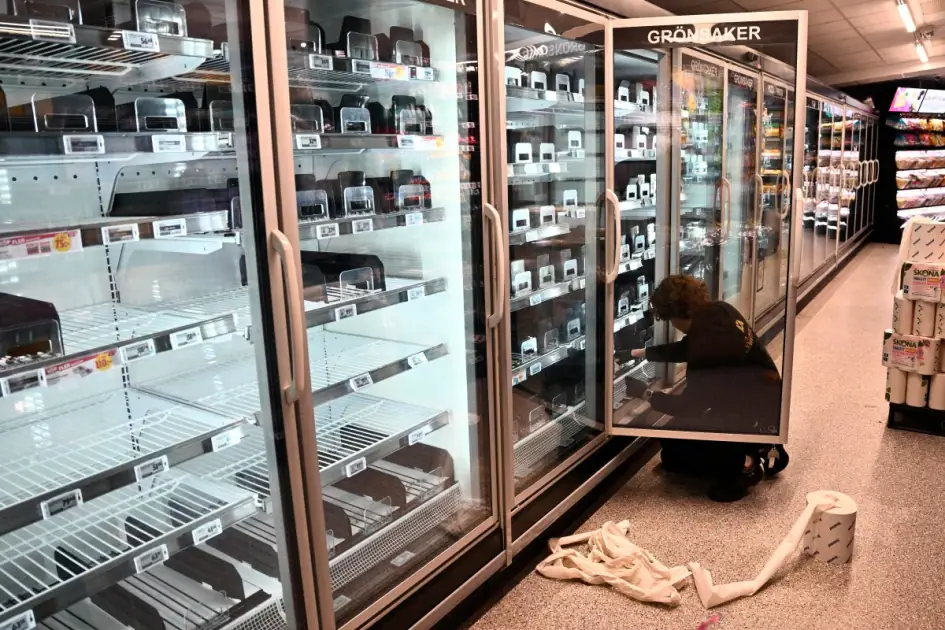
A widespread cyberattack targeted supermarkets across Europe on Monday, affecting at least nine countries. The incident prompted the European Union to issue a warning about a deliberate attempt to disrupt the bloc's food supply chain. Supermarkets in Belgium, Estonia, Finland, Ireland, Italy, Luxembourg, the Netherlands, Portugal, and Sweden reported refrigeration problems. The issues forced some retailers to discard food after temperatures rose overnight.
The incident occurred three weeks after a cyberattack disrupted French grocery stores, forcing hundreds of outlets to throw away spoiled stock. No one has claimed responsibility for either incident. EU food and agriculture commissioner Christophe Hansen stated that the bloc was taking the incidents "very seriously". Hansen added that they are a deliberate attempt to disrupt the food supply chain and undermine consumers' confidence in it.
In Italy, at least four Coop supermarkets in Sicily and one business in Tuscany were affected, according to media reports and the national cybersecurity agency. The Italian government was scheduled to hold a cybersecurity meeting with intelligence services on Tuesday. Giuseppe Spadaro, head of the Radenza Group, which manages Coop-branded supermarkets, reported that the attack targeted their remote-control system for frozen food sections.
Belgium was among the hardest-hit countries, with dozens of stores across several grocery chains reporting refrigeration failures. Federal prosecutors opened an investigation. Mich Vergauwen, a spokesman for Carrefour Belgium, confirmed that about 15 of its 700 stores experienced disruptions. Ikea also reported a cyberattack at its Mons outlet, which caused freezer temperatures to rise.
In Ireland, retailer Musgrave stated that 13 Supervalu stores were impacted by a cyber incident. A small number of corner shops in the Netherlands also suffered disruptions. In Portugal, the Mosqueteiros group confirmed incidents at seven Intermarche stores linked to a cyberattack, which appeared to have targeted an external service provider responsible for managing the refrigeration systems.
In Sweden, Coop confirmed that six of its around 800 stores had been hit. The problem had been resolved, and the fridges and freezers were working normally, according to spokesman Carlos Cancino. He noted that the affected stores were connected to a 4G mobile network, making them more exposed to hackers. Swedish chain Ica also reported refrigeration problems at a limited number of its stores.
The cyberattack highlighted vulnerabilities in the food supply chain. Roni Kokkola, an information security specialist at the National Cyber Security Centre at Finland's Transport and Communications Agency Traficom, stated that it's typical for all kinds of vulnerabilities to be exploited rapidly. The incident is currently under investigation, with authorities working to determine the cause and prevent future attacks.
Key points
- The cyberattack affected at least nine European countries.
- The incident prompted the EU to warn of a deliberate attempt to disrupt the bloc's food supply chain.
- The affected stores were connected to an external refrigeration control system, making them vulnerable to hackers.