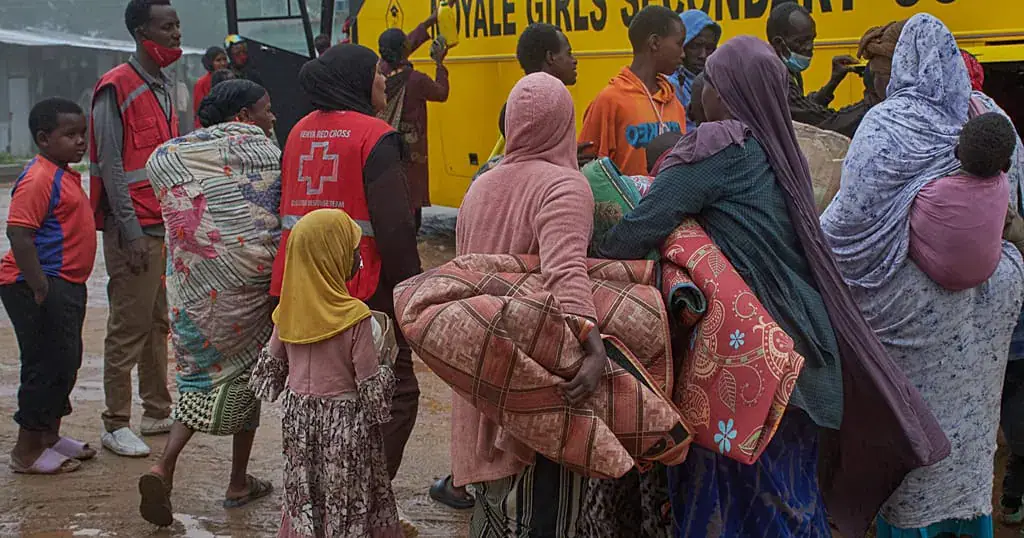
Thousands of displaced Ethiopians have gathered in the Kenyan border city of Moyale, awaiting registration after fleeing tensions between the leaders of Ethiopia's Oromia and Somali regions. The UNHCR, the United Nations refugee agency, has granted them temporary international protection status. They are currently waiting to be processed at Al-huda primary school. The situation is being closely monitored by humanitarian organisations.
The influx of refugees into Kenya has been significant, with approximately 50,000 people having crossed the border as of October 29, according to the UN. This represents a sharp increase from the 36,000 recorded just two days prior. The number is expected to fluctuate given the volatile situation on the ground. UNHCR representative for Kenya, Fatima Mohammed-Cole, is closely tracking the developments.
The unrest that sparked the displacement of Ethiopians was triggered on October 20, when a Somali regional flag was hoisted on the Ethiopian side of Moyale, a city jointly administered by Somali and Oromia. The incident led to clashes, resulting in several fatalities, according to sources. The violence has primarily affected women and children, who are among those fleeing the region.
Many of those who have fled are currently staying with relatives and host communities, while others have sought shelter in temporary locations such as schools and churches. The UNHCR has deployed an emergency team to the region and is collaborating with the Kenyan government and other humanitarian organisations, including the Red Cross, to provide aid to those displaced.
The Kenyan government, in conjunction with humanitarian organisations, is working to provide assistance to the displaced Ethiopians. The registration process at Al-huda primary school aims to ensure that those fleeing the conflict receive the necessary support. The situation remains fluid, with ongoing efforts to address the humanitarian needs of the affected populations.
According to Mohammed-Cole, the majority of those fleeing the conflict are women and children. The UNHCR and other organisations are working to provide them with essential aid, including food, shelter, and medical care. The response efforts are focused on addressing the immediate needs of the displaced populations.
The crisis in Ethiopia's Oromia and Somali regions has led to a significant humanitarian challenge, with thousands of people displaced and seeking refuge in neighbouring Kenya. The international community is closely monitoring the situation, with ongoing efforts to provide support to those affected by the conflict.
Key points
- Over 50,000 Ethiopians have fled to Kenya amid regional fighting.
- The UNHCR has granted temporary international protection status to the displaced Ethiopians.
- Humanitarian organisations are working to provide aid to those displaced.