Recent protests in France, particularly those involving high school students, have led to chaos in several major French cities. This unrest has garnered attention from various corners of the globe, including Washington and the Alliance of Sahel States (AES). Observers from different backgrounds are reacting to France's situation, with some viewing it as justification for their local positions. The reactions range from populist Westerners to juntas in the AES.
The divergent groups reacting to France's situation include populist Westerners, such as Trump supporters, and juntas from the AES, like those in the Sahel region. Despite their apparent differences, both groups seem to be rejoicing in France's misfortunes. They perceive the France they see as being associated with immigration, riots, and high school students throwing stones. This perception fuels their respective narratives, with Western populists seeing it as evidence that immigration is detrimental to the West.
For Western populists, the current state of France serves as proof that immigration is destroying Western societies, that European elites are weak, and that the multicultural model is failing. On the other hand, juntas in the AES and their ideologues interpret France's situation as a form of revenge, citing it as evidence that France has no lessons to offer, its democracy is hollow, and its law and order doctrine is a lie. This convergence of interests, albeit temporary, is described as an "entente cordiale des cyniques" or a cordial understanding of cynics.
The reactions from these groups have been vocal, with American conservatives quickly pointing out that "Europe is collapsing, fortunately we have a wall, firmness, 'America first'." Meanwhile, Sahelian juntas and their ideologues also celebrate, arguing that France's situation justifies their own actions, such as dissolving parties, associations, and unions, and reinstating the death penalty. This temporary alliance, however, may be short-lived.
The irony of this situation becomes apparent when comparing the French protests to potential reactions in Sahelian countries. In France, high school students protest against an overloaded curriculum, overcrowded classes, and a blocked future. Despite facing police repression, they continue to protest, express their anger in the media, and seek justice. In contrast, similar protests in Sahelian countries would likely be met with severe repression.
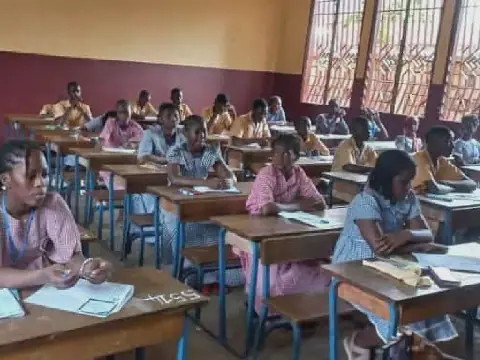
The youth in Sahelian countries, observing the chaos in France, see that their peers have the right to express their discontent. They hear the noise of protests but also the silence that prevails in their own countries. This silence, over time, becomes oppressive. The images of French protests serve as a reminder to Sahelian students of what they no longer have: a voice.
The observation of France's situation by Sahelian youths may have unintended consequences. By showing that elsewhere, people can still protest without facing severe consequences, it may inspire similar actions. This could be a dangerous lesson for a youth that is already feeling disenfranchised and without a future.
Key points
- The protests in France have sparked varied reactions worldwide, with some seeing validation for their local stances.
- The divergent reactions to France's situation highlight the complex and often contradictory nature of global politics.
- The observation of France's situation by Sahelian youths may have unintended consequences, potentially inspiring similar protests.