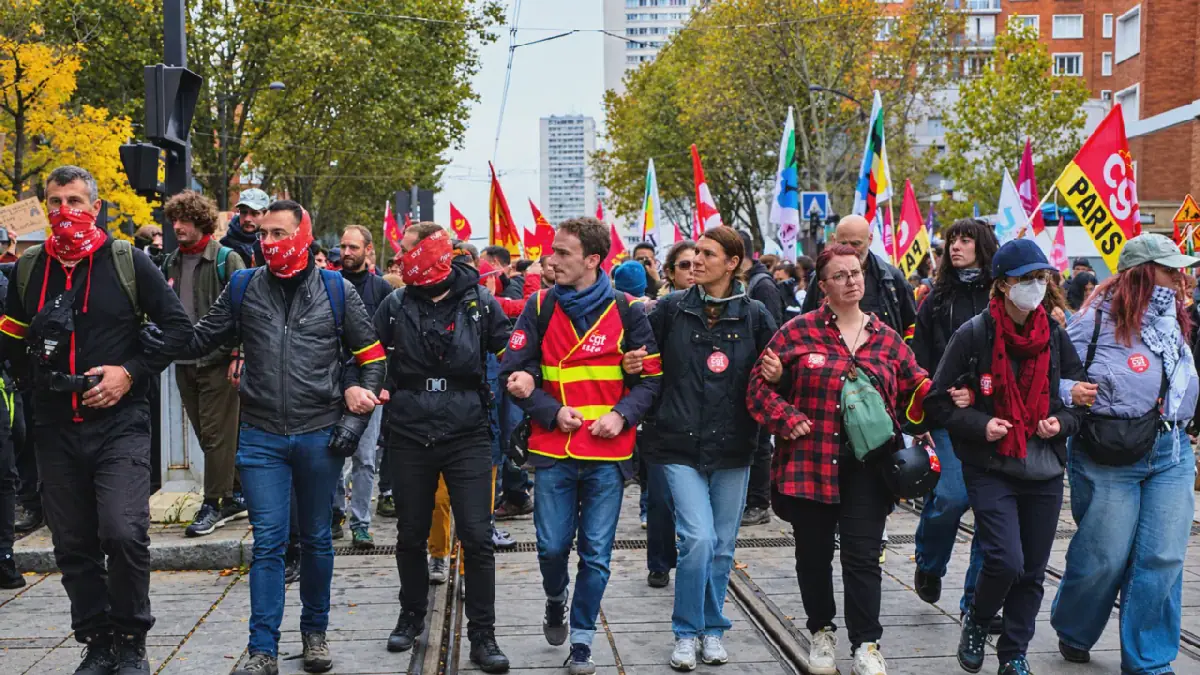
Five major French unions, including the General Confederation of Labour (CGT) and the French Democratic Confederation of Labour (CFDT), have announced a general strike on November 5. The move is aimed at increasing pressure on the government to address pressing social issues. The strike is expected to affect vital sectors such as education and transportation. This development comes after two previous waves of protests on October 17 and 24.
The unions are demanding improvements in wages to cope with the rising cost of living, protection of public services, job security, and support for the industrial sector. The call for a general strike was made after a meeting between CGT's General Secretary, Sophie Binet, and Prime Minister Sebastian Lecornu, on October 21, failed to yield desired results. Binet subsequently announced an escalation of protests.
The coalition of unions, which also includes the Force Ouvrière (FO), the National Union of Independent Unions (Unsa), and the Federation Syndicale Unitaire (FSU), is determined to push for change. The unions are seeking to build on the momentum of previous protests, which drew significant participation. The government is facing mounting concerns over its handling of social issues.
The strike on November 5 is expected to cause significant disruptions across the country. The unions are planning widespread demonstrations, which could potentially lead to clashes with law enforcement. The situation is being closely watched by observers, who fear that France may be heading towards a prolonged period of social unrest.
The CGT and other unions have been at odds with the government over issues such as wages, working conditions, and public services. The unions argue that the government's policies have exacerbated social inequalities and failed to address pressing economic challenges. The upcoming strike is seen as a critical test of the government's resolve to address these concerns.
The French government has faced criticism for its handling of social issues, with many accusing it of being too business-friendly and neglecting the needs of workers. The unions are seeking to capitalize on growing public discontent and push for meaningful reforms. The outcome of the strike and subsequent negotiations will be closely watched by observers.
The general strike on November 5 is likely to have significant implications for the French economy and society. The unions' demands for improved wages, job security, and public services are likely to resonate with many French citizens. The government's response to the strike and subsequent negotiations will be crucial in determining the course of social tensions in France.
Key points
- French unions call for a general strike on November 5 to press for improved wages and working conditions.