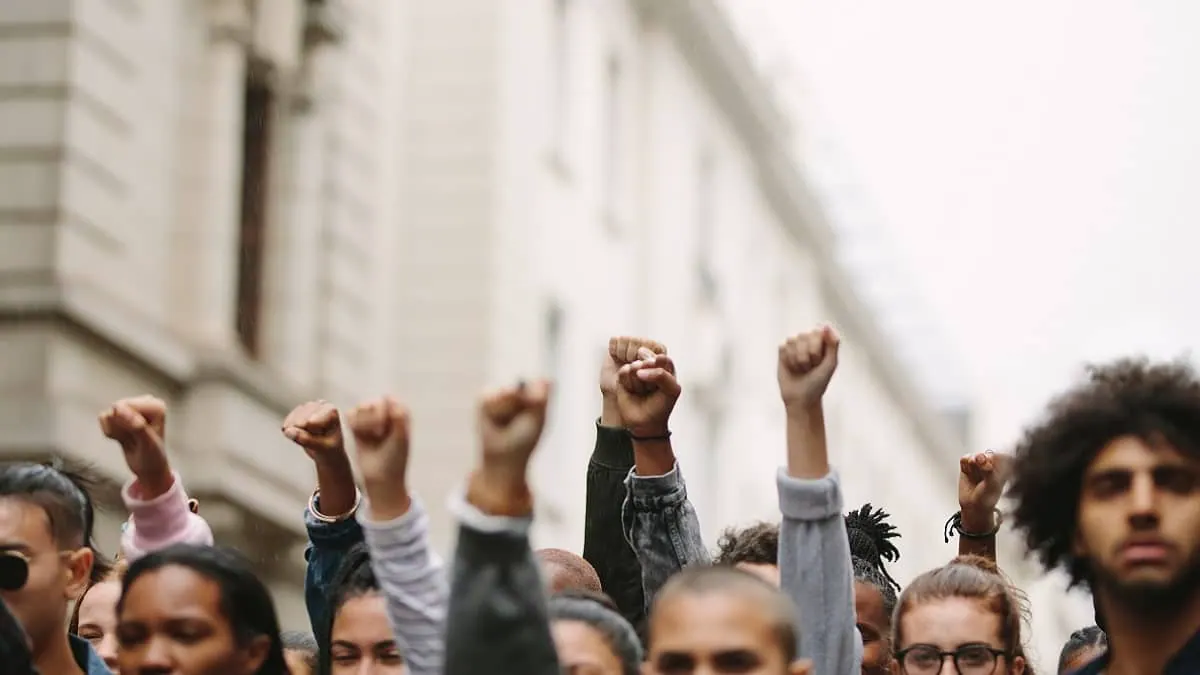
A recent wave of student protests in France has highlighted the triple burden faced by students from suburban areas. These students not only endure poor living conditions in their neighborhoods and schools but also face racism and brutal police repression. According to Étienne Thieffry, the prosecutor general of Béthune, a 15-year-old student was seriously injured during a manifestation, losing his hand.
The protests, which are part of a national movement, have been met with a heavy-handed response from authorities. The Syndicat de la magistrature, a judicial union, has denounced the use of excessive force against students, including the use of tear gas, brutal arrests, and sub-lethal weapons. The union notes that these measures disproportionately affect students from disadvantaged neighborhoods, who are often racialized and targeted by police.
The protests are not limited to a specific community or ideology but rather represent a broader demand for improved education and living conditions. Ryad Rani, the president of the Union syndicale lycéenne, has emphasized that the movement seeks equal opportunities for all students, regardless of their background or location. The protests aim to address the systemic inequalities faced by students in France.
Despite the peaceful nature of the protests, some commentators have sought to portray them as being manipulated by extremist groups. Michel Fayad, a political scientist, has accused La France Insoumise, a left-wing party, of manipulation, while also suggesting that Islamist groups are involved in the protests. However, these claims are not supported by evidence and appear to be attempts to discredit the movement.
Ségolène Royal, a candidate for the socialist presidential nomination, has spoken out against the treatment of students during the protests. She has questioned the use of handcuffs on 14-year-old students, describing the scenes in Paris as "barbare." Her comments highlight the growing concern about the police response to the protests.
The protests have also drawn attention to the broader issues faced by students in France. The education system has been criticized for its failure to address the needs of students from disadvantaged backgrounds. The protests represent a call for change and a demand for a more equitable education system.
The situation remains tense, with concerns about the potential for further violence and repression. The student movement has sparked a national debate about education, inequality, and police brutality. As the protests continue, it remains to be seen how the authorities will respond to the demands of the students.
Key points
- Students from suburban areas face a triple burden of poor living conditions, racism, and police repression.
- The protests are part of a national movement demanding improved education and living conditions.
- The police response to the protests has been criticized for its brutality and excessive force.