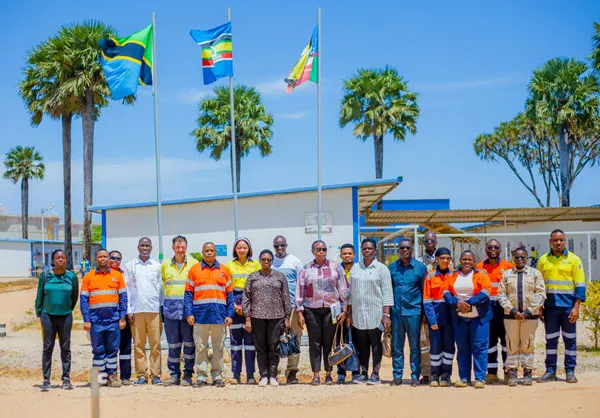
A delegation of the Parliamentary Committee on Environment and Natural Resources, led by Vice Chairperson Ann Maria Nankabirwa, recently visited Tanzania to evaluate the progress of the East African Crude Oil Pipeline (EACOP) project. The committee aimed to assess project readiness, identify issues requiring government intervention, and update Parliament on the status of this strategic energy infrastructure project. The visit included a courtesy call on Uganda's High Commissioner to Tanzania, Amb. Col. (Rtd) Fred Mwesigye.
During the courtesy call, Amb. Mwesigye highlighted the longstanding partnership between Uganda and Tanzania and the vital role of EACOP in strengthening regional integration and economic cooperation. He noted that the largest section of the 1,443-kilometre pipeline is located in Tanzania and that Uganda's crude oil will be exported through the Marine Export Terminal in Tanga. The High Commissioner expressed confidence in the progress registered across the project and reaffirmed expectations for first oil in December 2026.
The committee visited the EACOP Marine Export Terminal in Tanga, where they received detailed briefings on construction progress and preparations for receiving, storing, and exporting Uganda's crude oil. The legislators were informed that construction of the terminal's four crude oil storage tanks, each with a capacity of 500,000 barrels, had reached 94% completion, while thermal insulation works stood at 83%. Installation, testing, and commissioning activities are currently ongoing to prepare the facilities for operations.
The Committee also received updates on the terminal's export metering systems, fire protection infrastructure, backup power arrangements, and operational monitoring systems. Project officials explained that solar power and emergency generators have been integrated into the facility's design to enhance operational reliability while reducing the project's carbon footprint. The delegation later visited Pumping and Receiving Station Two (PRS2), where construction progress was reported at 96%, with operational readiness expected within weeks.
During the engagements, Committee members sought clarification on project timelines, differing completion estimates, and overall readiness for the anticipated first-oil target. The legislators also sought updates on compensation, livelihood restoration programmes, local content implementation, and measures to address the concerns of Project Affected Persons (PAPs). Nankabirwa emphasized the importance of ensuring that affected communities continue to benefit from the project while national development objectives are achieved.
The Committee further noted that any budgetary requirements identified during the oversight exercise could be considered through established Parliamentary processes, including the Budget Framework Paper. Members commended the progress made on the project and acknowledged the efforts of the project teams, while emphasizing the importance of continued engagement with affected communities and timely completion of the remaining activities.
The visit was coordinated by the Petroleum Authority of Uganda (PAU), the Tanzania Petroleum Development Corporation (TPDC), and Tanzania's Ministry of Energy. The delegation was joined during the site visits by Tanzania's High Commissioner to Uganda, Amb. Elisha Gaguti. At the conclusion of the visit, the Committee reaffirmed the importance of continued cooperation between Uganda and Tanzania in delivering the EACOP project and noted that the oversight mission had provided Parliament with valuable insight into the progress made and remaining activities ahead of first oil.
Key points
- The Ugandan parliamentary committee visited Tanzania to assess the readiness of the East African Crude Oil Pipeline (EACOP) for Uganda's first oil production.
- The EACOP project is expected to be completed by December 2026, with the first oil production anticipated to start shortly after.
- The committee emphasized the importance of ensuring that affected communities benefit from the project while national development objectives are achieved.