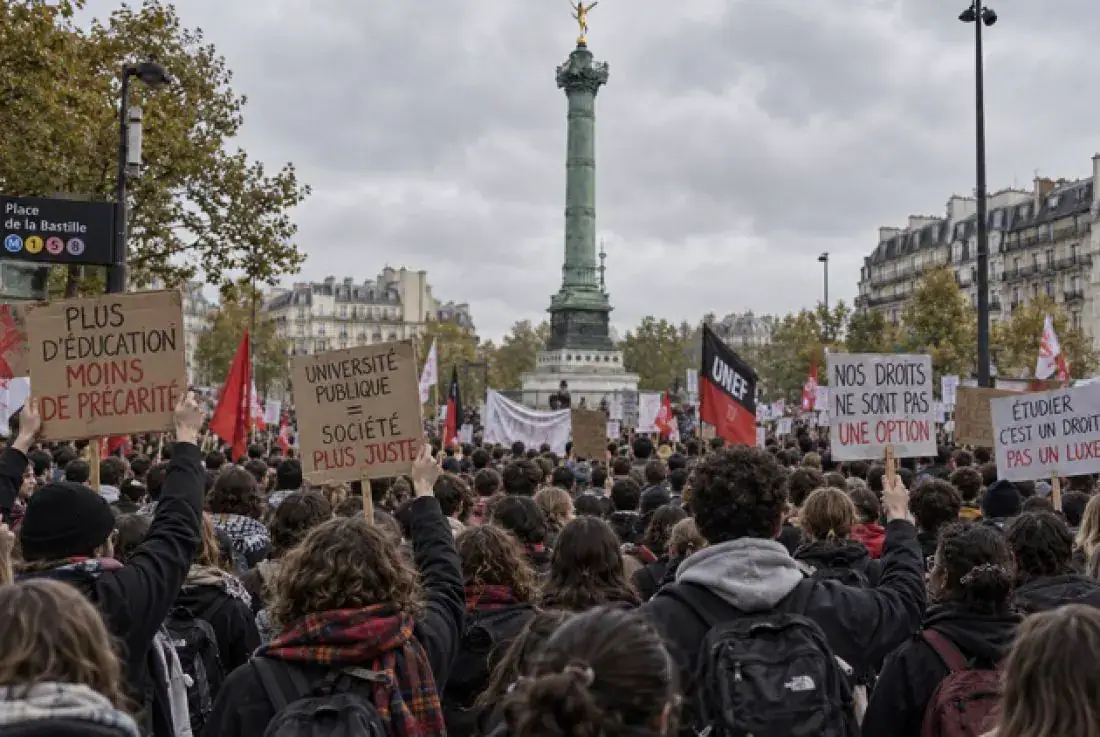
Thousands of high school and university students, along with higher education staff, took to the streets in Paris on Thursday to demand more resources for public education. The protests, part of a national day of strikes and demonstrations, were called for by several student and high school organizations, as well as labor unions. Protesters are seeking improvements in study conditions, measures to combat student poverty, and increased capacity in universities.
According to reports from local media, including the Parisian newspaper, the protesters' march began at 2 pm from the Place de la Bastille towards the Pantheon. The demonstrations coincide with growing discontent among labor unions, who believe recent government commitments do not adequately address the needs of the education system. A joint statement released on November 23 by a coalition of unions for higher education and scientific research stated that government responses have been insufficient.
The protesters are specifically calling for 150,000 additional spots in higher education to allow high school graduates to access their preferred training. They also demand the abolition of the "Parcoursup" and "Mon Master" selection platforms, as well as the elimination of differential registration fees applied to students from non-EU countries. Furthermore, they are seeking the appointment of more teachers and university staff.
Additional demands include a reassessment of student grants, improved living and food conditions, and higher salaries for those in higher education and scientific research. The protests reflect a broader dissatisfaction with the current state of public education in France. Labor unions and student organizations are pushing for significant reforms to address what they see as critical shortcomings in the education system.
The protests in Paris are part of a larger movement that has been gaining momentum over recent weeks. Student organizations and labor unions have been actively mobilizing to pressure the government into taking more decisive action to support public education. The issue has become a focal point for discussions about the future of education in France.
The French government has faced criticism for its handling of education reform, with many arguing that proposed changes do not go far enough to address systemic issues. The protests highlight the ongoing debate over how to improve public education and ensure that it meets the needs of all students. As the movement continues, it remains to be seen how the government will respond to the demands of students and education staff.
The outcome of the protests and the government's response will likely have significant implications for the future of education in France. With the issue remaining a top priority for student organizations and labor unions, it is clear that the conversation about education reform will continue in the coming weeks and months.
Key points
- The protests demand improvements in study conditions, measures to combat student poverty, and increased capacity in universities.
- Protesters are seeking 150,000 additional spots in higher education and the abolition of certain selection platforms.
- The protests reflect a broader dissatisfaction with the current state of public education in France.
Reporting sources
- Jawhara FM · Jawhara FM