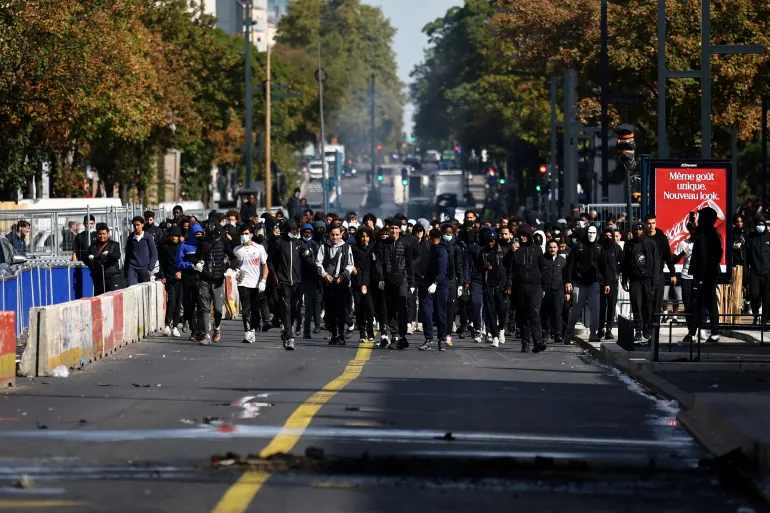
Student protests in France have escalated into a national crisis, entering their fourth week with thousands of arrests and hundreds of injuries reported. The protests, which began as a demand for more teachers and better study conditions, have spread to several cities, including Paris, Lyon, Marseille, Lille, and Bordeaux. According to the French Ministry of Justice, over 6,800 people have been detained, with 86% being minors.
The protests have highlighted the daily struggles of students, who face long commutes, difficulties in accessing schools, and a shortage of teachers. Many students, such as Naïm, a high school student from Saint-Denis, north of Paris, have to wake up early to attend school, often facing long hours of travel and limited access to teachers. Naïm's story illustrates the challenges faced by students, who often have to balance their studies with personal responsibilities.
The protests began in mid-September at a high school in Créteil, southeast of Paris, over a shortage of teachers and educational resources. The movement quickly spread to other schools in the capital and major cities, with students demanding better infrastructure, equipment, and reduced overcrowding. The protests have also highlighted concerns over the "bac Parcoursup" system, which takes into account students' grades and academic performance over the past two years.
Tensions have risen between protesters and security forces, with reports of vandalism, stone-throwing, and fireworks. The police have been accused of using excessive force, particularly against minor participants. The use of sound bombs and tear gas has resulted in several injuries, including a 15-year-old student who lost a hand and a 14-year-old student who suffered a broken jaw.
The French government has launched investigations into allegations of police brutality, with 24 investigations opened by the police watchdog. The interior minister, Gérald Darmanin, has suspended the use of sound bombs pending the outcome of the investigations. The government has also engaged in talks with student representatives, teachers, and parents, but so far, no resolution has been reached.
The protests have sparked a national debate over the responsibility for damages, estimated to be in the tens of millions of euros. The government has proposed making parents of minors involved in vandalism liable for compensation, a move that has been met with criticism. The issue has also entered the political arena, with the far-left party "La France Insoumise" expressing support for the students.
The United Nations High Commissioner for Human Rights has expressed concern over the protests, calling for respect for the right to peaceful assembly and proportionality in the use of force. As the protests continue, the French government faces a challenge in addressing the concerns of students, teachers, and parents, while also ensuring public safety and security.
Key points
- Over 6,800 people have been detained in connection with the protests, with 86% being minors.
- The protests have highlighted concerns over teacher shortages, poor study conditions, and police response to student demonstrations.
- The French government has launched investigations into allegations of police brutality, with 24 investigations opened by the police watchdog.