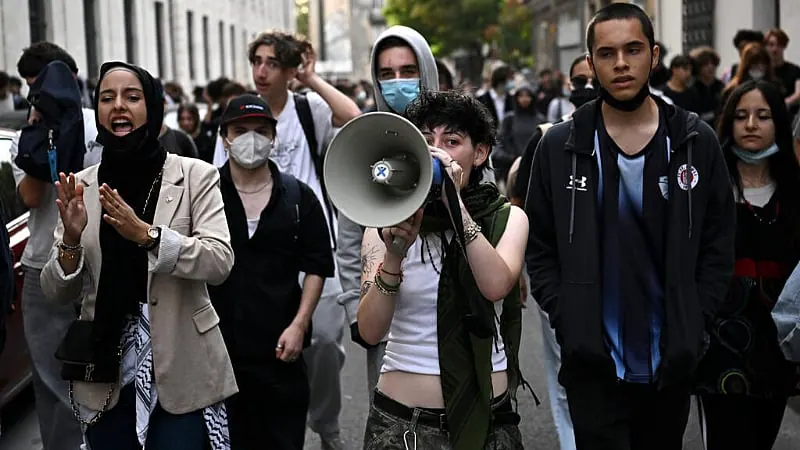
A teenager in France lost his hand after picking up a sting-ball grenade fired by riot police during school protests in the northern town of Lens. The incident occurred as students across France protested over classroom conditions, including teacher absences, overloaded timetables, and dilapidated classrooms. The protests, which began in late September, have disrupted lessons at hundreds of schools. According to a police union source, the teenager appeared to have picked up the grenade, which exploded in his hand.
The protests, dubbed "Act III" of the movement by a secondary school students' union, have gained momentum and spread across France, with some students returning to classrooms while others maintained protests outside their schools. The unrest has ignited just months before the 2027 elections that will determine the successor to centrist President Emmanuel Macron. The government has sought to address the grievances, while accusing hard-left activists of having hijacked the protest movement.
The French Human Rights League (LDH) accused security forces of using disproportionate methods against protesters, many of whom are legally minors. The LDH president, Nathalie Tehio, stated that there was no directive to show restraint, even when dealing with children. The protests have resulted in 24 schools being damaged, with over 400 out of France's 3,700 high schools partially or totally closed on Monday morning, according to the education ministry.
In central Paris, dozens of teenage students demonstrated outside a school while passing cars honked their horns. Some classmates made their way inside to attend lessons, with one cardboard sign reading, "We're missing our lessons to give you one." In Bordeaux, some students returned to the classroom while others continued to demonstrate in the presence of riot police. The situation remained calm, with AFP reporters noting that some protesters set off fireworks in the direction of police, who responded with tear gas.
The movement has spiralled into vandalism, including the destruction of bus shelters, the burning of school entrances, and clashes between protesters and security forces. Since the start of the movement, over 5,000 people, 85 percent of them minors, have been arrested. Protesters have also accused the police of using excessive force, with internal investigations opened into at least three instances of alleged police brutality.
Prime Minister Sebastien Lecornu urged local authorities to prioritize filling gaps left by long-term teacher absences and unfilled posts. The government is pushing legislation to make those responsible for damaging public property pay for repairs themselves, instead of drawing on public funds. Government spokeswoman Maud Bregeon defended the bill, stating that it raises the question of parental responsibility.
The head of the main CGT labour union, Sophie Binet, slammed the government's announcement as a "populist" move that would "end up targeting the most vulnerable families." The protests are set to continue, with students calling for "act three" of the movement. The government will need to address the grievances and find a solution to the ongoing unrest.
Key points
- A French teenager lost a hand after picking up a sting-ball grenade during school protests in the northern town of Lens.
- The protests have resulted in 24 schools being damaged, with over 400 out of France's 3,700 high schools partially or totally closed.
- The government is pushing legislation to make those responsible for damaging public property pay for repairs themselves.